


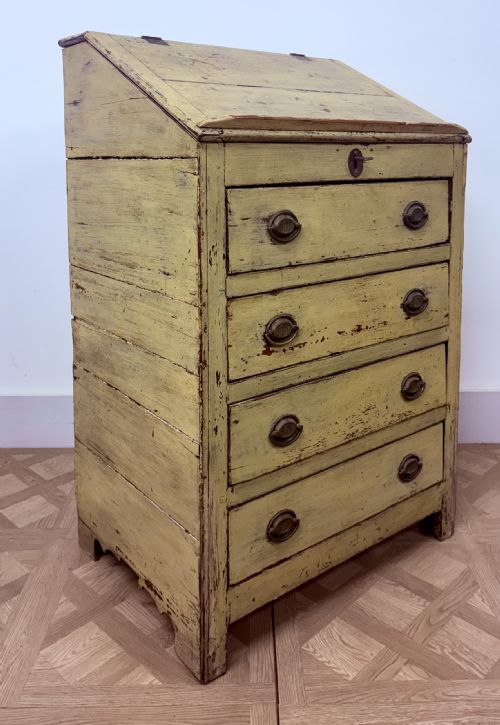
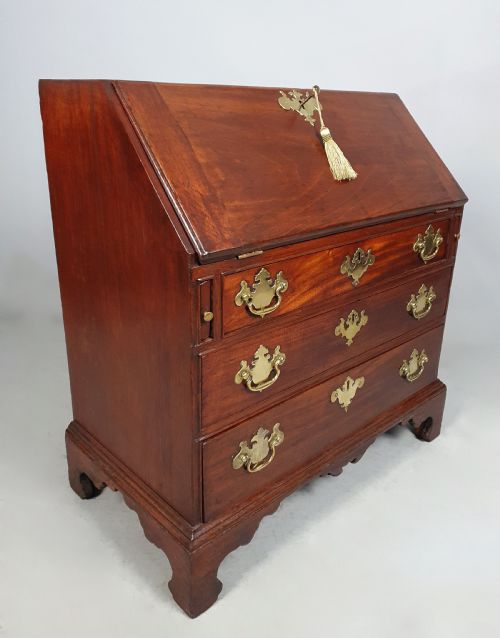
Georgian Sloped Desk
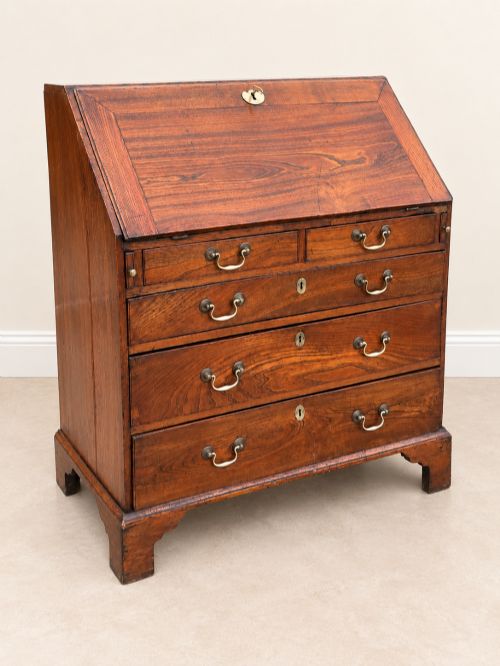
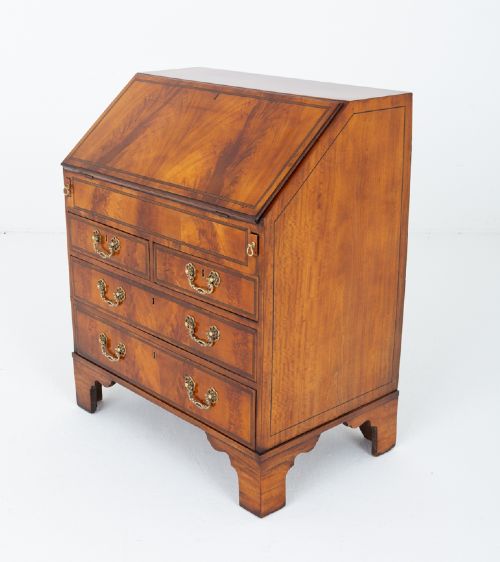
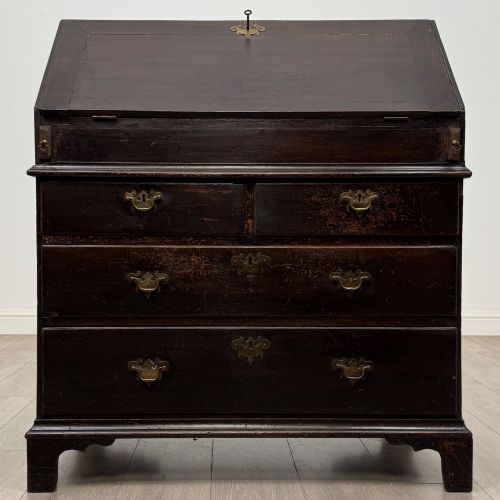
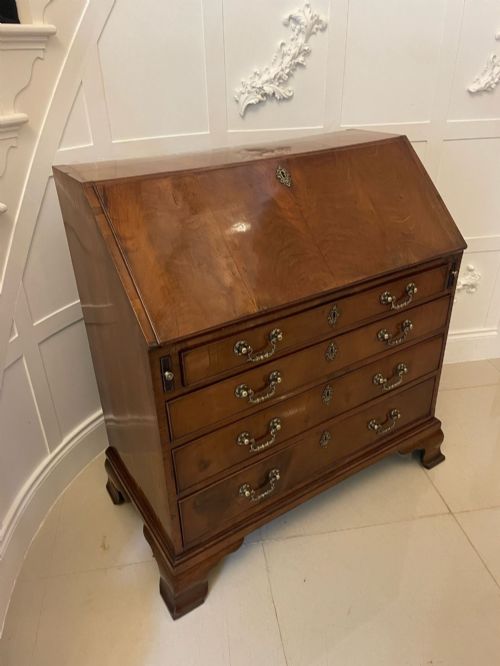
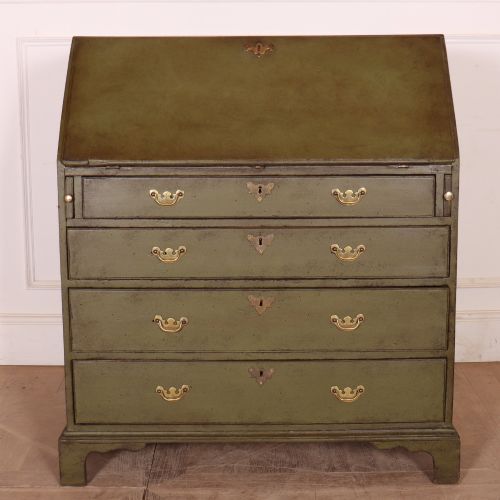
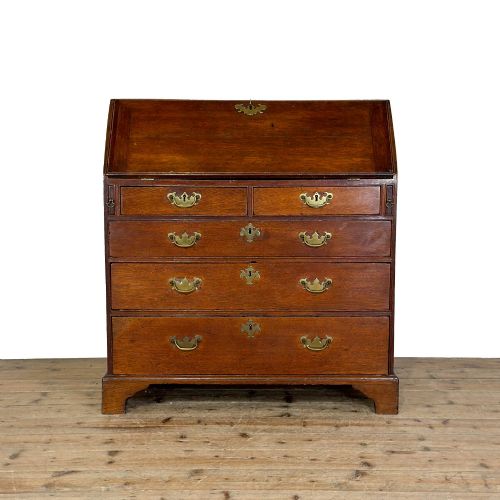
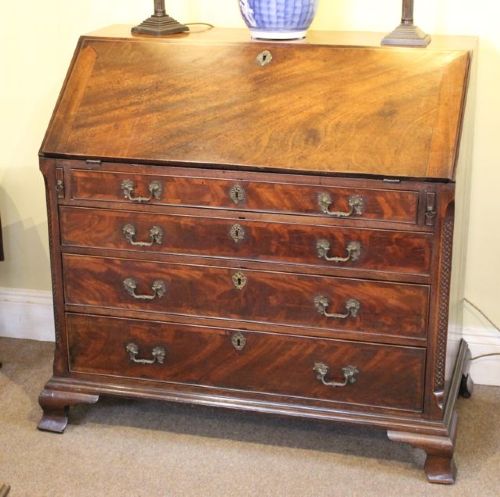
A georgian sloped desk is a working writing piece featuring a hinged fall front, built for correspondence and record-keeping.
Georgian Sloped Desk
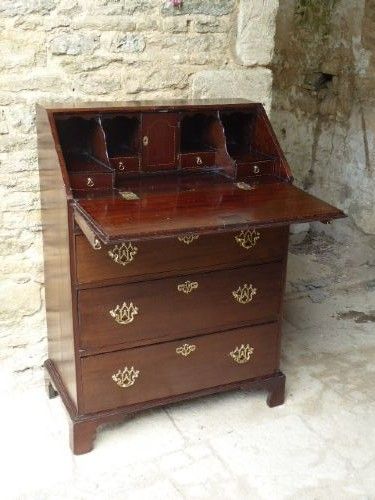
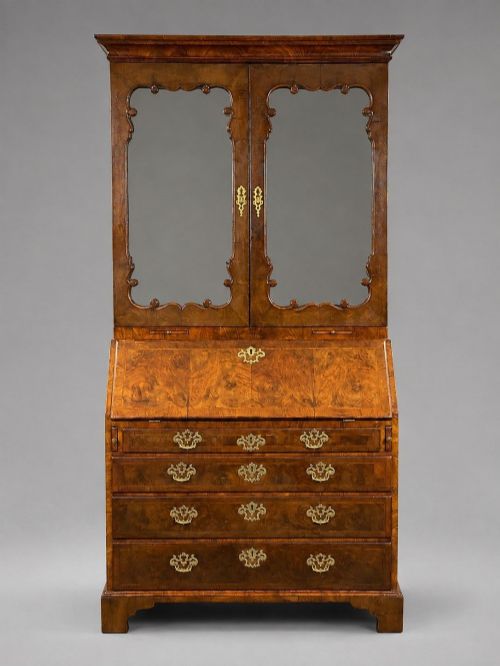
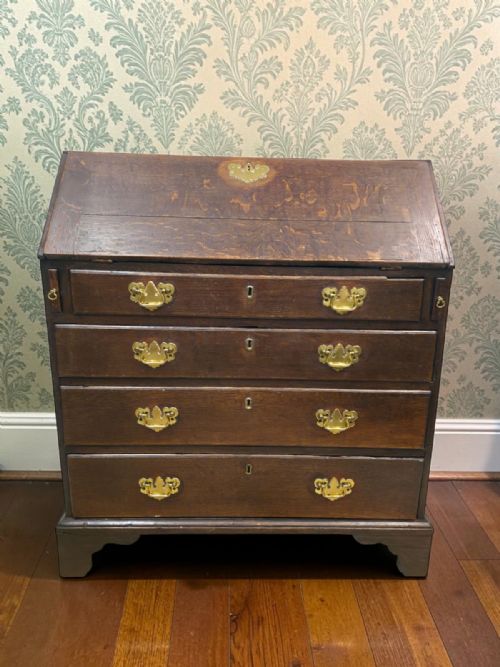
A georgian sloped desk encompasses items built primarily during the eighteenth and early nineteenth centuries, covering periods from Queen Anne through to Regency and Late Georgian. The selections here include bureau bookcases, writing slopes, davenports, and standard bureaux featuring fall fronts.
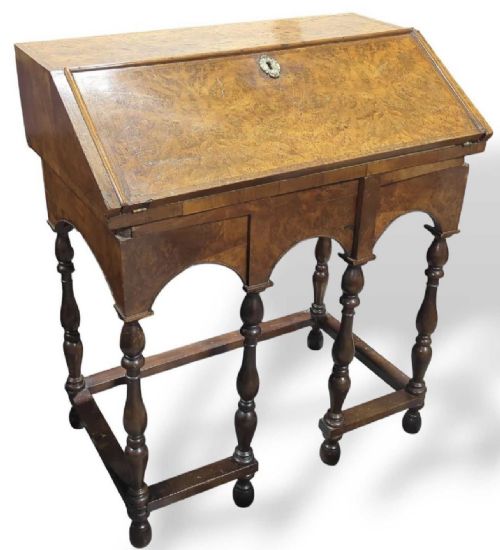
Most examples found on this page consist of mahogany and oak bureaux from the eighteenth century, alongside smaller portable writing slopes and bureau on stand variants. Regional and provincial pieces appear alongside formal cabinet work, spanning walnut, yew wood, and fruitwood timbers.
Cabinet makers constructed these objects to function as private writing stations, incorporating internal pigeonholes, small drawers, and secret compartments beneath the angled writing lid. Larger variations combine bookcase sections above, while clerk desks and campaign chests offer alternative utilitarian writing formats.
Materials and construction
Cabinet makers utilised dense native and imported timbers, predominantly mahogany, oak, and walnut, often applying burr veneers to principal surfaces to highlight natural wood figures. Secondary timbers such as cedarwood and deal appear internally within drawer linings and partitions.
Joinery techniques relied on dovetailed drawer construction, framed panels, and sturdy brass or iron hinges to support the heavy drop fronts. Drawer pulls and escutcheons utilised cast brass, while specialised pieces featured mother of pearl and bone inlay details or decorative painted finishes.
Listings feature pieces spanning the seventeenth, eighteenth, and nineteenth centuries, constructed from mahogany, oak, walnut, rosewood, and padauk.
Evaluating craftsmanship
Quality rests upon the selection of timber figures, evident in matched flame mahogany veneers and figured walnut selections that display deep natural warmth. Superior workshops achieved seamless drawer joins and retained original ironwork or brass hardware without modern replacements.
Proportion and interior arrangement separate standard utility items from masterwork examples, particularly where secret compartments and intricate pigeonhole configurations remain intact. The crispness of carved mouldings, bracket feet, and interior drawer construction defines the upper tier of surviving pieces.
The Georgian Sloped Desk Glossary
- Bureau
- A writing cabinet featuring an angled fall front that lowers to form a writing surface. It typically encloses a fitted interior of small drawers and pigeonholes.
- Fall Front
- The hinged sloping board on a desk or bureau that drops forward to provide a writing platform. When closed, it conceals the inner compartments.
- Writing Slope
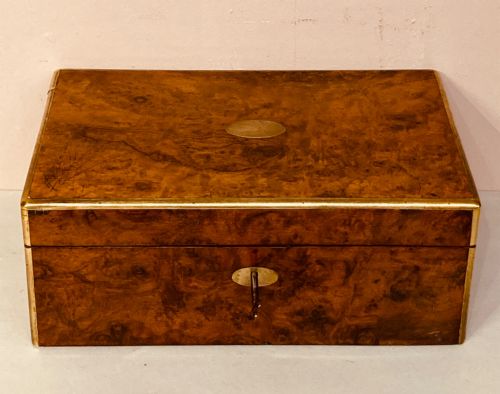
- A portable or table-standing box with an inclined lid designed for correspondence. These often open to reveal velvet-lined writing surfaces and inkwell compartments.
- Bureau Bookcase
- A tall piece of furniture comprising a lower bureau base combined with upper glass-fronted or panelled shelving for books. These dual-purpose items served domestic libraries and studies.
- Davenport
- A compact pedestal desk featuring a sloping top and side drawers, popular during the Regency period. They provide substantial storage within a small footprint.
- Escutcheon
- A protective brass plate surrounding a keyhole on a drawer front or fall lid. They prevent timber wear around the lock mechanism.
Georgian Sloped Desk: Frequently Asked Questions
What is a georgian sloped desk?
A georgian sloped desk is an eighteenth or early nineteenth century writing furniture piece equipped with an angled fall front lid. These items served domestic and clerical writing needs.
Inside, they house compartmented interiors designed for letters, documents, and writing implements. The sloping lid provides an ergonomic surface for handwriting when lowered.
How do you date a bureau?
Dating relies on examining timber choices, construction methods, and hardware styles across periods like Queen Anne, George III, and Regency. Early eighteenth century pieces often feature walnut or oak.
Later eighteenth century items frequently utilise mahogany with sophisticated veneer patterns and bracket feet. Secondary wood choices and interior drawer dovetailing provide further clues to exact eras.
What woods were used?
Cabinet makers utilised native timbers such as oak and elm alongside imported hardwoods like mahogany, rosewood, and padauk. Burr walnut and yew wood appeared on high-status decorative surfaces.
Secondary woods inside drawers typically included pine, cedarwood, or deal. Selection depended on regional availability and the intended status of the finished piece.
How were writing slopes used?
Writing slopes served as portable writing desks placed on tables or carried during travel. They held paper, pens, inkwells, and correspondence securely inside.
Wealthy owners utilised them in parlours or bedrooms before dedicated studies became standard. Their compact nature allowed writers to work comfortably in various rooms.