
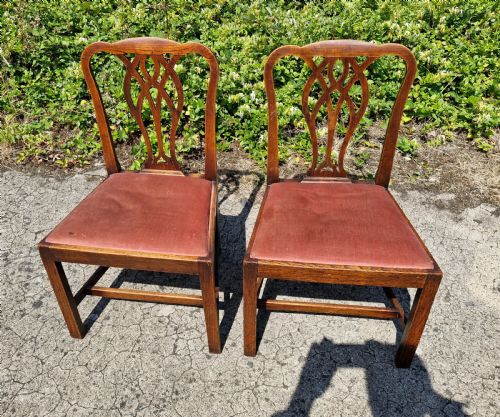
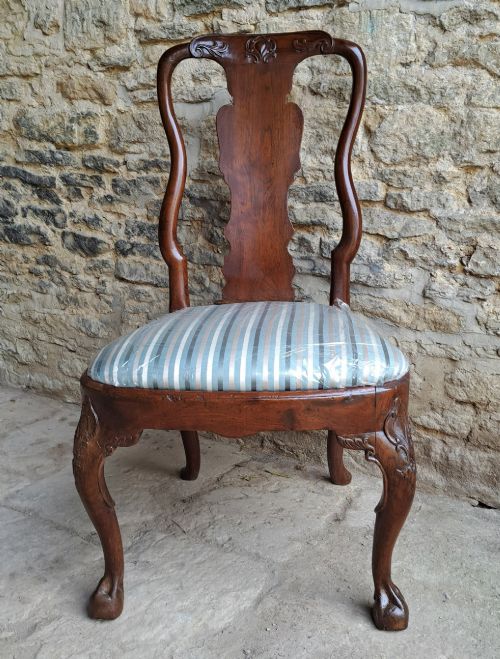
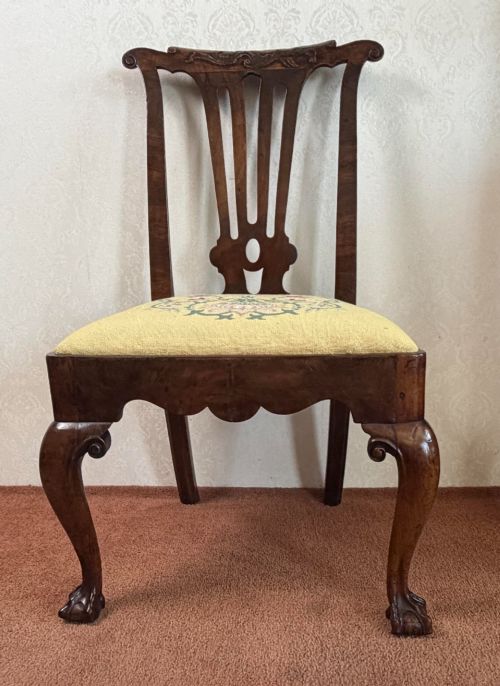
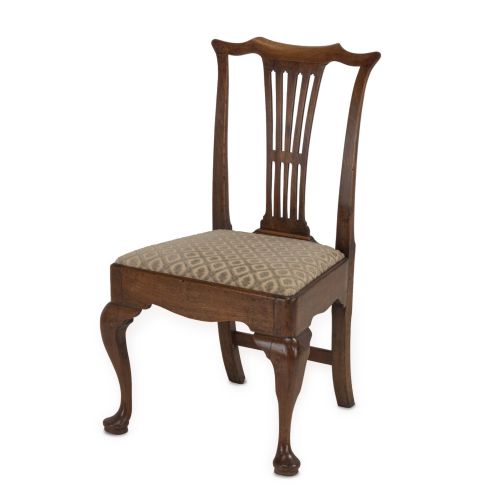
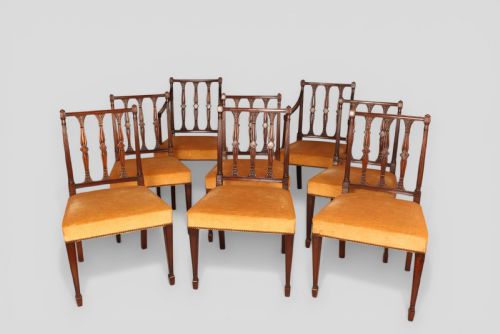
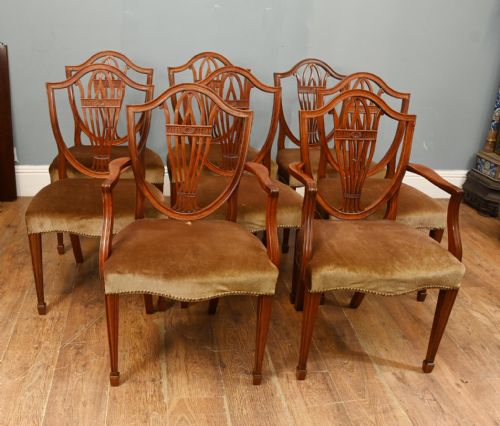


Georgian Single Chairs
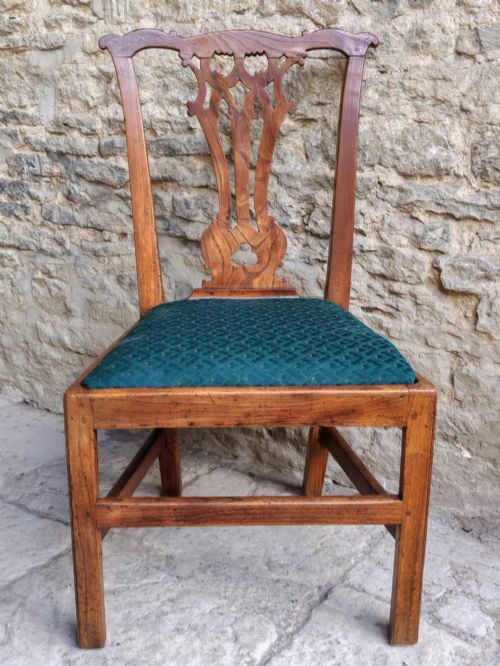
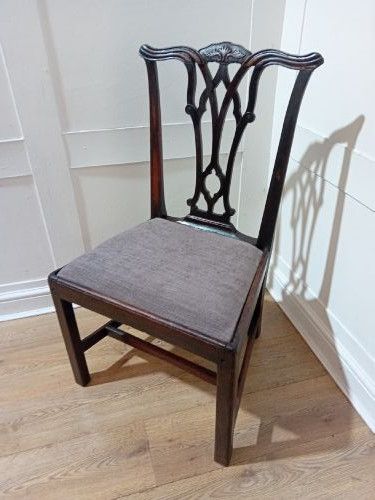
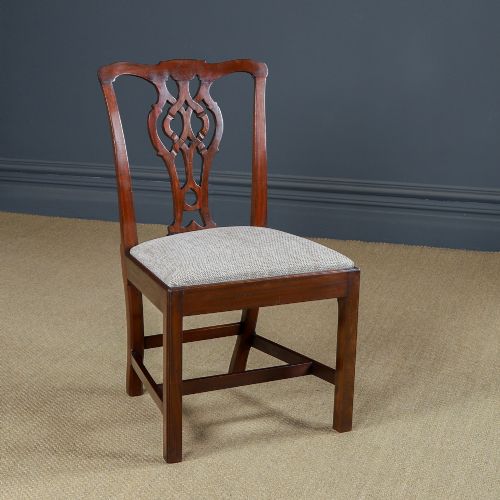
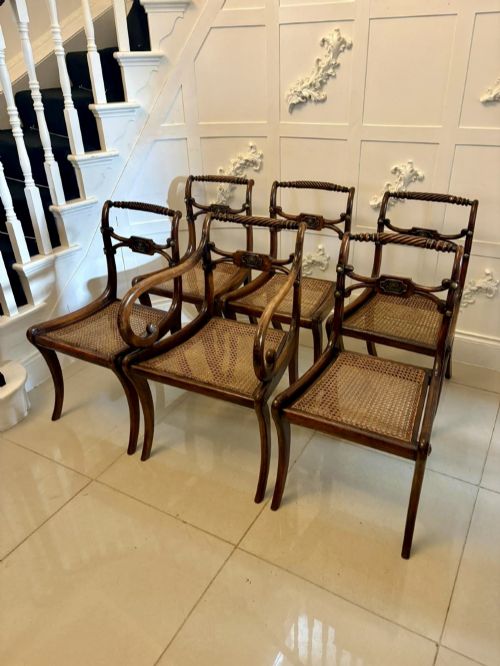
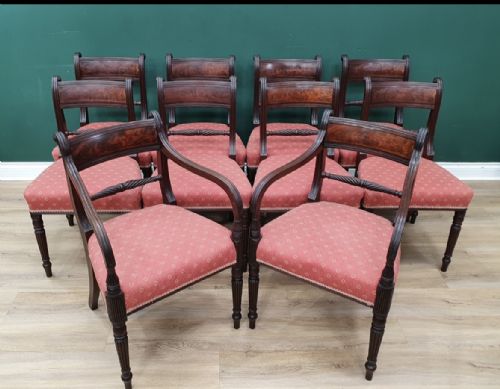
Georgian single chairs are timeless dining and hall seats built for versatility, and you will find mahogany and walnut examples ranging from simple elm country pieces to elaborate Chippendale and Hepplewhite designs.
Georgian Single Chairs
When you search for georgian single chairs, you encounter seating designed primarily for dining rooms, halls, and bedrooms across the eighteenth and nineteenth centuries. The selections include formal mahogany dining chairs alongside country elm and ash farmhouse models.
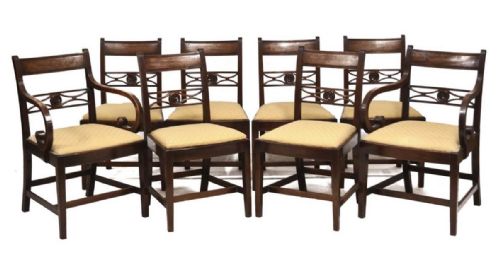
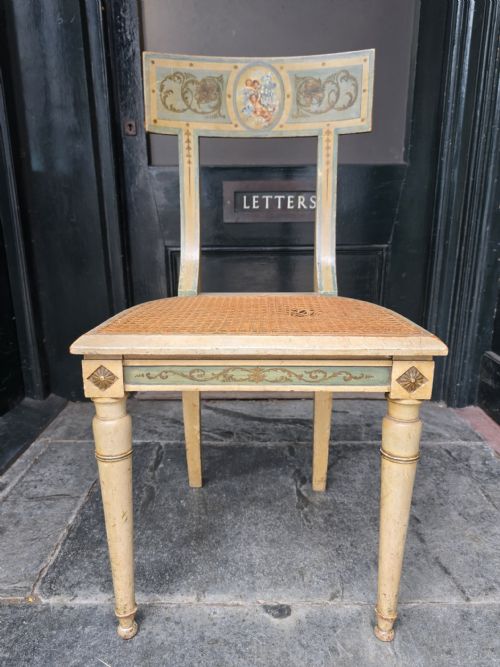
The materials span mahogany, walnut, elm, and oak, often paired with drop-in seats covered in fabric, leather, cane, or needlepoint. Many survive as pairs or larger sets, though individual side chairs and hall seats also appear frequently.
The styles trace a path from early walnut designs through George III Chippendale and Hepplewhite forms to later Regency and revival pieces. You will meet both original period furniture and later revivals from the nineteenth and early twentieth centuries.
How they were made
Joinery relied heavily on solid hardwoods like mahogany, walnut, and elm, shaped through turning, carving, and mortise and tenon construction. Cabinetmakers carved pierced splats and intricate details directly into the wood.
Seats incorporated drop-in frames upholstered in textile, velvet, leather, or woven cane. Secondary woods and brass details provided internal structure and decorative accents.
Some nineteenth century office desks borrowed standard dining chairs to keep paperwork upright.
What varies in quality
The calibre of timber and crispness of hand carving set the finest examples apart from standard workshop production. Dense mahogany and figured walnut with deep, sharp relief on the splats and rails indicate superior craftsmanship.
Structural integrity and the retention of original upholstery foundations, frame joints, and surface patination determine the standing of an individual piece. Sets that remain unified in timber and form carry greater consistency than assembled groups.
The Georgian Single Chairs Glossary
- Carver
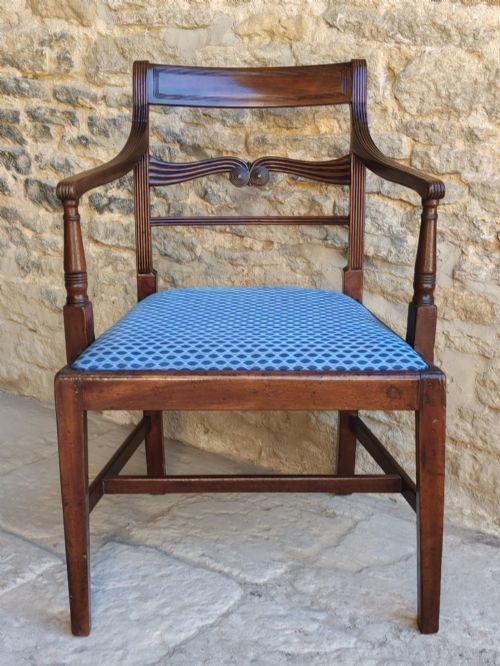
- An armchair designed to match a set of single chairs, usually placed at the head of a dining table.
- Drop-in seat
- A removable wooden frame upholstered separately and dropped into the seat rails of the chair.
- Side chair
- A chair without arms, intended for dining or occasional use around a room.
- Hall chair
- A rigid wooden seat, often un-upholstered, placed in an entrance hall and frequently carved with family crests.
Georgian Single Chairs: Frequently Asked Questions
How do I identify a true Georgian chair?
Examine the timber, construction methods, and design motifs such as pierced splats or carved cabriole legs. True pieces date from the reigns of the Georges between 1714 and 1830.
Look closely at the underside and joinery for signs of period hand-working rather than modern machine production.
Can I mix single chairs with a modern table?
These chairs pair effectively with contemporary dining tables to create a striking contrast of old and new materials. Their varied woods like mahogany and walnut add warmth to modern interiors.
Ensure the seat heights match your table clearance for comfortable daily dining.
How should I care for antique wood seats?
Maintain the wood by applying appropriate natural waxes sparingly and avoiding direct sunlight or radiator heat. This preserves the historic patination and prevents the timber from splitting.
Check the joints periodically to ensure the frame remains stable during use.
What is the difference between Chippendale and Hepplewhite styles?
Chippendale designs often feature interlaced ribbon or ladder backs with carved cabriole or straight legs. Hepplewhite pieces typically display shield-shaped or oval backs with slender tapered legs.
Both styles utilise mahogany extensively but handle carved ornamentation through distinct geometric vocabularies.