
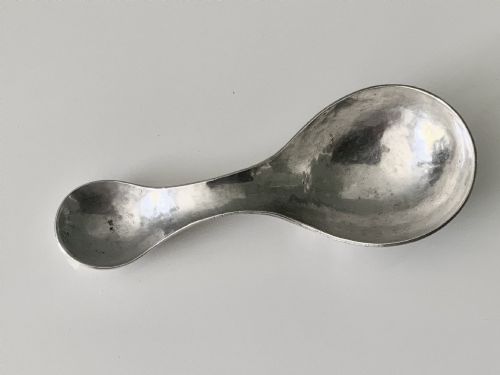
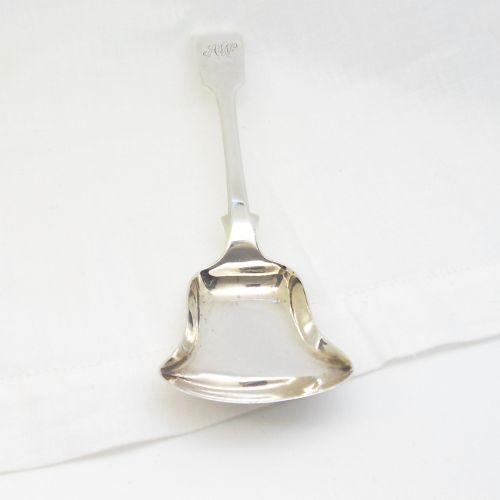
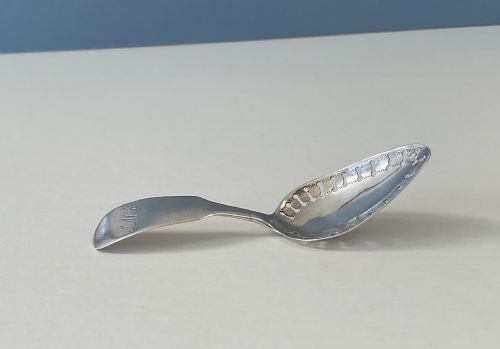


Georgian Silver Caddy Scoop
A georgian silver caddy scoop measures out dry tea leaves with precision and remains a tactile small-scale antique.
Georgian Silver Caddy Scoop
A georgian silver caddy scoop is a small utensil designed for measuring loose tea from a canister into a teapot. These items appear primarily in the form of specific spoons and scoops within broader silver and cutlery categories.
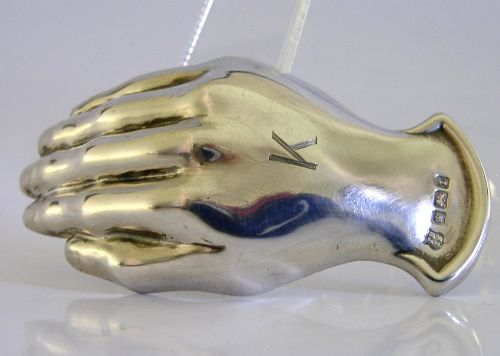
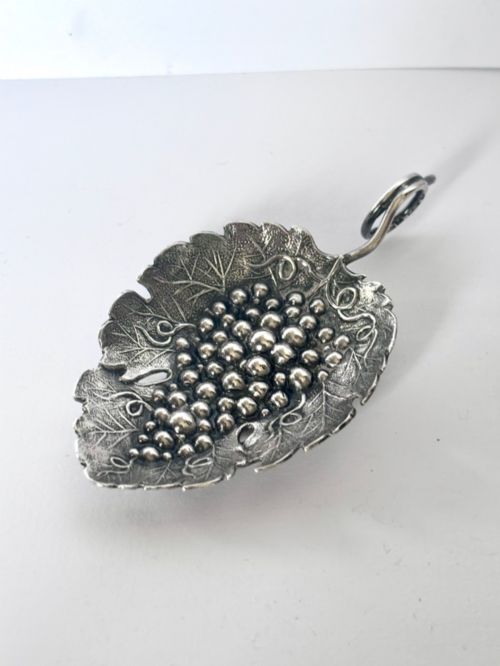
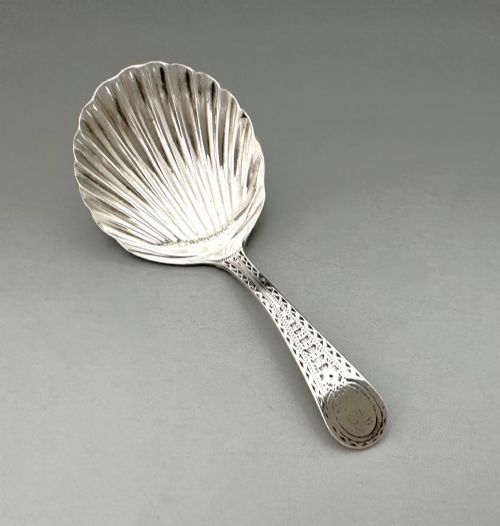
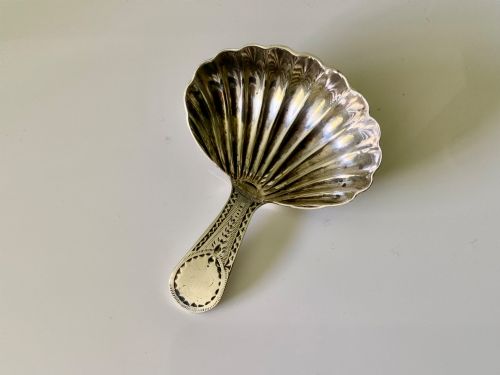
The most common examples on this page date from the Georgian period, often associated with the late eighteenth and early nineteenth centuries. Makers shaped these pieces into leaf patterns, shells, jockey caps, and simple shovel forms.
Regional variations span English, Scottish provincial, Irish, and London-made examples. The inventory also includes pieces crossing into Victorian, Edwardian, and later twentieth-century production dates.
Materials and construction
Silversmiths constructed these scoops predominantly from sterling silver, with select pieces receiving parcel-gilt or silver-gilt finishes. Working with sheet silver required precise cutting, hammering, and forming to create delicate bowls and handles.
Decoration relied on hand engraving, chasing, and double striking to impart texture such as vine veins or shell ribs. Makers stamped their work with hallmarks denoting town, date, and silversmith identity directly onto the metal.
Georgian Silver Caddy Scoop Retail Price Guide 2026
Typical asking prices for georgian silver caddy scoop among the pieces listed under this phrase on Sellingantiques today, from the lower quarter to the upper quarter. They describe what is for sale here now, not the wider market.
Silversmiths shaped tea scoops into miniature jockey caps, proving that eighteenth-century tea drinkers appreciated sporting novelties just as much as we do.
Distinctions in quality
Quality rests in the crispness of the original engraving and the structural integrity of the thin silver bowl. Pieces shaped as novelty items like jockey caps or vine leaves demand higher technical skill from the silversmith.
Clear, legible hallmarking adds authority to a piece, while crisp definition in double-struck handles separates standard production from superior output. Well-preserved gilding on parcel-gilt surfaces retains its original visual depth.
Joseph Willmore·John Walton·George Wintle
The Georgian Silver Caddy Scoop Glossary
- Caddy spoon
- A specialised small spoon used for measuring tea leaves from a caddy. These pieces typically feature shallow bowls and short handles.
- Parcel-gilt
- Silver objects having parts of their surface covered in a thin layer of gold. This technique highlights specific design elements like interior bowls.
- Double struck
- A method where the die is applied twice during manufacture to sharpen the pattern on a spoon handle. This creates deeper relief in the ornamentation.
- Hallmark
- An official stamp indicating the metal standard, place of assay, and date of manufacture. These marks provide historical proof of origin.
Georgian Silver Caddy Scoop: Frequently Asked Questions
What is a georgian silver caddy scoop?
A georgian silver caddy scoop is a small utensil designed specifically for transferring dry tea from a storage container to a brewing vessel. These objects date primarily to the late eighteenth and early nineteenth centuries.
Silversmiths shaped them into utilitarian shovels, naturalistic leaves, and decorative novelty forms. Each piece reflects the domestic tea-drinking rituals of the period.
How were these scoops used?
Users employed these small implements to measure out valuable loose tea leaves before the advent of tea bags. The short handle allowed the scoop to rest inside or beside the tea caddy.
Because tea was an expensive commodity, precise measurement was standard practice in middle and upper-class households. The spoon served as both a practical tool and a display of refined dining accessories.
How do I care for silver caddy scoops?
Care involves minimal handling and gentle cleaning using non-abrasive cloths suited for antique silver. Avoiding harsh commercial dips preserves the original surface and any remaining parcel-gilt finish.
Storing these items in dry, stable environments prevents tarnishing and protects the thin silver bowls from bending. Regular soft dusting is sufficient for maintenance.
How can I tell the period?
Dating relies heavily on the stamped hallmarks showing town marks, date letters, and maker symbols. Reference texts match these stamped letters to specific active years for the assay office.
Stylistic cues such as the hand engraving and form also indicate whether a piece belongs to the Georgian, Regency, or later Victorian eras.