

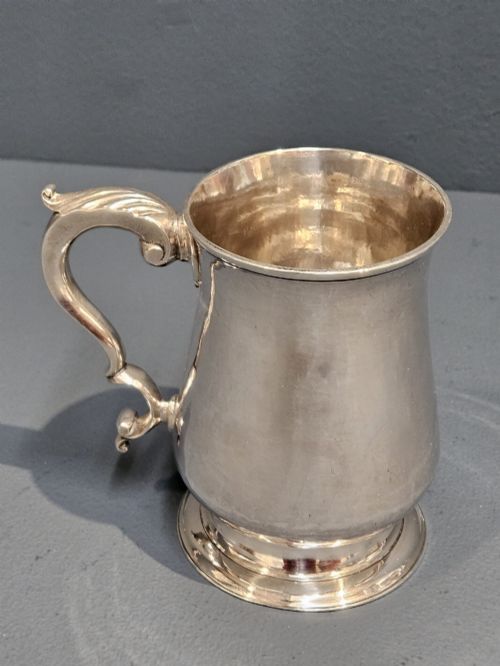


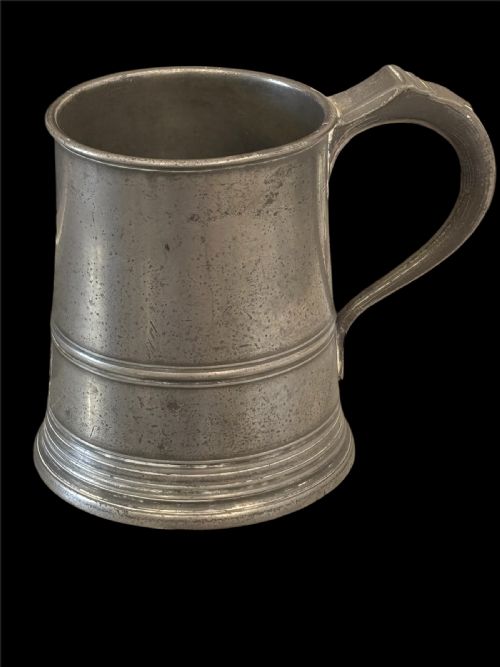


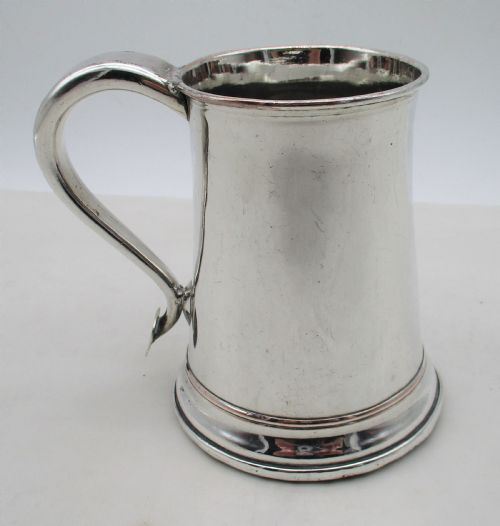
Georgian Silver Ale Mug
A georgian silver ale mug offers solid drinking vessels built in sterling silver, old sheffield plate, and pewter.
Georgian Silver Ale Mug
A georgian silver ale mug covers sturdy drinking vessels intended for daily use and hospitality during the eighteenth century and subsequent periods. These items take the form of tankards and mugs designed to hold pints or quarts of ale.
Most examples found here date from the eighteenth century, alongside pieces from around eighteen hundred and the nineteenth century. Buyers will frequently encounter versions made in old sheffield plate and sterling silver, as well as pewter variants.
The objects span simpler utilitarian vessels through to larger lidded tankards meant for domestic dining. They reflect the tavern and household drinking customs of their periods without unnecessary ornament.
How they were made
Makers shaped these drinking vessels from sterling silver, old sheffield plate, copper, and pewter using traditional metalworking techniques. Old sheffield plate combined a layer of silver fused to a copper base, creating durable vessels with the appearance of solid silver.
Master smiths formed the cylindrical bodies by raising or rolling sheet metal and joining the seams securely at the side. Handles were cast separately and soldered firmly to the body to withstand heavy daily lifting.
Gilding occasionally provided an interior lining to protect the metal from acidic contents and enhance the appearance of the piece. Surface finishes remained largely plain or featured simple linear bands suited to functional drinking vessels.
Georgian Silver Ale Mug Retail Price Guide 2026
Typical asking prices for georgian silver ale mug among the pieces listed under this phrase on Sellingantiques today, from the lower quarter to the upper quarter. They describe what is for sale here now, not the wider market.
Listings feature items spanning the eighteenth century, the year eighteen hundred, and the nineteenth century, executed in silver, old sheffield plate, and pewter.
What varies in quality
Quality rests upon the weight of the metal utilised and the integrity of the original construction. Solid silver and heavier old sheffield plate retain their structural form better over centuries of handling than thinner alternatives.
The proportion and balance of the handle relative to the cylindrical body dictate the aesthetic success of the piece. Clean solder joints and minimal distortion from past use separate the finer surviving examples from heavily worn vessels.
Richard Morton
The Georgian Silver Ale Mug Glossary
- Old Sheffield Plate
- A composite material made by fusing a thin sheet of silver to a thick copper core. This technique predates electroplating and produces characteristic subtle copper edges on older pieces.
- Pewter
- A malleable alloy consisting largely of tin combined with copper and antimony. It provides a muted grey alternative to silver for historical drinking vessels.
- Quart
- A traditional volumetric capacity measurement equal to two pints. Quart tankards represent the largest drinking vessel category found in this group.
- Pint
- A standard measure for liquid capacity utilised in tavern and domestic mugs. Pint mugs offer a more compact drinking format than larger tankards.
- Tankard
- A tall drinking vessel featuring a single side handle, sometimes fitted with a hinged lid. They were produced extensively in silver, plate, and pewter throughout the georgian era.
Georgian Silver Ale Mug: Frequently Asked Questions
What is a georgian silver ale mug?
A georgian silver ale mug is a historical drinking vessel produced in silver, old sheffield plate, or pewter during the eighteenth century and surrounding periods. These sturdy items were designed for holding ale in homes and taverns.
The form generally includes a cylindrical body and a sturdy side handle, with some larger examples featuring hinged lids. They demonstrate the practical metalworking standards of their era.
How were these tankards used?
These vessels served for the consumption and serving of ale at table or in public houses. Their robust construction allowed them to withstand frequent handling and cleaning.
Larger quart tankards often circulated among groups or stood as centrepieces on dining tables. Smaller pint versions catered to individual drinkers.
How do I care for old sheffield plate?
Old sheffield plate requires gentle cleaning to preserve the thin silver layer fused over the copper base. Aggressive polishing can wear through the silver to reveal the underlying copper.
Utilise mild silver creams and soft cloths, avoiding abrasive brushes. Proper storage away from damp environments prevents corrosion of the base metal.
How can I tell periods apart?
Periods are identified through manufacturing techniques, material compositions, and stylistic shifts in the vessel bodies. Eighteenth-century pieces often display hand-beaten characteristics or early fused plate methods.
Later nineteenth-century and twentieth-century examples frequently show standardised manufacturing marks and alternative plating technologies. Examining the handle construction and base seams helps clarify the era of production.