

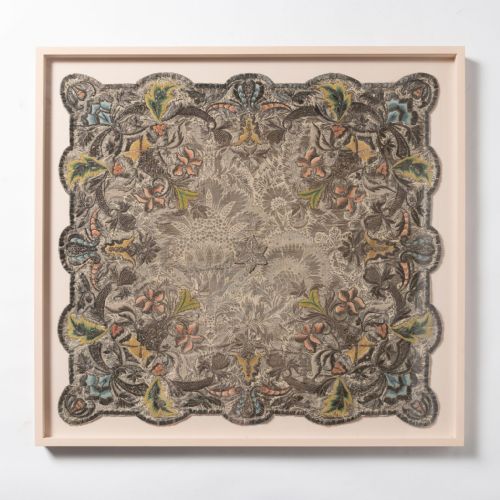


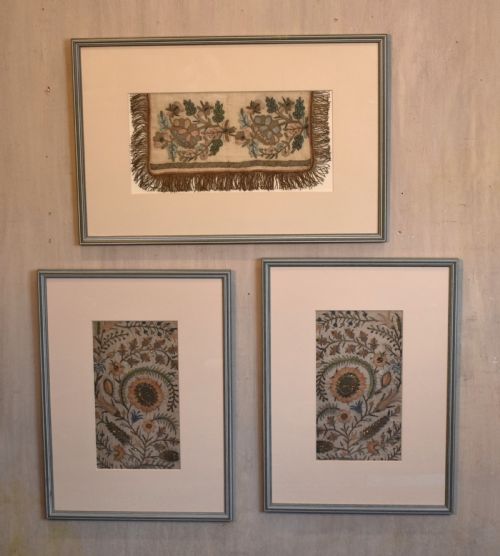
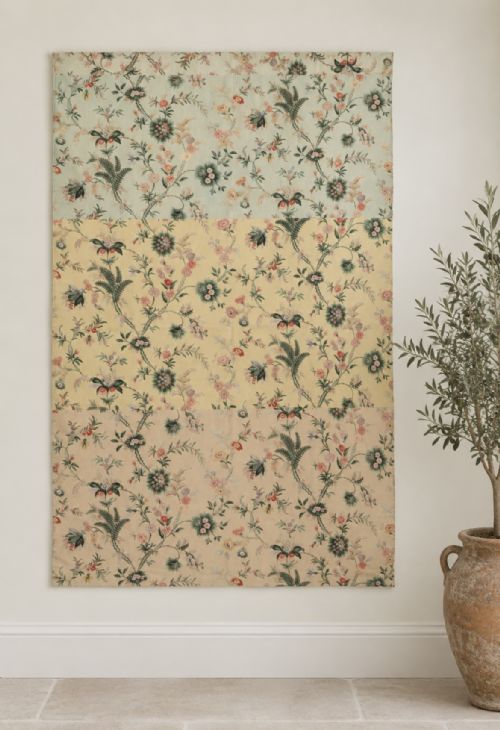


Georgian Silk Panel
A georgian silk panel brings centuries of meticulous needlework into a room, offering tactile historical charm through framed textile art and embroidered pictures.
Georgian Silk Panel
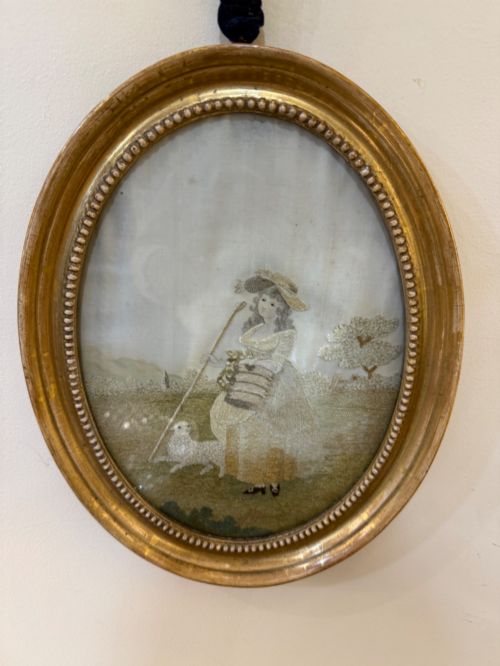
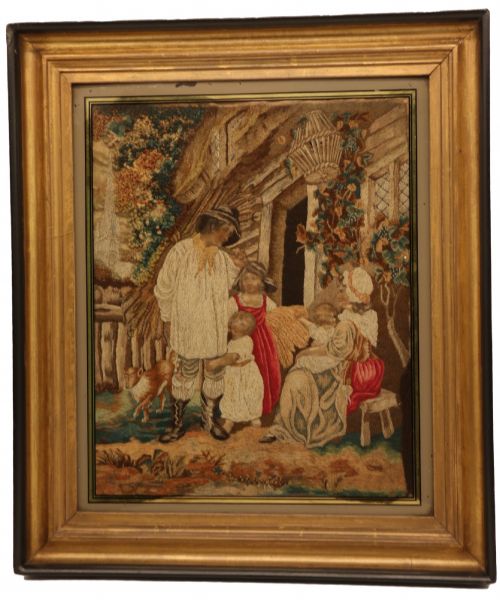
A georgian silk panel comprises framed textile art, needlework pictures, and samplers created primarily during the eighteenth and early nineteenth centuries. Buyers searching for this phrase typically find pictorial embroideries, band samplers, and pastoral scenes worked on fine fabric grounds.
The pieces appearing on this page range from religious needlework pictures and bird embroideries to lengths of patterned lampas and velvet hangings. Most examples arrive preserved behind glass within period wood, giltwood, or water-gilded oval frames.
Materials and construction methods
Maker materials combine silk thread, silk floss, and wool stitched onto linen or silk foundations, often incorporating hand-painted details alongside needlework. Frames utilise traditional timber construction, employing mahogany, giltwood, and water-gilded finishes to protect the fragile textiles.
Techniques range from crewel work and delicate silk embroidery to complex lampas weaving and ciselé silk velvet production. Artisans mounted these delicate panels securely within octagonal, oval, or rectangular wooden frames to ensure long-term preservation.
Georgian Silk Panel Retail Price Guide 2026
Typical asking prices for georgian silk panel among the pieces listed under this phrase on Sellingantiques today, from the lower quarter to the upper quarter. They describe what is for sale here now, not the wider market.
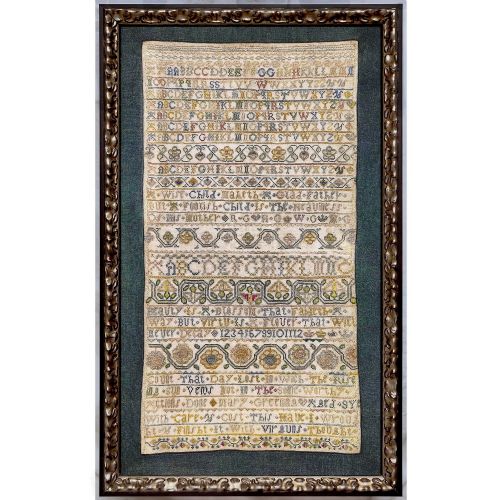
Young Mary Greening stitched her band sampler before the eighteenth century even reached its halfway point.
Distinctions in quality and execution
The housing contributes significantly to overall quality, with original water-gilded frames and secure glass mountings indicating superior historical care. Samplers signed and dated by young makers add documentary value through legible lettering and complete alphabetic or numeric rows.
Mary Greening·Louiss Elkins·Elizabeth Horn·Sarah Baker·Mary Mason·Martha Hall·Mary Street·Susan Mary Williams·Sarah Reading
The Georgian Silk Panel Glossary
- Sampler
- A piece of needlework produced as a demonstration or test of skill, often featuring alphabets, numerals, and moral verses worked by young girls. These textile documents provide helpful dates and maker names.
- Lampas
- A figured fabric where a pattern is formed by supplementary weft threads bound to a ground weave. This complex textile structure appears in eighteenth-century furnishing lengths.
- Ciselé velvet
- A velvet technique combining cut and uncut pile loops to create patterned motifs against a contrasting background. It creates rich texture on historical wall hangings.
- Crewel work
- Embroidery executed using wool yarn on a sturdy linen or cotton twill ground. This technique creates robust surface decoration with a distinct tactile weight.
- Giltwood
- Timber carved and coated with a thin layer of gold leaf or gesso for decorative framing. It provides a bright reflective border around antique textile panels.
Georgian Silk Panel: Frequently Asked Questions
How do I hang a textile panel safely?
Position framed textile panels away from direct sunlight and strong artificial heat sources to protect delicate silk threads and hand-painted pigments from fading. Ensure the hanging wall remains free from dampness to prevent mildew developing on the historic fabric.
Utilise secure picture hooks rated for the combined weight of the timber frame and glass. Check that the hanging wire and D-rings fastened to the reverse remain sturdy before mounting the piece on the wall.
What subjects appear in these embroideries?
Common subjects include pastoral farming scenes, religious stories, birds, and decorative floral arrangements worked in coloured silk and wool threads. Many educational pieces feature alphabets alongside moral verses and familial records stitched by young makers.
Narrative illustrations drawn from literature and folklore also appear within early nineteenth-century stitched pictures. Commemorative pieces mark significant national events, such as military achievements involving the Royal Artillery.
How should I clean antique silkwork?
Dust the exterior glass surface gently using a soft, dry microfibre cloth without applying liquid cleaning sprays directly near the frame edge. Avoid removing the protective glass backing or attempting to wash fragile historic silk threads at home.
Professional textile conservators should handle any structural repairs, cleaning, or stabilization required for damaged panels. Minimising physical handling helps preserve loose threads and aged fabric grounds from further degradation.
Are these samplers dated?
Many samplers include embroidered names, ages of the young makers, and exact completion dates stitched directly into the composition. These textual details help historians trace the origin and education of female needleworkers across the eighteenth and nineteenth centuries.
Unsigned pieces rely on stylistic indicators, frame types, and materials to suggest a broad period of creation. Comparative study of lettering styles and border motifs assists in narrowing down the date of anonymous works.