



Historic Silk Weave
Historic silk weave fragments bring centuries of textile artistry into a room, offering rich textures and complex historical narratives through woven threads.
Historic Silk Weave
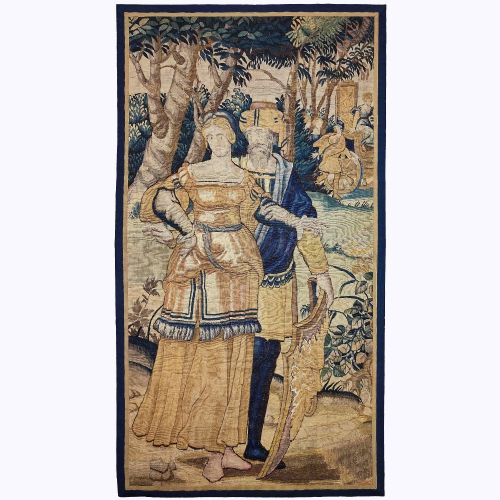
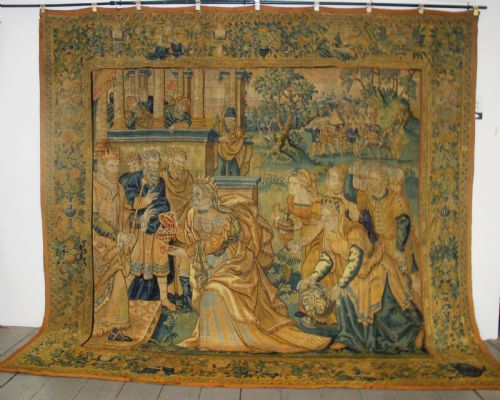
A historic silk weave encompasses sophisticated textile creations, frequently appearing on this page as fragments, cushions, wall hangings, and tapestries dating from the sixteenth century through the eighteenth century. Buyers seeking these pieces encounter items spanning major European centres of production, notably Flemish and French workshops.
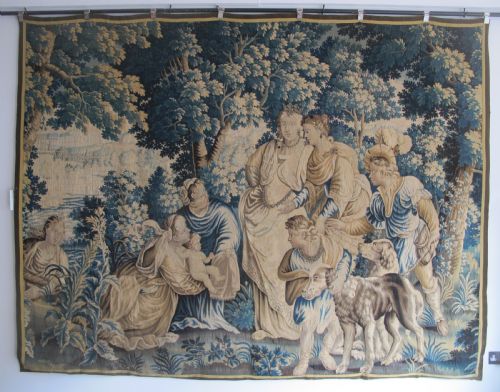
The selection ranges from large pictorial wall tapestries and verdure panels depicting landscapes to specialised lengths of bizarre silk lampas and ciselé silk velvet. These textiles served grand interiors, functioning as monumental wall decorations or luxurious soft furnishings that defined wealthy households of the period.
Many surviving examples take the form of panels or fragments salvaged from larger wall hangings, offering manageable portions of historical weaving for modern domestic spaces. Cushion covers and pilaster hangings also feature regularly, repurposed from grander decorative schemes while retaining their original material character.
How they were made
The creation of these textiles relied on complex loom techniques, combining silk with supporting threads of wool and linen to provide structural stability. Master weavers employed specialised mechanisms to execute intricate patterns, such as the asymmetrical designs characteristic of bizarre silks or the raised textures of ciselé velvet.
Tapestry weaving involved interweaving coloured weft threads through a warp on high-warp or low-warp looms, painting with dyed yarns to build pictorial scenes or botanical verdure. Velvets and lampas required advanced multi-shed loom setups to manipulate warp and weft floats, achieving high relief and contrasting matte and lustrous surfaces.
Historic Silk Weave Retail Price Guide 2026
Typical asking prices for historic silk weave among the pieces listed under this phrase on Sellingantiques today, from the lower quarter to the upper quarter. They describe what is for sale here now, not the wider market.
Some seventeenth-century weavers hid their initials within foliage, leaving tiny signatures for sharp-eyed owners to spot centuries later.
What varies in quality
Quality in these textiles rests upon the density of the weave, the complexity of the design, and the survival rate of the original fibres. Finer pieces demonstrate exceptional precision in the handling of pictorial detail, botanical foliage, or abstract motifs, reflecting the skill of the weaver and the quality of the raw materials.
The preservation of the silk pile, metallic threads, and ground fabrics distinguishes superior examples from those with extensive degradation or later restoration. Intact edge finishes, original dimensions, and minimal intervention by later hands elevate the standing of a textile fragment within its period.
The Historic Silk Weave Glossary
- Bizarre silk
- An umbrella term for asymmetrical, exotic silk textiles produced in the late seventeenth and early eighteenth centuries. These fabrics feature whimsical, large-scale patterns influenced by global trade and contemporary botanical discoveries.
- Ciselé velvet
- A velvet fabric featuring a pattern created by cutting some pile loops while leaving others uncut. This technique produces a low-relief design against a contrasting background.
- Lampas
- A figured textile woven on a patterned loom, featuring a ground weave and supplementary wefts that create the design. It often incorporates contrasting finishes to highlight the decorative motifs.
- Verdure tapestry
- A wall hanging depicting a dense landscape of foliage, trees, and often animals or birds. These scenes typically focus on woodland or garden views rather than human narratives.
- Pilaster hanging
- A long, narrow decorative textile designed to fit wall spaces between windows or architectural columns. They frequently utilise rich woven patterns or velvet to complement room interiors.
Historic Silk Weave: Frequently Asked Questions
What is a historic silk weave?
A historic silk weave refers to luxury textiles produced on handlooms during earlier centuries, incorporating silk yarns often blended with wool, linen, or metal threads. These materials formed grand wall decorations, furnishings, and wearable arts.
Today, surviving examples include wall tapestries, cushion covers, and specialised lengths of fabric like lampas and velvet. They represent centuries of European textile craftsmanship and interior decoration.
How were tapestries used in period homes?
Tapestries served primarily as functional wall insulation in large stone or wood-panelled rooms during the sixteenth and seventeenth centuries. Their thick weaves helped trap heat and block drafts in drafty castles and manor houses.
Beyond insulation, they functioned as major statements of wealth, status, and taste. Grand pictorial scenes and verdure landscapes transformed bare architectural surfaces into colourful narratives.
How do I care for a textile fragment?
Textile fragments require protection from direct sunlight, which fades delicate silk and wool dyes over time. Displaying pieces away from windows and utilising UV-filtering glazing helps preserve their remaining colour and structural integrity.
Cleaning should be left to textile conservation specialists rather than standard methods. Gentle vacuuming through protective mesh can remove surface dust without disturbing fragile threads.
How can I tell a sixteenth-century piece from an eighteenth-century piece?
Sixteenth-century works, such as early Flemish tapestries, often feature dense figurative compositions with heavier wool and linen foundations. Their designs reflect Renaissance or early Baroque aesthetic priorities and architectural scales.
Eighteenth-century examples transition toward lighter decorative schemes, including French Rococo influences and specialised silks like bizarre lampas. The colour palettes, weaving densities, and ornamental motifs shift in line with prevailing stylistic developments of the period.