







Antique Silk Brocade
Antique silk brocade brings woven luxury into a room, offering rich patterns formed with threads of metal and silk.
Antique Silk Brocade
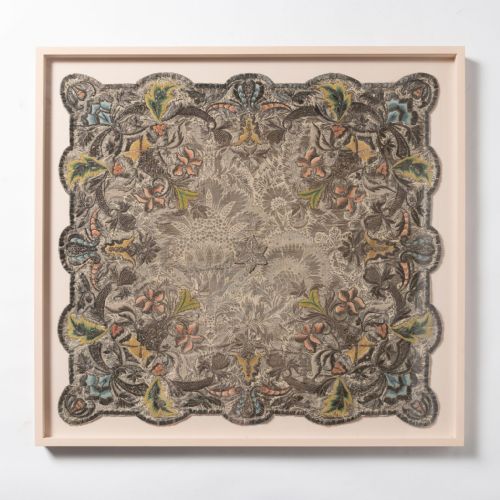
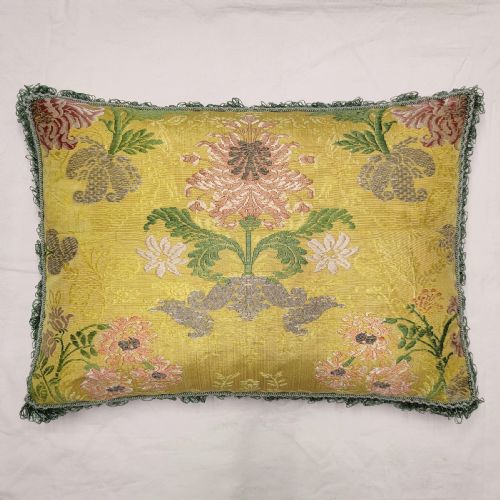
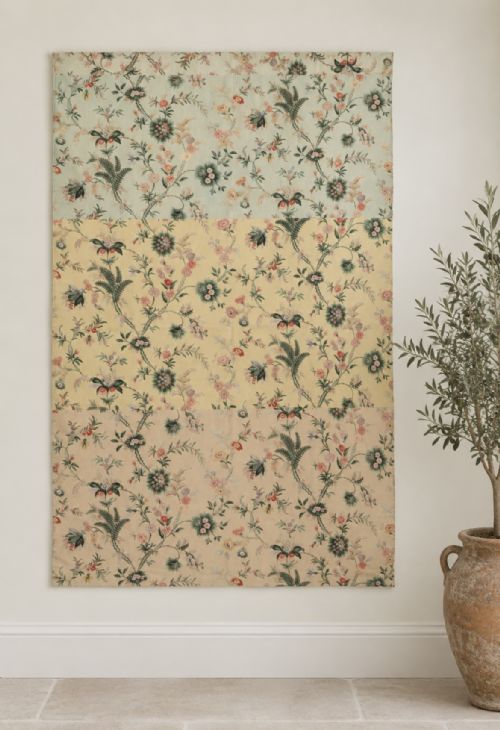
When buyers search for antique silk brocade, they are looking at historic woven textiles featuring raised decorative patterns often enriched with metal threads. These pieces arrive in various forms including cushions, wall hangings, framed panels, and traditional garments.
The versions most commonly met on this page date from the eighteenth and nineteenth centuries, originating from French, English, Central Asian, and Japanese sources. They appear as standalone lengths of fabric or integrated into seating such as settees and armchairs.
Geographic origins span from French chateaux to English country houses, along with Uzbek and Indian traditions. Each piece reflects the aesthetic of its period, ranging from early Bizarre silk lampas to later floral and geometric compositions.
How they were made
Makers utilised silk as the primary foundation for these textiles, weaving supplementary warps or wefts to create the characteristic raised patterns of brocade. Skilled artisans often incorporated silver metal thread to add lustre and contrast to the silk ground.
Many items combine textile work with traditional framing and upholstery techniques, mounting delicate fabrics within giltwood, rosewood, or beech frames. Others involve hand-stitching silk panels into cushions, wall panels, and garments using cotton and thread support.
Antique Silk Brocade Retail Price Guide 2026
Typical asking prices for silk brocade among the pieces listed under this phrase on Sellingantiques today, from the lower quarter to the upper quarter. They describe what is for sale here now, not the wider market.
Some nineteenth century sets included matching silk love seats designed specifically for lengthy polite conversations.
What varies in quality
Quality rests in the complexity of the weave and the density of the metal thread work utilised by the maker. Early Bizarre silks and fine French eighteenth century panels demonstrate superior precision compared to later decorative lengths.
The integrity of the silk ground and the preservation of the woven pattern determine the distinction between pieces. Items retained in original frames or specialist mounts maintain higher structural consistency than altered garments or loose fabric lengths.
The Antique Silk Brocade Glossary
- Brocade
- A class of richly decorative shuttle-woven fabrics, often made in coloured silks with or without gold and silver threads. It creates a raised, embroidered appearance directly on the loom.
- Lampas
- A type of figured fabric where the background is formed by a warp and weft, with a secondary pattern-weft creating the design. This technique defines the complex eighteenth century lengths found in the collection.
- Giltwood
- Wood carved and then covered with a thin layer of gold leaf or gold paint. It provides the ornate framing seen on nineteenth century French armchairs and wall panels.
- Ukiyo-e
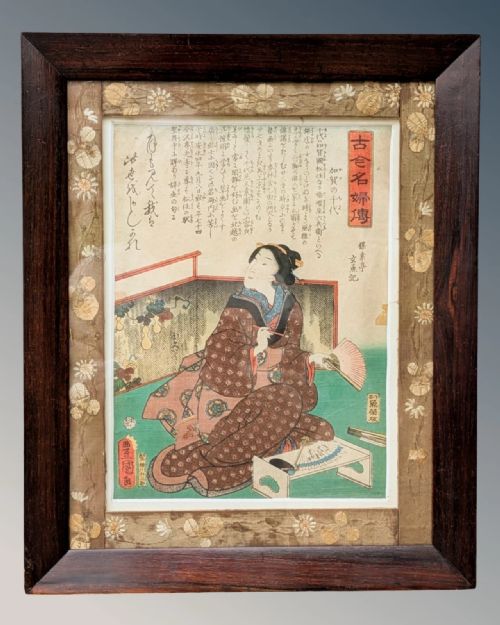
- A genre of Japanese art depicting scenes from everyday life, woodblock prints, and narratives. These prints occasionally incorporate silk brocade mounts within their framing.
Antique Silk Brocade: Frequently Asked Questions
What is antique silk brocade?
Antique silk brocade comprises historic woven textiles featuring raised patterns created with supplementary wefts of silk and metal thread.
These fabrics survive as framed panels, wall hangings, cushions, and upholstery on period seating.
How should I care for antique silk brocade?
These delicate textiles require protection from direct sunlight to prevent the silk fibres and metallic threads from degrading over time.
Displaying pieces behind glass, such as framed textile art or prints with silk brocade mounts, helps shield them from dust and handling.
Where were these textiles made?
The pieces originate from diverse global traditions, including eighteenth and nineteenth century France, England, India, and Central Asia.
Each region employed distinct weaving methods, such as the Uzbek metal thread work on red velvet garments or French lampas.
How can I date antique silk brocade?
Dating relies on stylistic evidence, material composition, and the specific weaving techniques employed during periods like the eighteenth or nineteenth century.
Early pieces often feature Bizarre silk designs, whereas later nineteenth century items appear in French boudoir settees and Japanese framed mounts.