
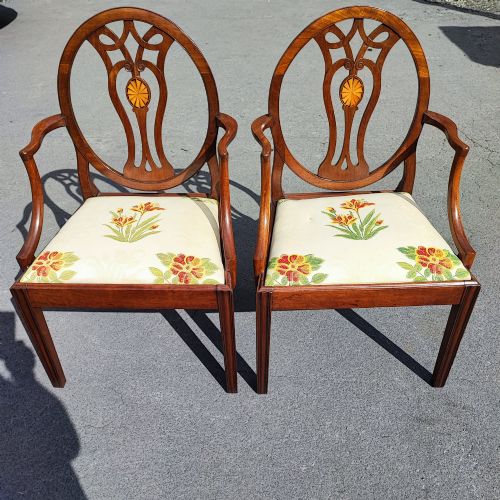
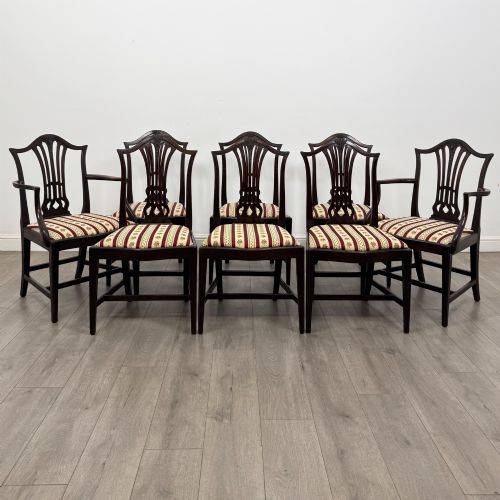
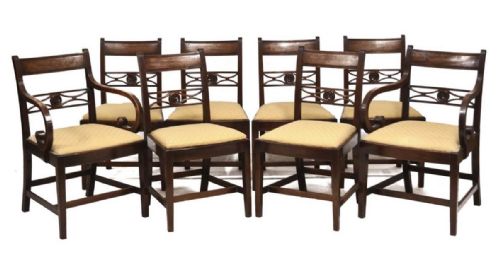
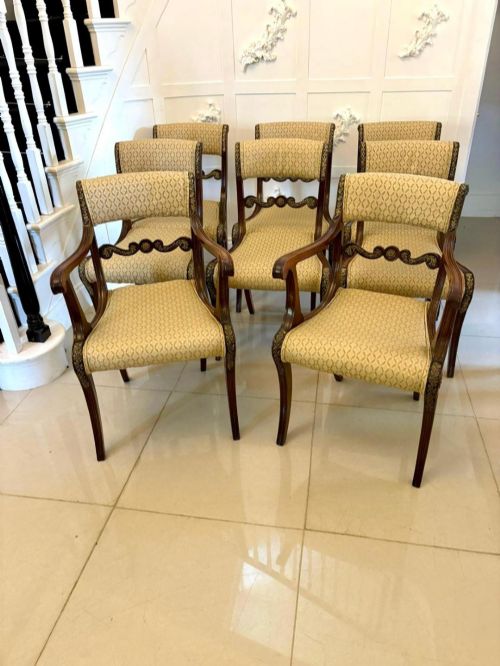
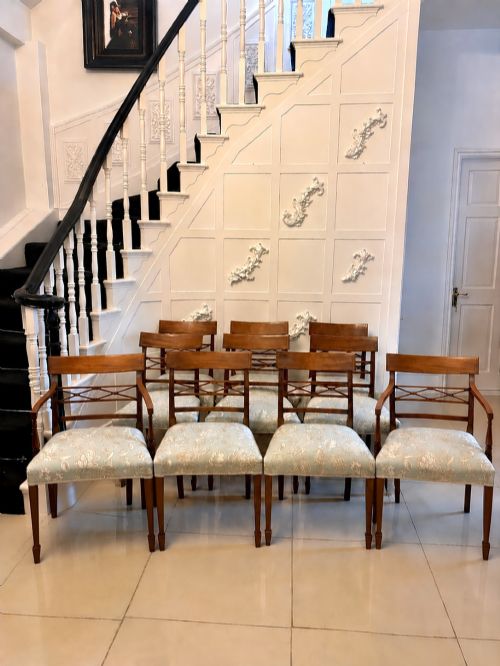
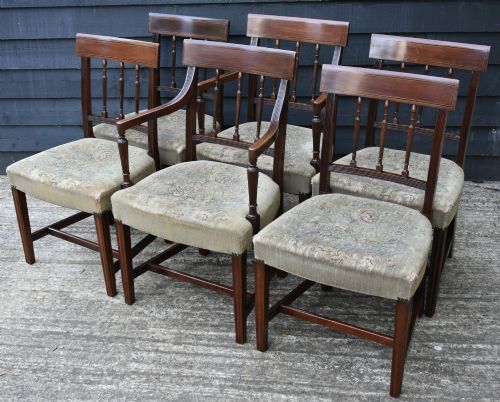
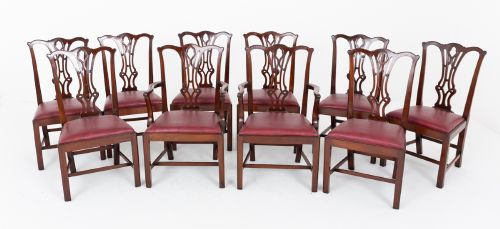
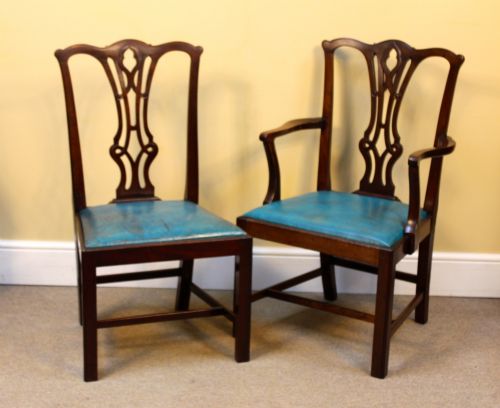
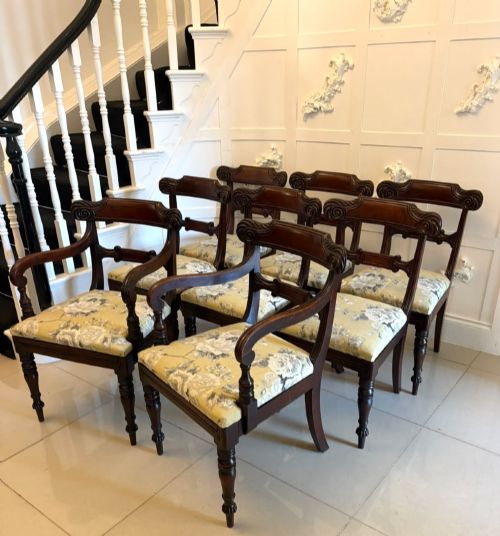
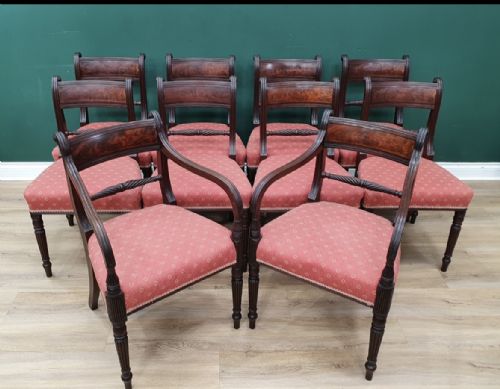
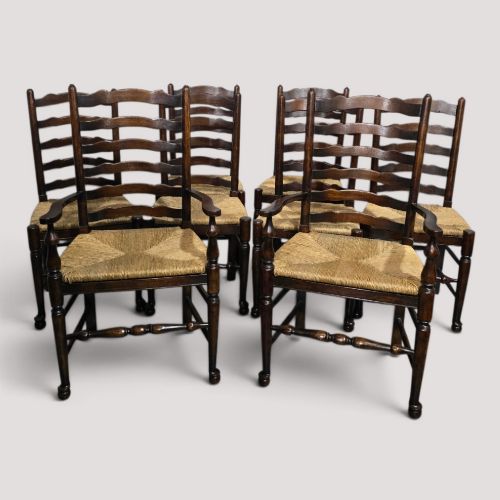
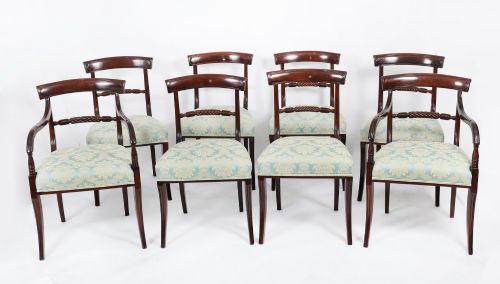
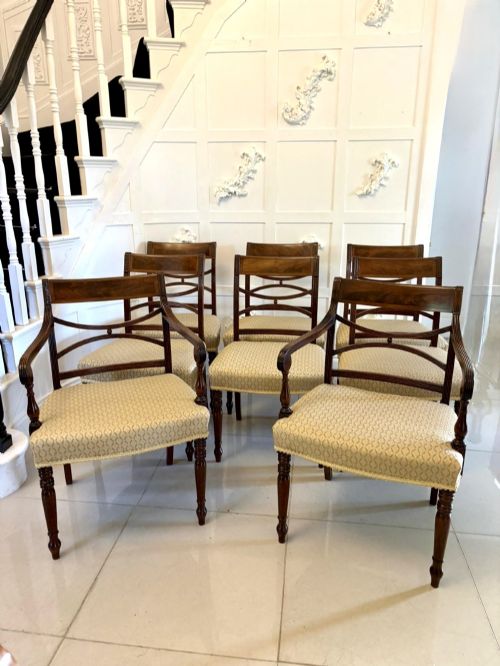
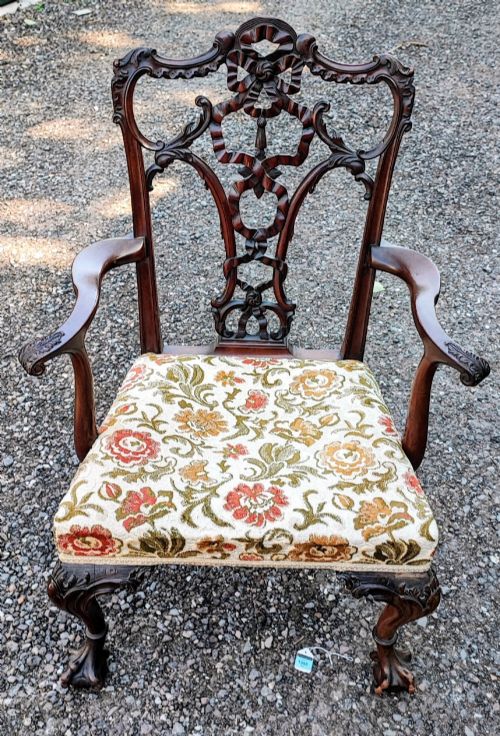
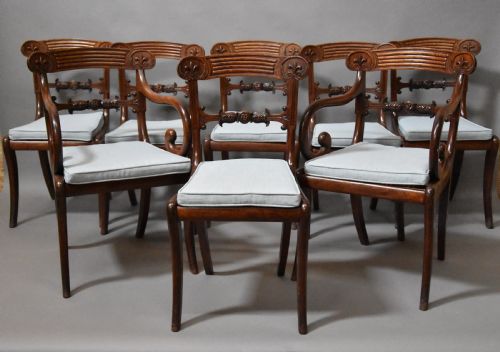
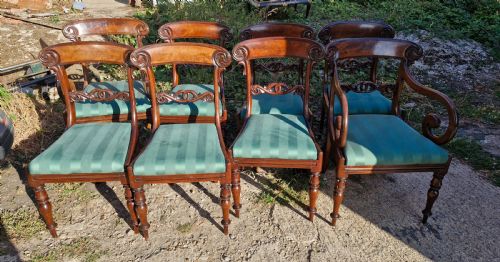
Georgian Side Armchair
When you search for a georgian side armchair, you are looking at substantial wooden seating spanning centuries of design from the 18th century onward.
Georgian Side Armchair
A georgian side armchair encompasses formal dining carvers, library chairs, and desk elbow chairs originating from the 18th century through the Regency period and later revivals. Buyers seeking this phrase encounter both authentic period seating and later interpretations produced during the 19th and early 20th centuries.
The form appears predominantly within sets of dining chairs featuring two carvers alongside multiple single chairs, as well as standalone library and desk armchairs. Styles span Chippendale, Hepplewhite, and Sheraton designs alongside robust regional variations.
Most examples found on this page utilise mahogany as the primary timber, complemented by satinwood, oak, rosewood, and ash. Upholstery ranges from plain fabric and leather to velvet.
How they were made
Cabinetmakers constructed these chairs using solid hardwoods such as mahogany and oak, employing traditional joinery to secure frames subjected to daily weight. Carved details on backs and arm terminals were executed entirely by hand.
Seat frames often incorporated drop-in upholstered pads or webbed foundations covered in leather, horsehair, or fabric. Inlays utilised contrasting timbers like satinwood alongside brass stringing to accentuate shield backs and tapered legs.
Listings feature mahogany, oak, satinwood, and rosewood across periods spanning the 18th century to the 1930s.
What varies in quality
Quality rests in the crispness of the hand-carving upon the splats and the selection of dense, well-figured timber for the show wood. Superior chairs maintain integrity in their frame joints without excessive strengthening or replacement components.
Proportion and stance dictate visual success, where well-balanced arm supports and carefully raked legs distinguish finer cabinet work from utilitarian production.
The Georgian Side Armchair Glossary
- Carver
- An armchair designed with open sides to accommodate formal dress, typically manufactured to match a set of single dining chairs. These pieces usually stood at the head and foot of a dining table.
- Bergere
- An enclosed upholstered armchair with wooden framing visible around the sides and back. These seats frequently incorporate cane panels or deep squab cushions.
- Ladder back
- A chair back featuring multiple horizontal wooden rails resembling steps between the upright stiles. This style appears in both rustic ash and formal mahogany formats.
- Splat
- The vertical central wooden member connecting the seat to the top rail of a chair back. Carving and piercing on this element define the distinct stylistic period of the seating.
Georgian Side Armchair: Frequently Asked Questions
What is a carver chair?
A carver chair is an armchair designed to match a set of single dining chairs. They were traditionally placed at the ends of a dining table.
These pieces share the stylistic motifs and timber of the accompanying dining chairs while providing supportive armrests.
How do I identify a George III chair?
George III chairs date from the long reign spanning the second half of the 18th century. They frequently display classic mahogany frames, pierced carved splats, and straight or cabriole legs.
Examination of the timber underneath and construction joinery helps confirm the period of manufacture.
Are these chairs suitable for daily use?
Period armchairs constructed from solid mahogany or oak offer robust structural stability for everyday seating. Checking the rigidity of the frame ensures they withstand regular sitting.
Many examples function well at a desk or around a dining table when paired with appropriate modern or antique tables.