


Georgian Settee
A georgian settee brings architectural grace to a room, offering seating built with centuries of cabinet-making skill.
Georgian Settee
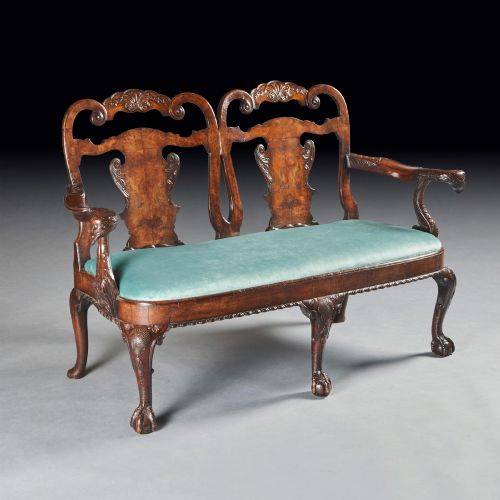
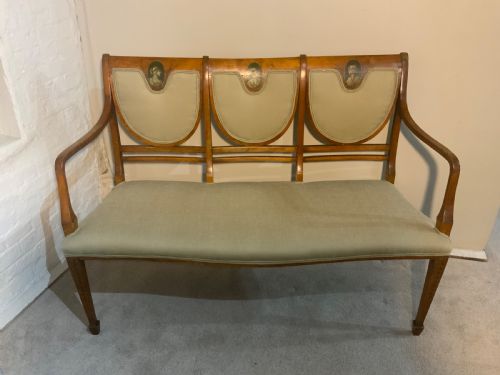
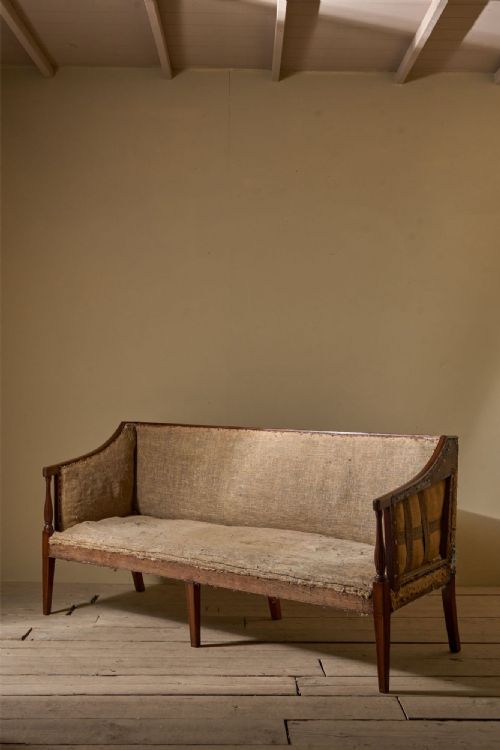
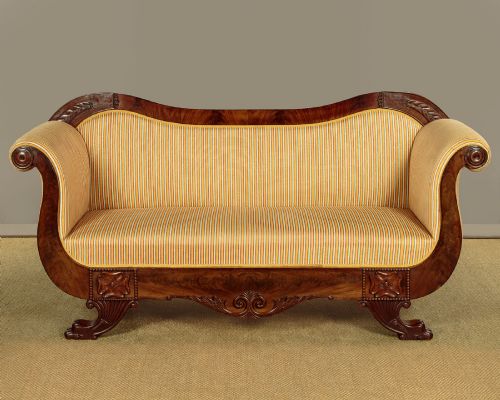
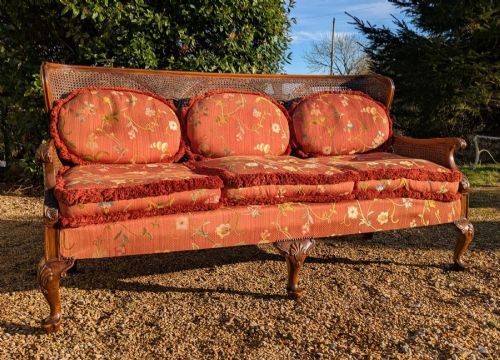
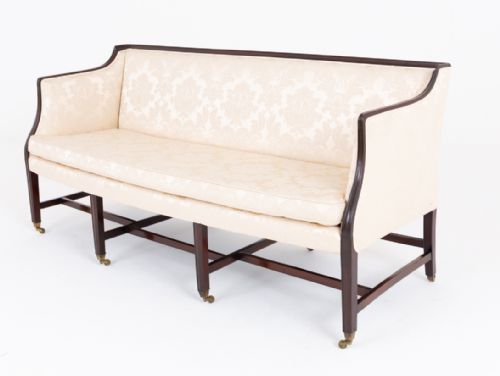
A georgian settee typically appears as a mahogany or walnut frame designed for two or more occupants, incorporating styles from George II and George III periods alongside later revivals.
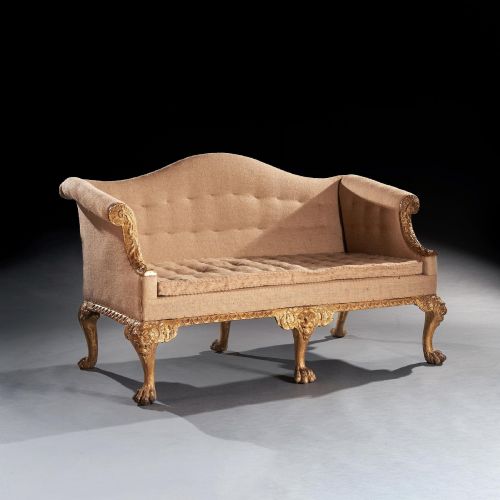
Buyers encounter serpentine camel backs, twin chair back designs, and scroll end couches spanning actual eighteenth-century pieces to twentieth-century revivals.
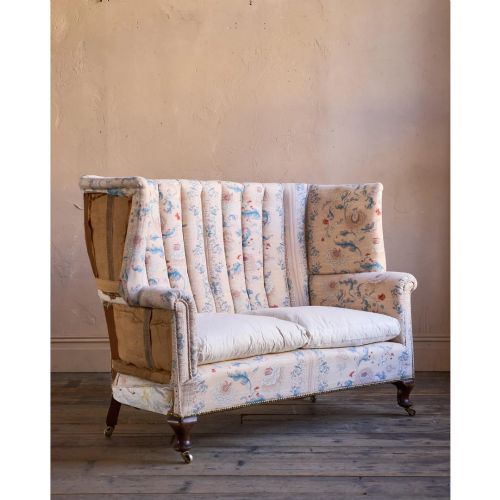
Forms range from simple ladderback frames to large upholstered sofas resting on cabriole or hairy paw feet.
Craftsmanship and Proportion
Quality rests in the crispness of carved details, such as lion mask hairy paw feet or intricate splats, versus softer, later machine work.
Proportion and structural integrity dictate the distinction between master cabinet-making and utilitarian framing.
Listings feature mahogany, walnut, satinwood, and rosewood across eighteenth-century and later revival periods.
Giles Grendey·Butlers of Dublin
The Georgian Settee Glossary
- Camel back
- A serpentine curved top rail resembling a camel's hump, popular on upholstered settees.
- Cabriole leg
- A furniture leg that curves out and then in, commonly ending in a pad or claw foot.
- Chippendale
- A style of eighteenth-century English furniture characterised by ornate carving and ribbon-back designs.
- Satinwood
- A durable yellowish wood utilised for fine cabinet work and decorative inlay.
Georgian Settee: Frequently Asked Questions
How do I spot a Georgian revival settee?
Revival pieces usually date from the late nineteenth or early twentieth century, utilising twentieth-century construction methods while copying earlier eighteenth-century aesthetics.
Examination of the timber underneath and tool marks often reveals the true age of the frame.
Were these settees used for sleeping?
Many scroll end couches and double-ended sofas functioned as daybeds for resting during daylight hours.
Deep seats and upholstered arms provided comfort for reclining without requiring a full bed.
What fabrics are correct for upholstery?
Original pieces utilised woven damasks, leather, or heavy textiles secured with brass tacks over hessian foundations.
Many surviving frames have been re-covered multiple times across different centuries to match changing interior tastes.
How do I care for antique wood frames?
Maintain timber frames by avoiding direct sunlight and keeping indoor humidity stable to prevent wood splitting.
Apply traditional wax sparingly to nourish polished mahogany and walnut surfaces without building up heavy residue.