

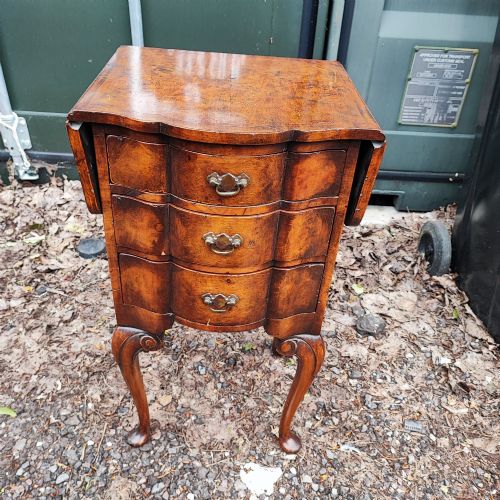
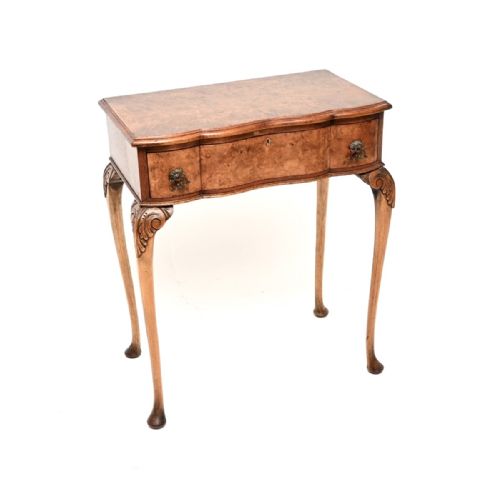

Georgian Serpentine Side Table
A georgian serpentine side table brings a subtle, flowing curve to a room, offering the structured elegance typical of eighteenth-century cabinet making.
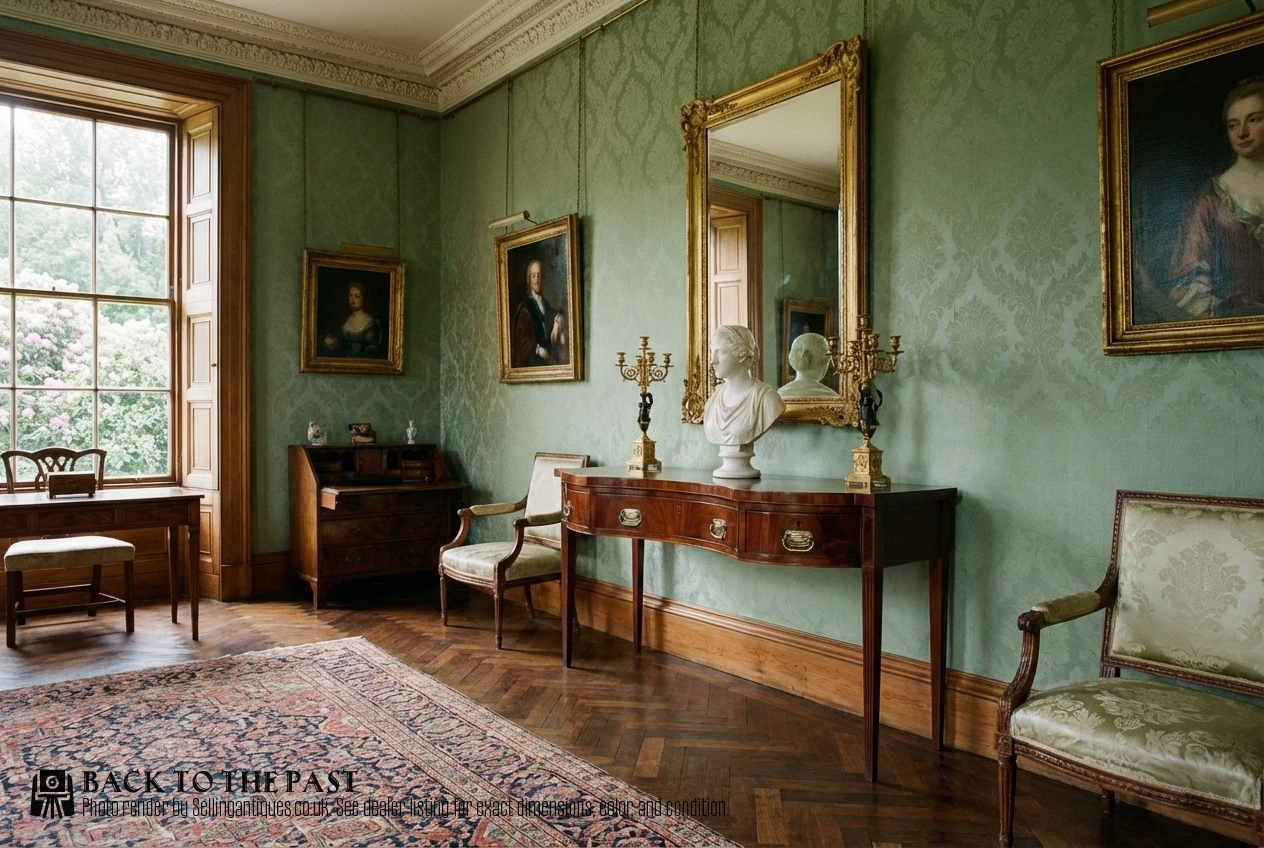
Georgian Serpentine Side Table
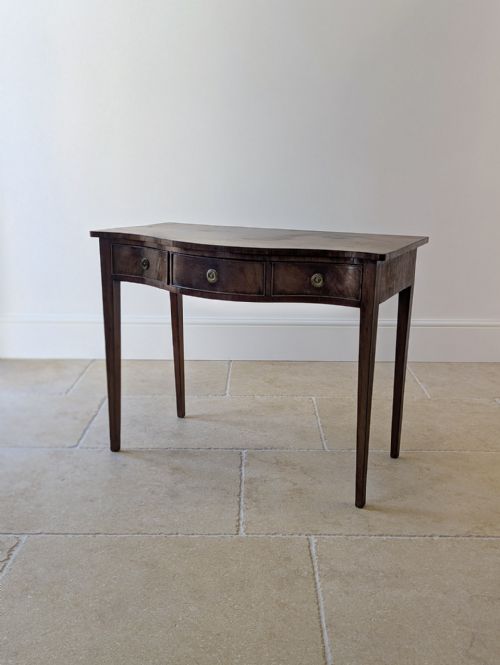
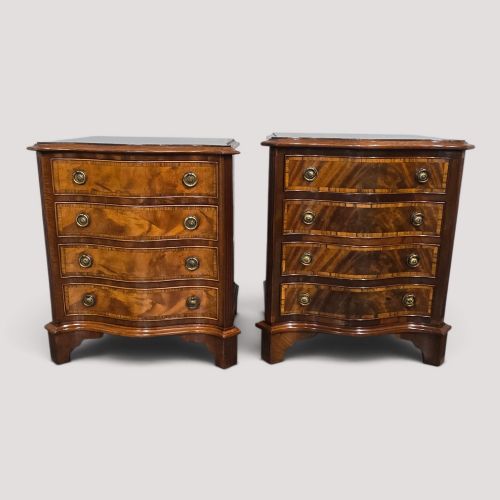
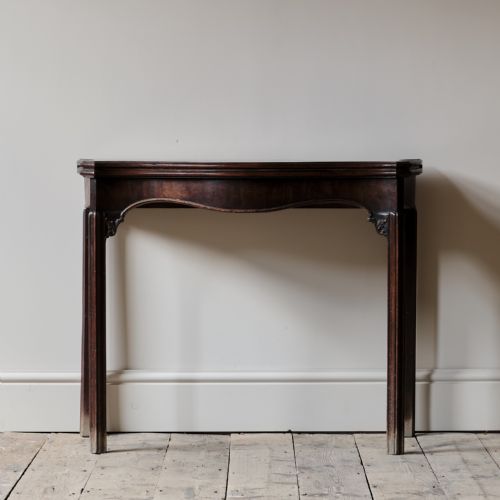
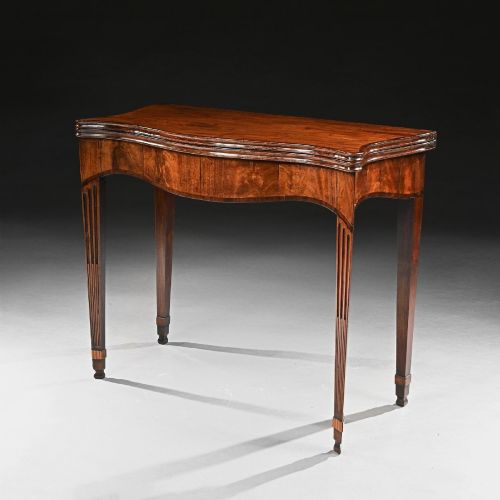
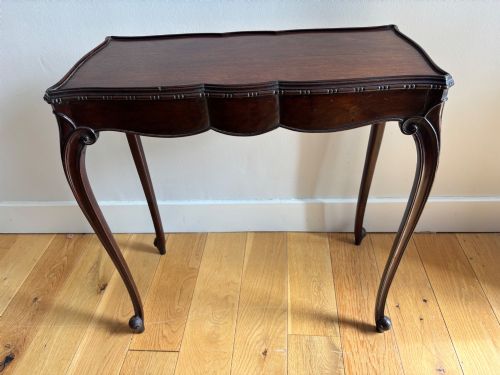
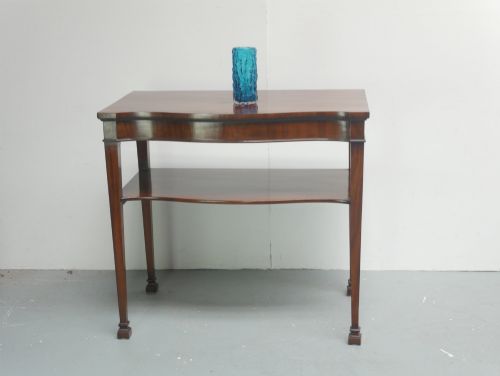
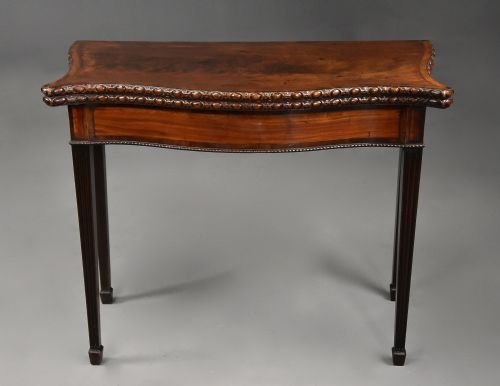
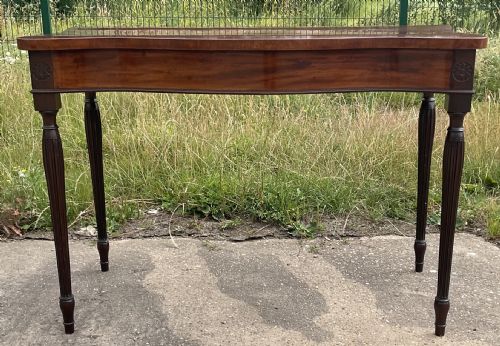
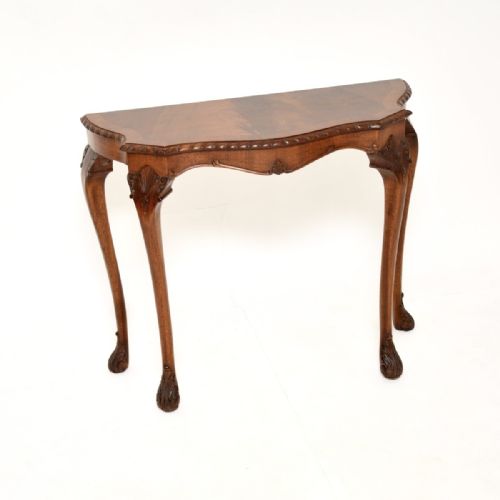
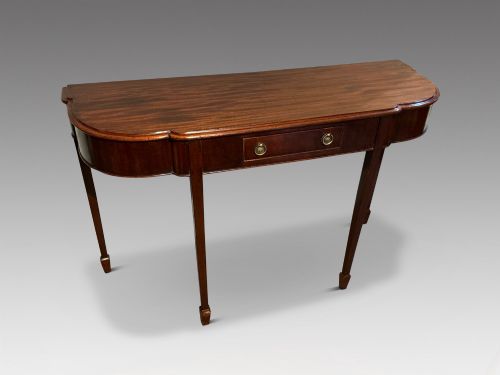
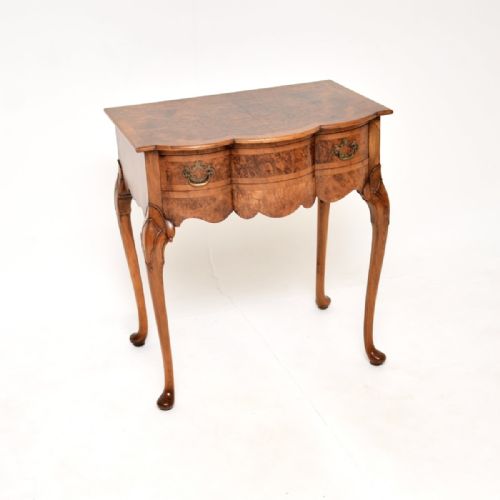
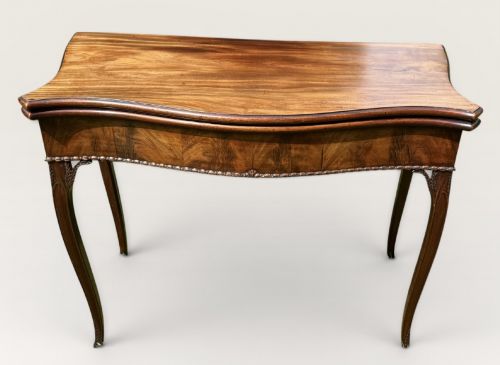
A georgian serpentine side table presents a characteristic undulating front edge, shaping wood into a gentle convex centre flanked by concave wings. The selection includes authentic eighteenth-century examples alongside later revivals from the twentieth century.
Makers adapted this curving profile for various domestic functions, resulting in card tables, tea tables, and console tables. These pieces served practical needs in reception rooms and hallways while displaying sophisticated joinery.
Period pieces span the Georgian era and the eighteenth century, joined by revival interpretations from Edwardian and later decades. Buyers encounter mahogany predominantly, supplemented by burr walnut, satinwood, and brass hardware.
How they were made
Craftsmen shaped solid timber and applied veneers over supportive secondary woods to achieve the complex curved silhouette. Flame mahogany veneer and burr walnut provided rich surface patterns that highlighted the undulating line of the front.
Joiners utilised precise hand-cut joints to construct the framework, incorporating folding mechanisms for convertible card and tea tables. Brass fixtures such as handles, hinges, and gallery rails added functional detail to the timber structures.
Listings feature mahogany, walnut, burr walnut, and satinwood, reflecting the principal decorative timbers utilised across Georgian and revival periods.
What varies in quality
The sophistication of the timber figure and the depth of the natural patina distinguish superior examples from standard ones. Figured mahogany and carefully matched burr walnut veneers demonstrate greater ambition in the workshop.
The execution of the serpentine curve itself reveals the maker's hand, particularly in how smoothly the convex and concave sections flow into one another. Crisp carving on legs and friezes elevates a piece above simpler, plain-fronted alternatives.
Gillow
The Georgian Serpentine Side Table Glossary
- Serpentine
- A furniture front shaped with a central convex curve between two concave ends. This contour requires precise woodworking to maintain structural integrity along the undulating edge.
- Patina
- The surface sheen and colour developed by wood over decades of handling and exposure to light. Original patination indicates a piece retains its early finish without harsh chemical stripping.
- Veneer
- A thin layer of figured timber applied to a stable secondary wood base. Flame mahogany and burr walnut veneers allowed cabinet makers to display dramatic grain patterns.
- Console table
- A table designed to stand against a wall, frequently secured with brackets or legs at the front. These tables served decorative and serving purposes in formal rooms.
- Card table
- A folding table equipped with a hinged top that opens to reveal a baize-lined playing surface. Eighteenth-century examples often featured clever pivoting leg mechanisms to support the open leaf.
Georgian Serpentine Side Table: Frequently Asked Questions
How do I spot an eighteenth century piece?
Examine the construction methods visible on the underside and drawer linings, looking for hand-cut dovetails and timber shrinkage consistent with age. Eighteenth-century examples display natural wear patterns and authentic patination developed over generations of use.
Compare the proportions and secondary woods against known period standards. Revival pieces from later centuries often employ different internal timbers and machine-made elements.
Where should I place a console table?
A console table fits naturally against a flat wall in a hallway, dining room, or living space. Its shallow depth ensures it occupies minimal floor space while providing a surface for lamps or decorative objects.
Positioning the piece beneath a mirror or painting creates a balanced focal point in a room. Ensure the curving front remains unobstructed so the silhouette can be fully appreciated.
What is a card table used for?
A card table provides a folding surface historically utilised for parlour games and card playing in the evening. The hinged top opens to double the surface area, supported by a swing leg or a gateleg frame.
In modern interiors, these tables function well closed as side tables or open as occasional writing desks. The clever folding mechanism offers versatile placement options in compact rooms.
How do mahogany and walnut differ?
Mahogany offers a dense, reddish-brown grain that takes a high polish and accepts fine carving details. Walnut provides a softer, warmer brown tone often enhanced by swirling burr figures.
Both timbers were favoured by period cabinet makers for their durability and striking appearance. Maintenance involves gentle cleaning and waxing to preserve the natural character of the wood.