
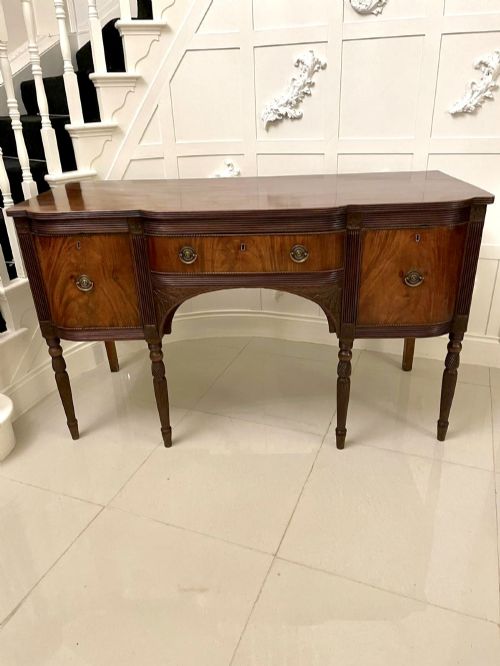


Reeded Leg Serving Table
A reeded leg serving table brings architectural grace to a dining room, offering slender turned supports and rich mahogany surfaces.
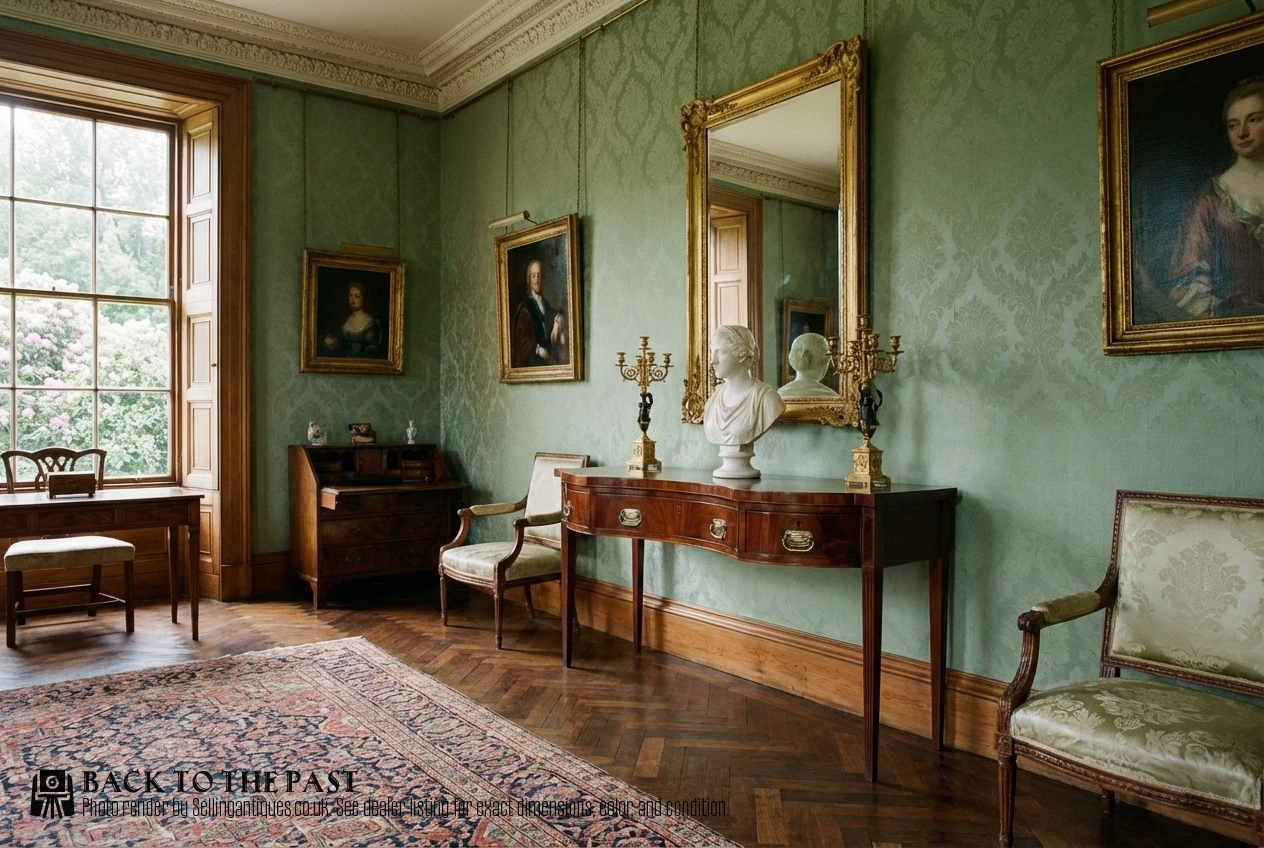
Reeded Leg Serving Table
When you search for a reeded leg serving table, you are looking at substantial dining furniture designed for serving food and displaying silver during the eighteenth and nineteenth centuries. The pieces on this page span several significant periods, including the Regency and George III eras, alongside later revivals.
The most common form you will meet on this page is the mahogany serving table, sometimes featuring multiple tiers, folding elements, or inlaid boxwood details. These tables served practical domestic functions in grand houses and smaller town residences alike, functioning as ancillary surfaces during large meals.
Originating primarily within British cabinet-making traditions, these tables often exhibit regional variations, such as the distinctive proportions found in Irish Regency examples. They sit comfortably alongside sideboards and console tables in historical hierarchies of dining room furniture.
How they were made
Cabinet-makers relied heavily on solid mahogany and flame mahogany veneer, selecting timber with deep grain patterns to catch the candle-light. Boxwood stringing and delicate wood inlay frequently punctuated the darker primary wood, providing subtle linear contrast.
The characteristic reeding on the legs was achieved through meticulous hand-carving or specialised scraping tools that created parallel convex mouldings. Brass castors and fittings were often incorporated into the design to allow these heavy timber pieces to move smoothly across dining room floors.
Materials appearing across the inventory include solid mahogany, flame mahogany veneer, brass hardware, and contrasting boxwood stringing.
What varies in quality
The distinction between standard domestic furniture and the finest workshop output lies in the selection of timbers and the crispness of the carved detail. Master cabinet-makers ensured that secondary woods and hidden framing matched the high standard of the visible mahogany surfaces.
Proportion and restraint in ornament separate superior examples from later revival pieces, where decorative flourishes can sometimes appear heavy-handed. The precision of the reeding along the legs and the integration of brass accents indicate the level of skill invested by the original maker.
Gillows of Lancaster and London
The Reeded Leg Serving Table Glossary
- Reeded
- A decorative moulding formed of parallel convex strips resembling bundled reeds. This technique softens the appearance of straight table legs and reflects light along the vertical axis.
- Mahogany
- A durable tropical hardwood prized for its rich reddish-brown colour and stable working properties. It dominated high-end British furniture production throughout the eighteenth and nineteenth centuries.
- Breakfront
- A piece of furniture featuring a central section that projects forward from the flanking wings. This architectural arrangement creates dynamic shadow lines across the front of a sideboard or serving table.
- Serpentine
- A gently undulating line curving outward at the centre and inward at the sides. This contour requires advanced woodworking skill to shape solid timber or veneer accurately.
- Dumbwaiter
- A tiered serving stand fitted with revolving circular trays on a central pillar. It allowed diners to help themselves to courses without the presence of servants in the room.
Reeded Leg Serving Table: Frequently Asked Questions
What is a reeded leg serving table used for?
These tables were historically placed against dining room walls to hold platters, tureens, and heavy silver during large meals before being served.
Today, they function well as sideboards in modern dining spaces or as console tables in grand hallways, providing generous surface area and historical character.
How do I tell a Regency table from a revival piece?
Original Regency and George III pieces exhibit construction methods appropriate to their period, such as hand-cut dovetails and timber shrinkage consistent with age.
Revival pieces from later periods often show more standardised machine tooling and different secondary woods beneath the mahogany veneers.
Are these tables suitable for everyday modern living?
Solid mahogany construction makes these serving tables remarkably durable and capable of withstanding daily domestic use.
Their narrow profile ensures they do not intrude too far into a room while still offering practical tabletop space for lamps or decorative objects.
What distinguishes Irish Regency furniture?
Irish pieces of this era frequently display bolder proportions, distinct timber selections, and sometimes more robust carving than their English counterparts.
Cabinet-makers in Dublin and regional workshops developed subtle variations in leg turning and bracket design that collectors learn to spot.