


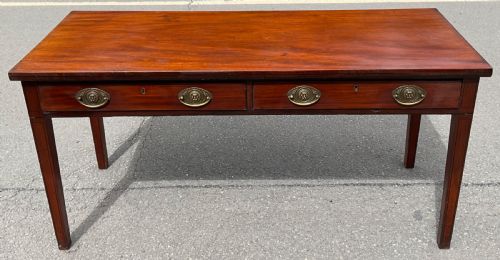


Rich Brown Serving Table
A rich brown serving table offers deep mahogany tones and generous proportions, bringing practical grandeur and timeless dining room utility to your interior.
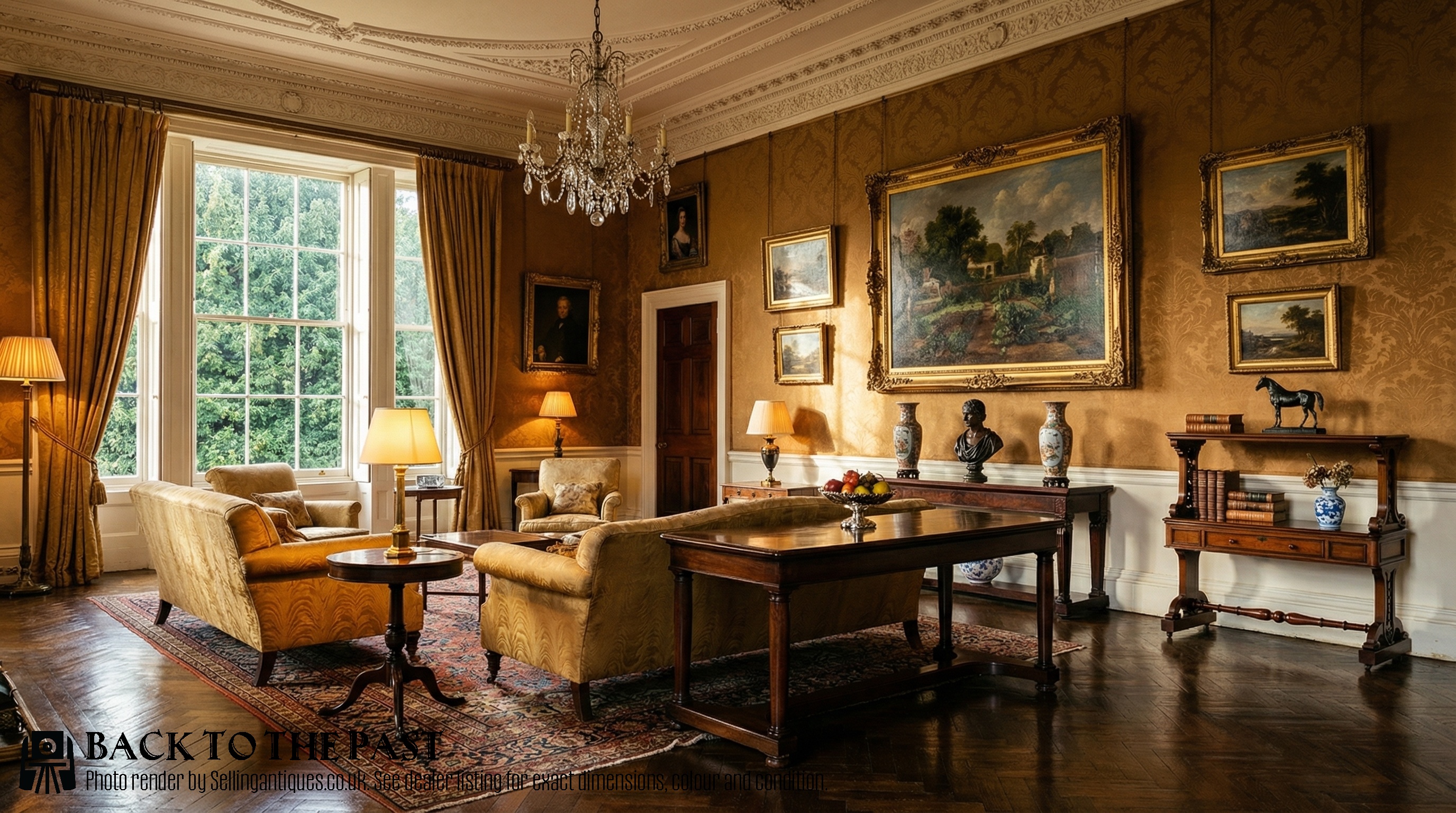
Rich Brown Serving Table
When you search for a rich brown serving table, you encounter substantial dining furniture designed to hold dishes, glassware, and silver during formal meals. These pieces function as central staging surfaces in traditional dining rooms, offering long rectangular tops supported by sturdy legs or pedestals.
The versions most commonly met on this page span the Georgian, Regency, and Victorian eras, along with Edwardian revivals. They appear variously as sideboards, servers, dumb waiters, and console tables, frequently showing the deep, dark timber tones characteristic of their period.
Makers from the late eighteenth century onward constructed these items to meet the demands of grand entertaining, employing considerable length and depth. You find them with single tier surfaces or multi-tiered arrangements, occasionally featuring serpentine fronts or carved details.
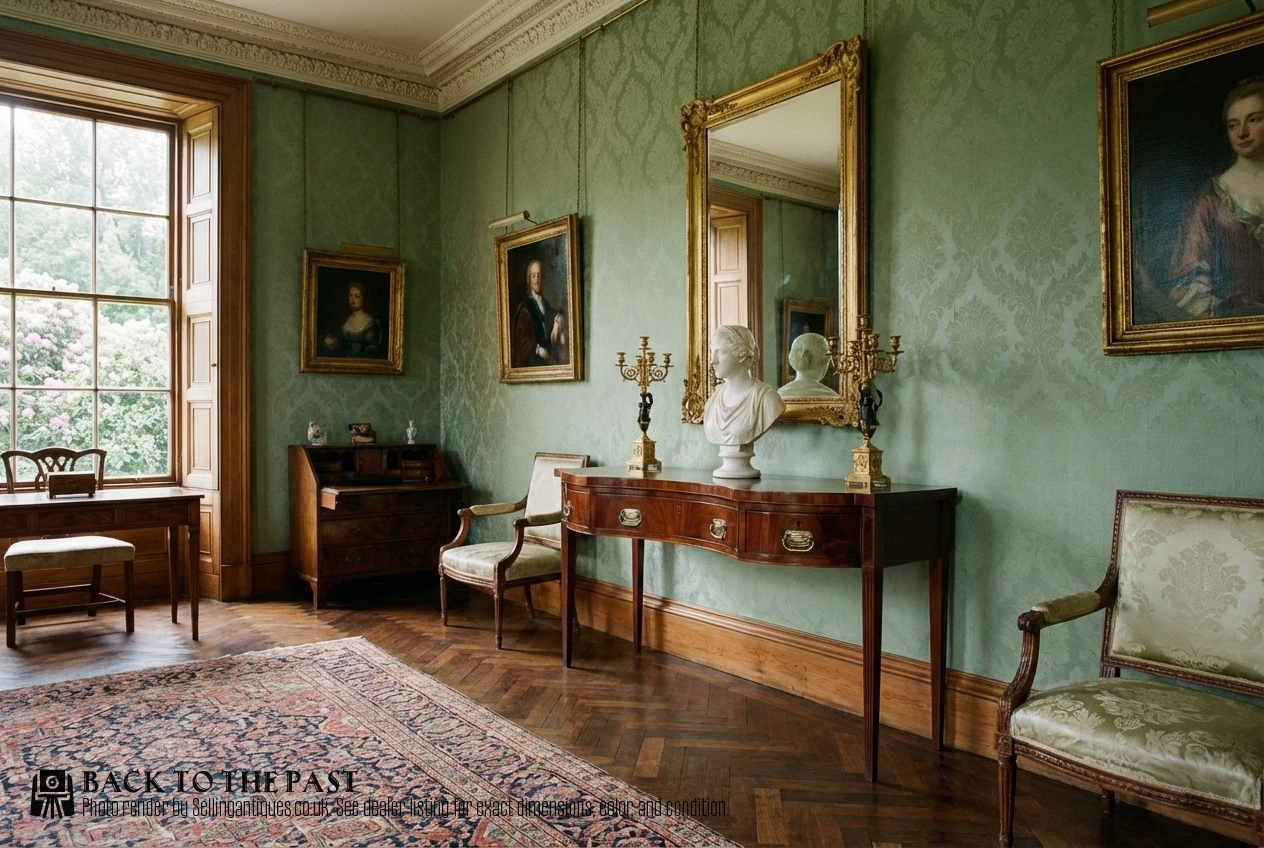
How they were made
Cabinet makers constructed these serving tables primarily from solid mahogany and flame mahogany veneer, chosen for rich figuring and deep natural colour. They frequently incorporated secondary woods such as satinwood and boxwood for contrasting stringing and inlay work.
Metal elements played a functional and decorative role, with brass fixtures, castors, and handles appearing across William IV and Regency examples. Joinery techniques relied on traditional framing and dovetailing to support heavy workloads of serving vessels without warping.
An eighteenth-century dumb waiter stands ready to hold your evening tea when conversation runs dry and footmen are entirely out of the question.
What varies in quality
The distinction between ordinary and superior examples lies in the selection of timber veneers and the crispness of carved enrichment. Pieces featuring high-grade flame mahogany and intricate boxwood or satinwood stringing display a more deliberate attention to visual balance.
Constructional depth also dictates worth, where substantial secondary timbers and robust pedestal mounts provide greater stability. Master workshops invested heavily in the subtlety of serpentine shaping and the precision of brass mountings, elevating the utilitarian serving surface into a sculptural focal point.
Gillow·George Smith·Holland and Sons
The Rich Brown Serving Table Glossary
- Serpentine
- A front edge or surface curving convexly in the centre and concavely at the sides. This shape demands high carpentry skill and adds visual movement to a heavy timber frame.
- Dumb Waiter
- A tiered serving table or stand holding multiple trays for dishes and bottles without requiring a servant present. These items stand on central pedestals with tripod or multi-legged bases.
- Flame Mahogany
- A veneer cut from timber where the branch meets the trunk, producing a flickering flame-like grain pattern. Cabinet makers reserved this expensive material for prominent drawer fronts and tabletops.
- Stringing
- Thin inlaid lines of contrasting wood, such as boxwood or satinwood, set flush into the primary timber. This technique defines the edges and geometric panels of formal dining furniture.
- Pedestal
- A heavy supporting column or pillar beneath a table top, often resting on a platform base. They provide robust support for large serving sideboards and console tables.
Rich Brown Serving Table: Frequently Asked Questions
What is a rich brown serving table used for?
These tables served primarily in dining rooms to hold platters, tureens, and heavy serving dishes away from the main dining table. They acted as staging areas for courses during large meals.
Today, they function well as sideboards in living spaces or hallways, offering deep surface areas for display and substantial storage beneath.
How do I tell a Georgian serving table from a Victorian one?
Georgian and early Regency pieces tend to display cleaner architectural lines, subtle stringing, and restrained proportions based on classical design principles. They often use solid mahogany with minimal heavy carving.
Victorian and late Regency examples frequently introduce heavier proportions, bolder pedestal bases, and more exuberant carved foliage or raised panels, reflecting changing nineteenth-century tastes.
What woods are typical for these serving tables?
Mahogany forms the primary structural and visual foundation for nearly all pieces in this category, providing the characteristic deep brown colour. Burr walnut also appears on later nineteenth-century examples.
Cabinet makers accented these dark primary timbers with lighter woods like satinwood and boxwood for inlaid banding, along with brass for castors and handles.
Where should I place a serving table in my home?
A serving table suits rooms with generous wall space where its length and depth can be appreciated without blocking traffic flow. Dining rooms remain the most traditional and practical placement.
Alternatively, wide hallways and spacious living rooms accommodate their surface area well, allowing them to function as console or display tables.