


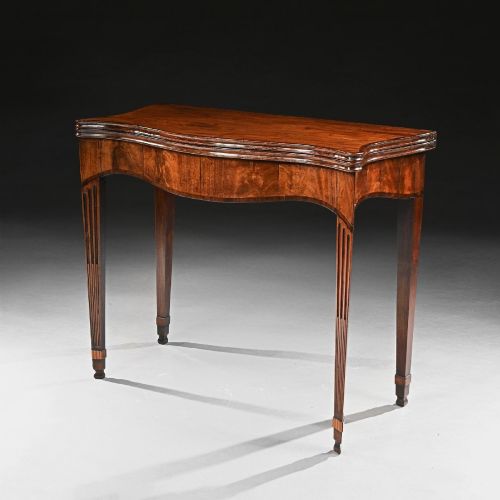
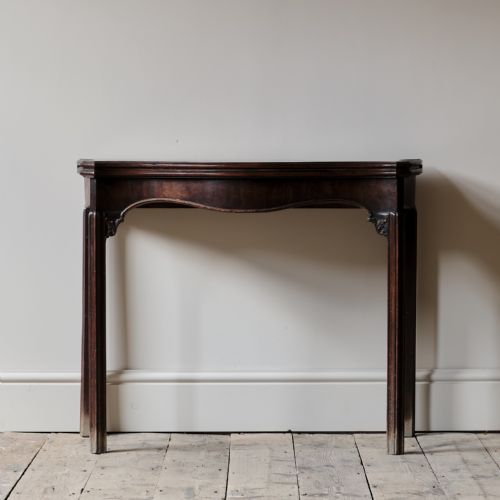
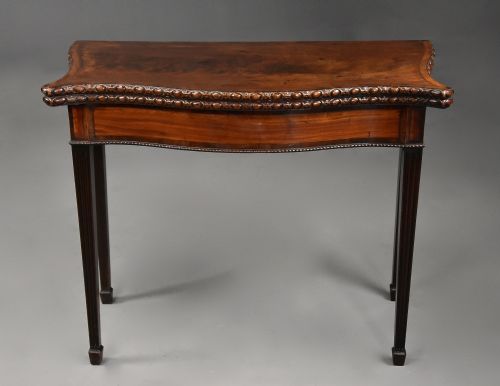
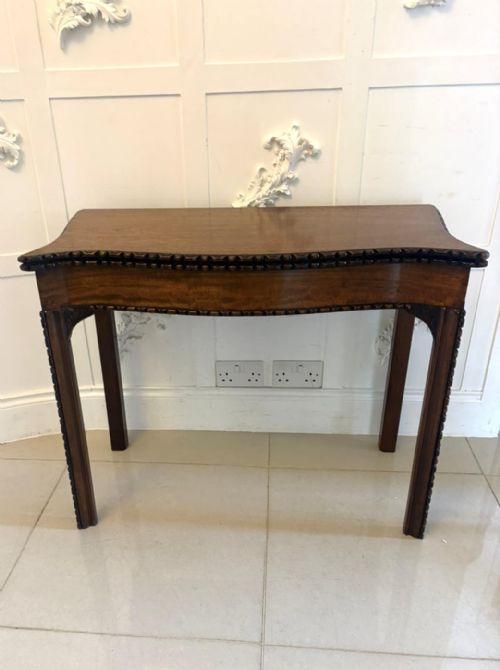




Georgian Serpentine Card Table
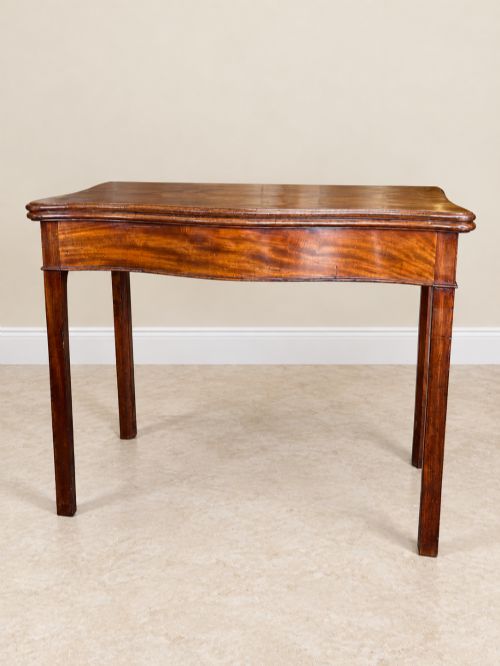
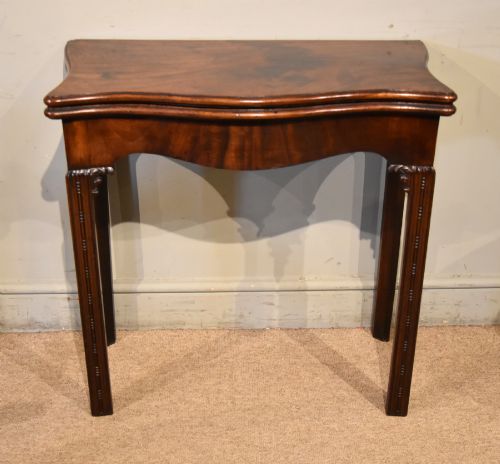
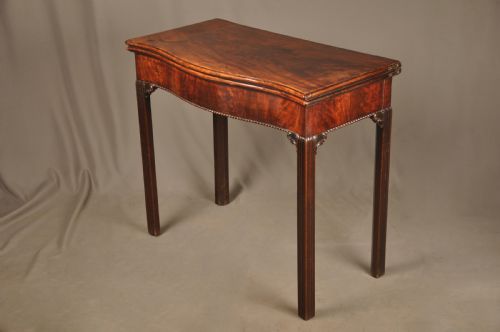
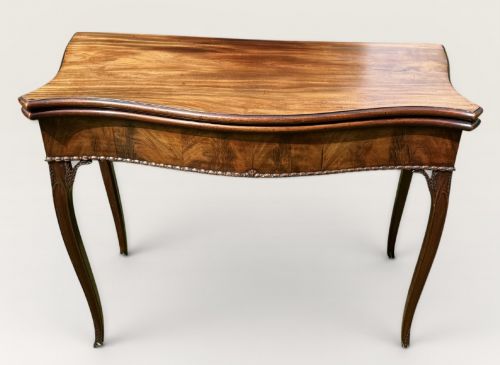
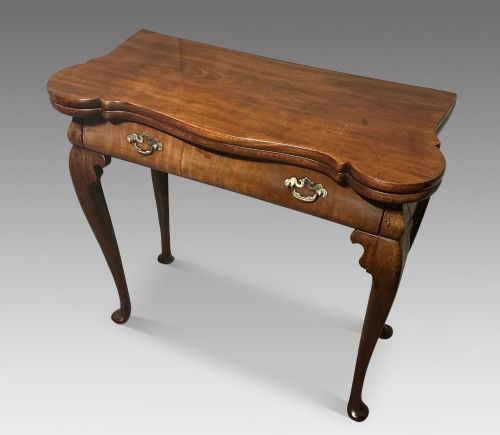
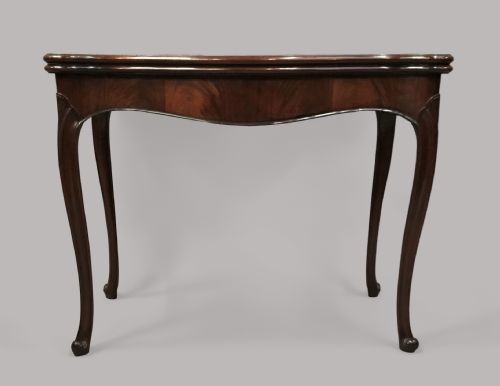
These pieces are georgian serpentine card table examples, prized for their undulating timber fronts and clever folding tops that transform from slim consoles into playing surfaces.
Georgian Serpentine Card Table
A georgian serpentine card table presents a distinctive undulating front that curves gracefully outward at the centre and recedes toward the corners. This flowing outline distinguishes the form from straightforward rectangular folding tables of the period.
Most examples found here date from the eighteenth century, spanning the reigns of George II and George III, with later nineteenth-century interpretations also appearing. The secondary forms include tea tables, console tables, and games tables that share the characteristic serpentine silhouette.
Makers designed these items primarily to stand against a wall as decorative side furniture when closed, ready to unfold for evening entertainment. The pivoting or concertina action supports the heavy hinged top when opened for play.
Materials and Construction
Solid mahogany and rich mahogany veneers form the primary structural body of these tables, chosen for durability and deep grain. Cabinetmakers shaped the serpentine curves from thick timber blocks or through careful bending techniques.
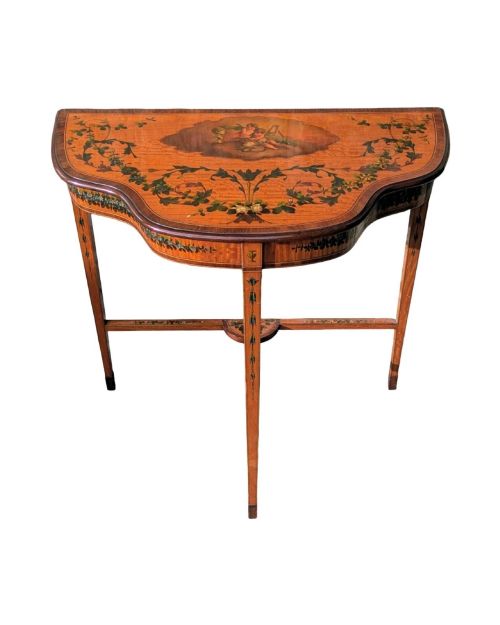
Inlay work utilises contrasting timbers such as satinwood, boxwood, and general wood veneer to create delicate borders and decorative motifs. Brass components provide structural hinges and operational support for the folding mechanisms.
Georgian Serpentine Card Table Retail Price Guide 2026
Typical asking prices for georgian serpentine card table among the pieces listed under this phrase on Sellingantiques today, from the lower quarter to the upper quarter. They describe what is for sale here now, not the wider market.
Card playing was so popular in the eighteenth century that specialised tables were built with hidden candle wells to illuminate late-night games.
Judging Quality
The sophistication of the carved detail on the knees, edges, and apron elevates an example above standard workshop production. Sharp, deep carving executed directly into the solid timber shows the hand of a master cabinetmaker.
Timber selection and surface patination dictate visual success, where rich, undisturbed colour and deep wax finishes separate superior specimens from dry or heavily restored surfaces.
The Georgian Serpentine Card Table Glossary
- Serpentine
- A curved shape featuring a convex centre flanked by concave wings. This undulating line defines the visual character of the form.
- Concertina action
- An expanding frame mechanism that extends outward when the table top unfolds. It provides support for all four corners evenly.
- Baize
- A coarse woollen fabric traditionally used to line the playing surface of games tables. It offers a soft texture suitable for card playing.
- Patina
- The deep surface sheen and mellow colour acquired by wood through age and regular handling. It serves as an indicator of authenticity.
- Fold-over top
- A hinged wooden surface that doubles the footprint of the table when opened. It conceals the internal well used for storing playing cards.
Georgian Serpentine Card Table: Frequently Asked Questions
How do I use a serpentine card table today?
These tables function well as slim console tables placed against hallway or living room walls when closed. Opening the top reveals a generous surface suitable for display or occasional use.
The interior well also provides a discreet place to store small items when the table remains folded shut.
What is a concertina action?
A concertina action is an expandable frame system that pulls outward as the hinged top opens. This mechanism allows the table legs to move into the corners for stable support.
Simpler tables use a pivoting rear leg instead, which swings out from the side of the frame.
How do I identify a Hepplewhite style table?
Hepplewhite style pieces often feature lighter proportions, tapered legs, and delicate inlay work rather than heavy carving. The serpentine front remains gentle and refined.
Many examples incorporate satinwood stringing or classical motifs inspired by contemporary design books.
Why is green baize common inside?
Green baize was the traditional textile chosen for card tables because its soft, textured nap prevented cards from sliding. It also provided a quiet surface for shuffling and dealing.
Original linings add significant interest for collectors, though many surviving pieces have received replacement fabric over the centuries.
How do I care for mahogany veneer?
Mahogany veneer requires stable room humidity to prevent the thin timber layers from lifting or cracking over time. Regular dusting with a soft, dry cloth preserves the polished finish.
Abrasive cleaners and direct sunlight should be avoided to protect the historic timber surface.