




Georgian Serpentine Bureau
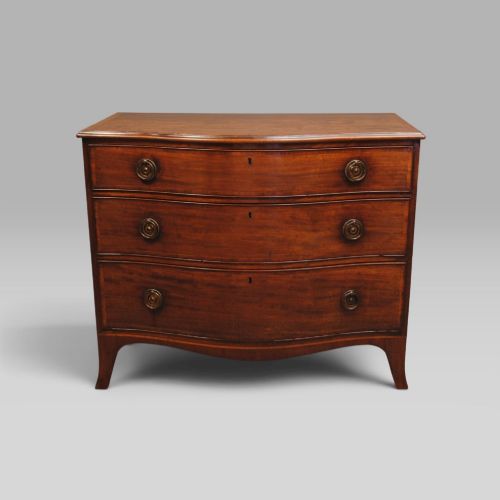
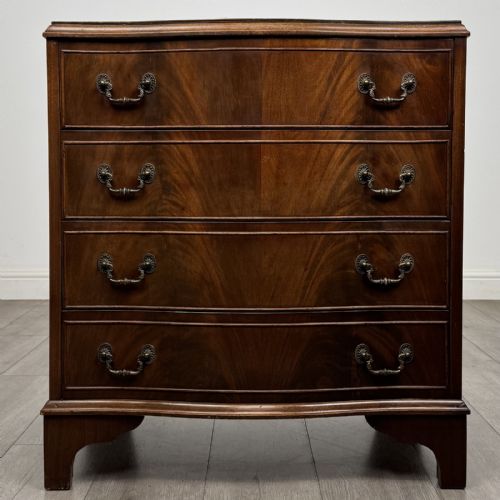
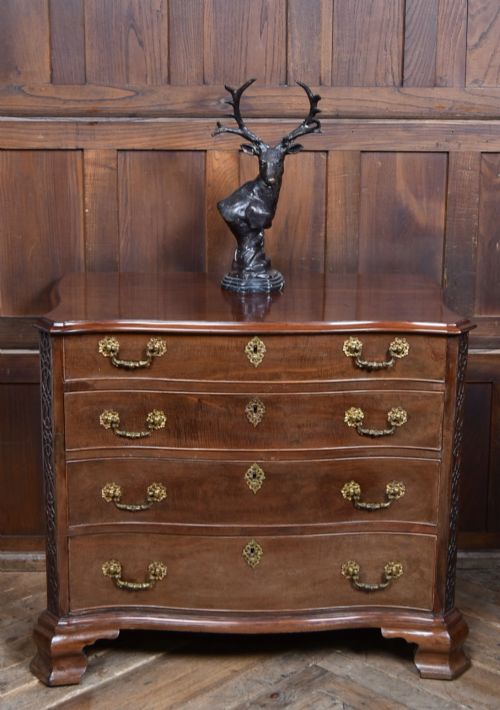
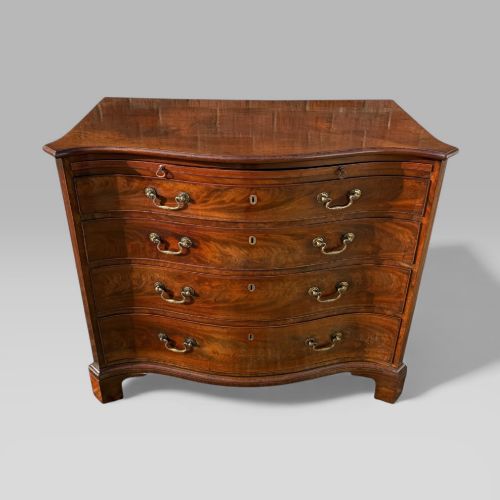
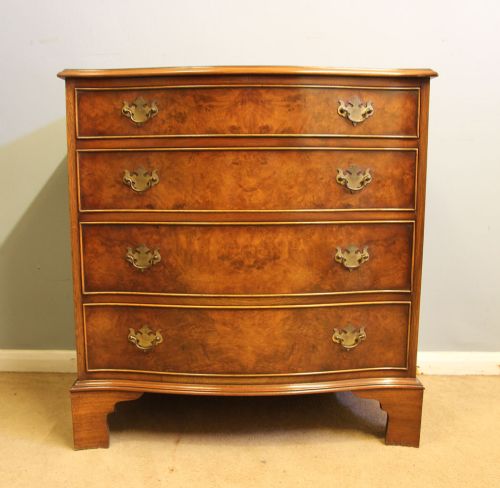
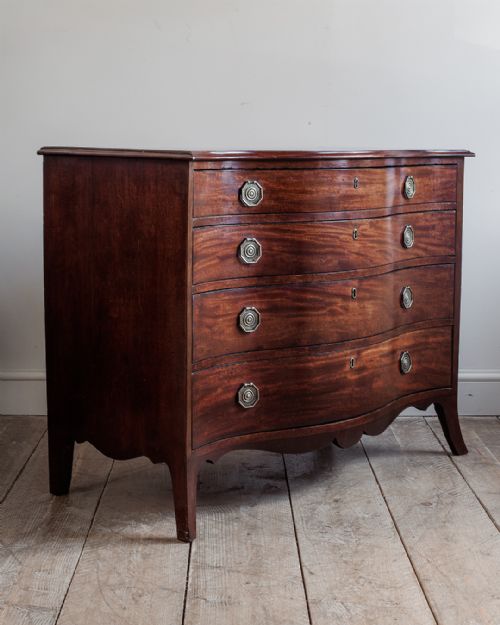
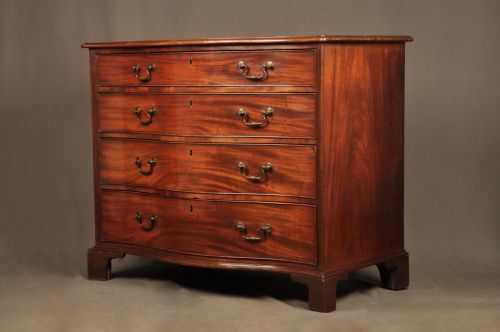
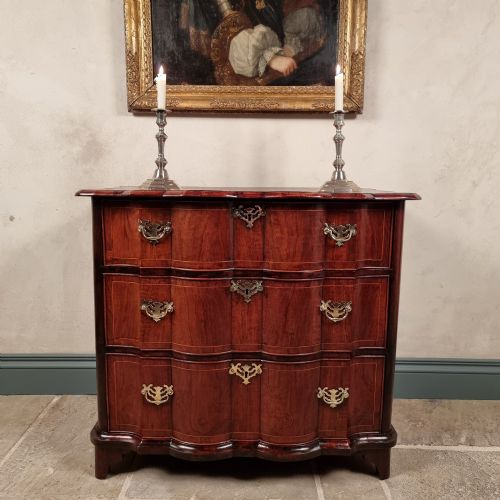
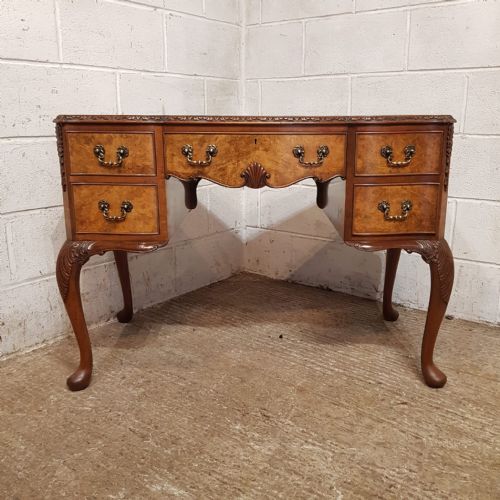
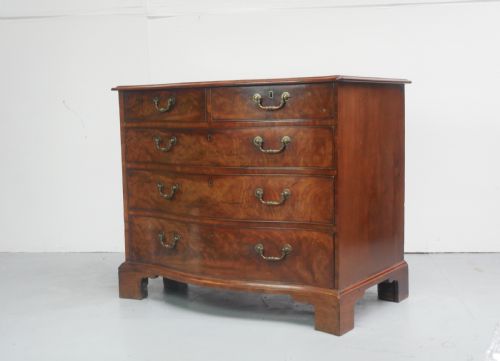
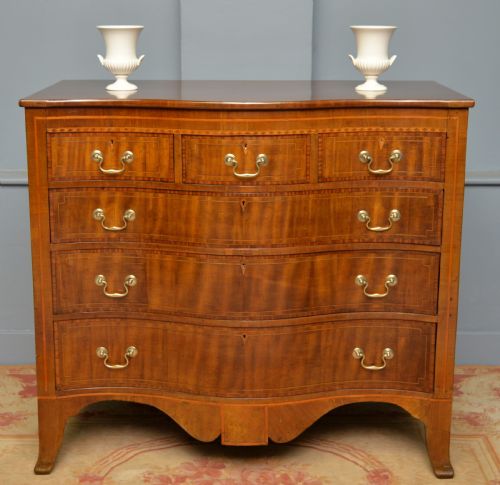
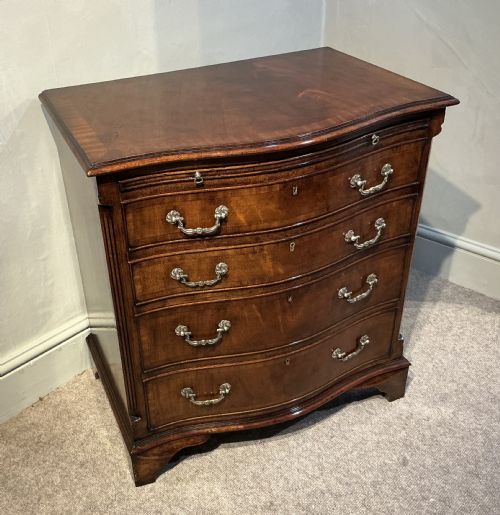
A georgian serpentine bureau brings a sweeping, undulating front and fitted writing interior into a room, offering both practical writing space and storage.
Georgian Serpentine Bureau
A georgian serpentine bureau typically presents a distinctive undulating front facade that curves outward at the sides and inward at the centre, creating a fluid silhouette. Buyers searching for a georgian serpentine bureau will encounter pieces ranging from authentic mid to late eighteenth century examples to later revival interpretations.
The form often combines chest of drawers storage with a fold-down writing flap or fitted desk interior, appearing in forms such as kneehole desks and secretaire bookcases. Mahogany and burr walnut dominate the surviving examples, alongside occasional satinwood and oak pieces.
Construction and materials
Cabinetmakers constructed these pieces primarily using solid mahogany, oak, and burr walnut timbers, frequently applying figured veneers to the curved drawer fronts. Delicate boxwood inlay and brass hardware finish the construction, requiring specialist joinery to shape wood along the complex undulating serpentine contours.
Makers shaped the characteristic serpentine curve from solid timber or built up thick veneers on a supportive secondary wood base. Dovetail joints secure the drawer construction, while interior compartments incorporate small drawers and pigeonholes around a central writing surface.
Georgian Serpentine Bureau Retail Price Guide 2026
Typical asking prices for georgian serpentine bureau among the pieces listed under this phrase on Sellingantiques today, from the lower quarter to the upper quarter. They describe what is for sale here now, not the wider market.
Several pieces include hidden writing brushes and sliding compartments designed to sweep away wood shavings and dust from the desk.
Distinguishing quality
The standard of timber selection and the precision of the serpentine curve define the upper tier of these pieces. Grain continuity across multiple drawer fronts and crispness in the inlaid boxwood details separate master cabinet work from standard workshop production.
Proportion and the handling of secondary woods inside the drawers reveal the underlying skill of the maker. Finer examples retain original brass handles, well-figured mahogany or walnut surfaces, and intact internal writing slides.
Maple and Co·Hepplewhite
The Georgian Serpentine Bureau Glossary
- Serpentine front
- A curved furniture front that undulates with a convex centre flanked by concave sides. This shape demands advanced cabinetmaking skill to execute cleanly.
- Secretaire
- A desk or chest of drawers incorporating a fitted writing compartment with a drop-down flap or drawer front. It allows a piece to function as both a writing desk and a storage chest.
- Kneehole desk
- A compact desk featuring a central recessed space for the legs, flanked by pedestals of small drawers. They often incorporate a small concealed drawer above the knee space.
- Fiddleback mahogany
- A highly figured mahogany timber displaying undulating grain patterns resembling the back of a violin. Cabinetmakers reserved this prized wood for prominent exterior surfaces.
- Dovetail
- A traditional interlocking woodworking joint used to connect drawer sides to drawer fronts. Hand-cut dovetails indicate earlier periods of manufacture.
Georgian Serpentine Bureau: Frequently Asked Questions
What is a serpentine front?
A serpentine front is a cabinet facade shaped with a convex curve in the middle and concave curves at the edges.
This undulating profile creates a sense of movement and visual depth that distinguishes standard flat-front furniture.
How do I spot a later revival piece?
Later revival pieces from the nineteenth and twentieth centuries often display machine-cut internal elements and standardised hardware.
Examination of the secondary woods, timber shrinkage, and construction joints helps reveal the actual age of the piece.
Where were these pieces used?
These pieces served as functional writing desks and storage chests in private libraries, drawing rooms, and studies.
Their dual purpose provided a secure surface for correspondence alongside drawers for household documents and personal items.
How do I care for walnut veneer?
Burr walnut veneer requires stable room humidity and protection from direct sunlight to prevent lifting and fading.
Regular dusting with a dry cloth and occasional application of traditional wax helps maintain the natural sheen of the timber.