



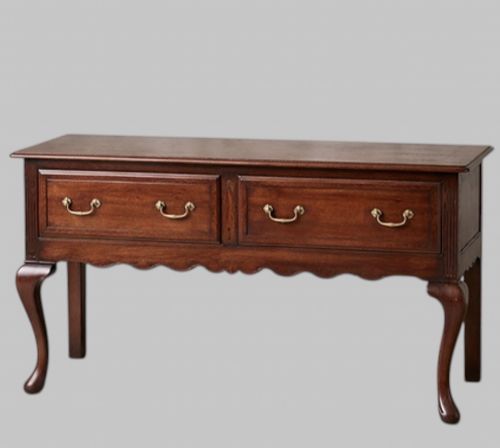


Georgian Scalloped Apron Table
A georgian scalloped apron table brings tactile warmth and vernacular elegance to a room, offering practical surface space rooted in eighteenth-century craftsmanship.
Georgian Scalloped Apron Table
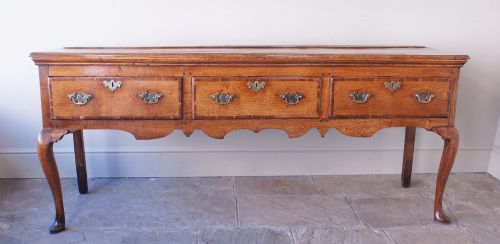
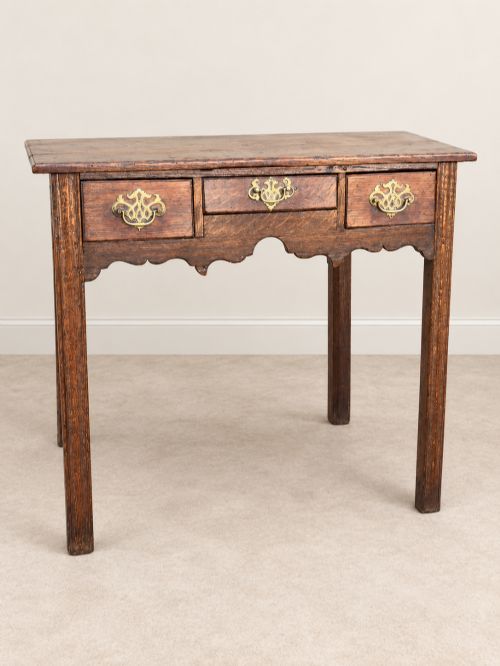
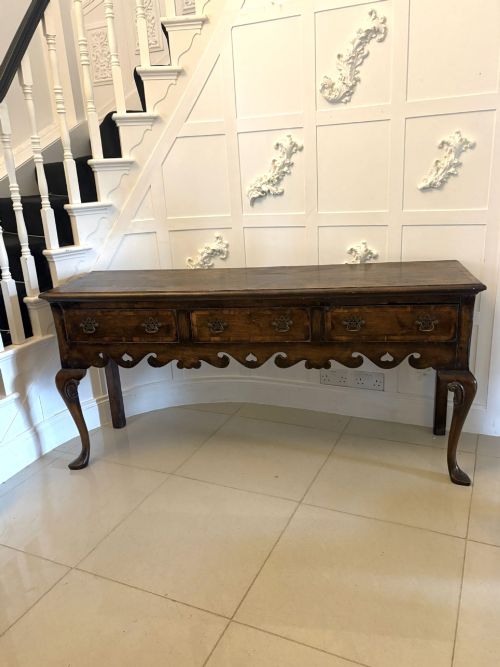
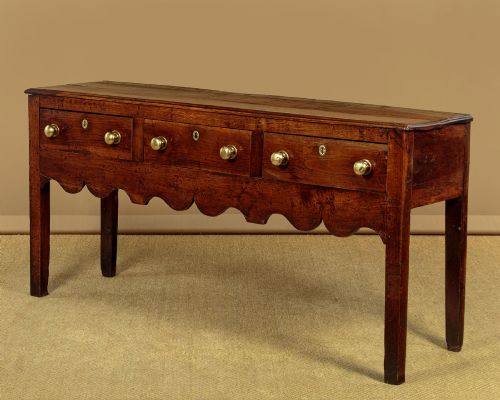
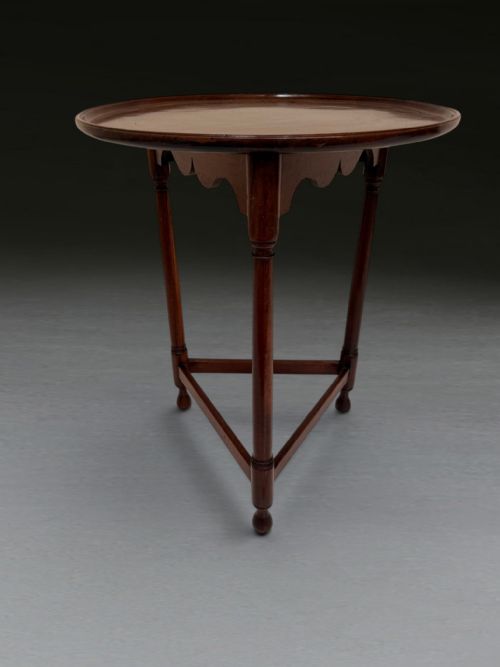
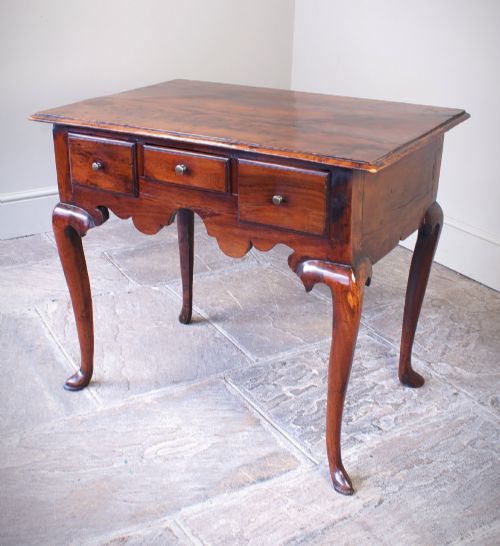
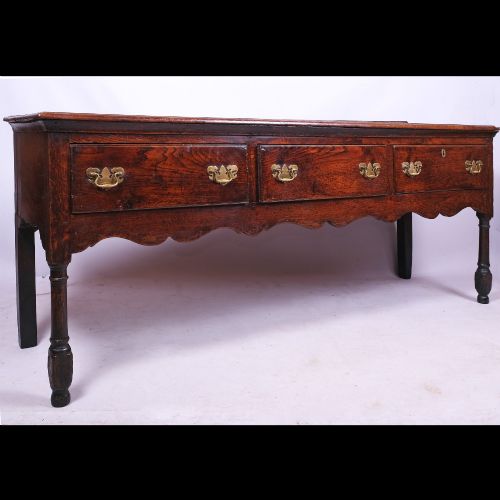
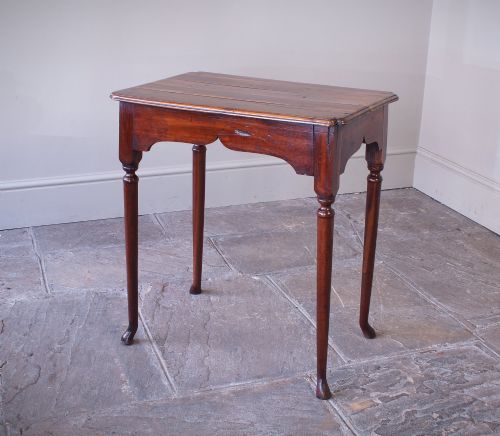
A georgian scalloped apron table typically presents as a lowboy, side table, or dresser base designed with a shaped lower rail. These pieces emerge predominantly from the eighteenth century, spanning periods from early Georgian iterations to later nineteenth-century revivals.
The selection ranges from compact lamp tables and cricket tables to larger oak and mahogany dresser bases. Vernacular examples frequently hail from Welsh workshops, demonstrating regional variations in timber selection and apron profiles.
Materials and construction
Cabinetmakers utilised robust native timbers such as oak, fruitwood, yew wood, and cherry, alongside imported mahogany for finer formal commissions. Surfaces were frequently left to age naturally or treated with basic paint finishes, particularly on vernacular pieces.
Construction relied on traditional joinery methods appropriate for tables and lowboys, incorporating pegged joints, turned or cabriole legs, and shaped aprons hand-sawn to create the distinctive scalloped silhouette.
Georgian Scalloped Apron Table Retail Price Guide 2026
Typical asking prices for georgian scalloped apron table among the pieces listed under this phrase on Sellingantiques today, from the lower quarter to the upper quarter. They describe what is for sale here now, not the wider market.
Current listings feature eighteenth and nineteenth-century pieces constructed from oak, mahogany, yew wood, fruitwood, and painted wood.
Assessing quality and character
Quality rests upon the crispness of the hand-cut scallop on the apron and the integration of the legs into the frieze. Superior examples maintain balanced proportions and pleasing timber figure without relying on heavy restoration.
The choice of primary wood heavily influences character, where dense grain in early yew wood or rich patination on older oak elevates a piece far above later revival interpretations.
The Georgian Scalloped Apron Table Glossary
- Apron
- The horizontal timber member beneath the table top that connects the legs, frequently shaped or scalloped in this group.
- Lowboy
- A small kneehole table or dressing table standing on relatively tall legs, commonly produced in the eighteenth century.
- Potboard
- An open lower shelf built into a dresser base or table framework, historically used for storing pottery and utensils.
- Cricket table
- A small, lightweight occasional table typically featuring three legs and a circular top.
- Vernacular
- Regional furniture built by local craftsmen using traditional methods and native woods, distinct from metropolitan high-style pieces.
Georgian Scalloped Apron Table: Frequently Asked Questions
What is a lowboy?
A lowboy is a small table equipped with drawers and relatively tall legs, designed initially for domestic utility in bedchambers or parlours.
Over time, these adaptable pieces transitioned into general side tables and serving surfaces within living spaces.
How do I tell oak from mahogany?
Oak displays a prominent, open grain with visible medullary rays and a warm, honey-brown or dark patination.
Mahogany presents a tighter, smoother reddish-brown grain that lends itself to sharper carving and formal nineteenth-century revival styling.
Where were these tables used?
These tables served primarily in dining rooms, halls, and parlours as auxiliary surfaces for lighting, serving, or writing.
Smaller variants fit easily beside seating, while dresser bases anchored larger country kitchens and dining spaces.
Are revival pieces well made?
Revival items from the nineteenth century adopt earlier Georgian design motifs, utilising older woodworking traditions with slight mechanical improvements.
They offer sturdy construction and period aesthetic while remaining distinct from authentic eighteenth-century originals.