

Georgian Sabre Leg Chairs
Georgian sabre leg chairs bring forward the sweeping, curved line of classical antiquity into everyday dining and library seating.
Georgian Sabre Leg Chairs
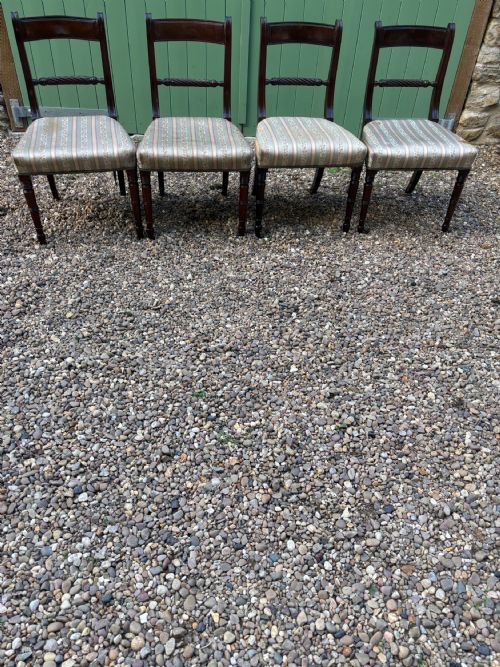
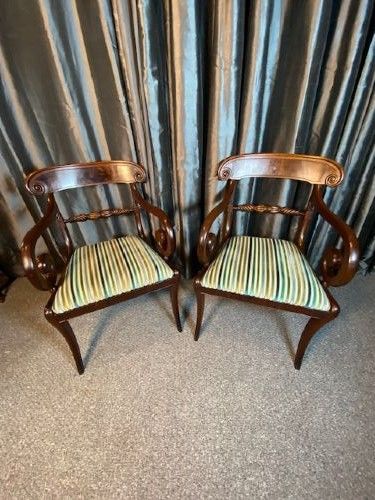
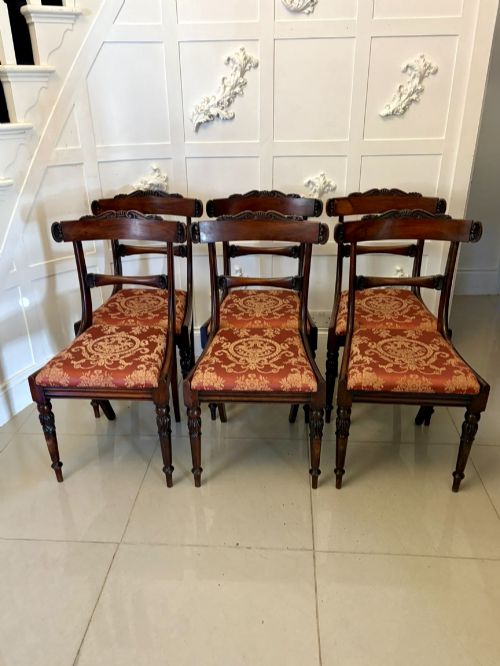
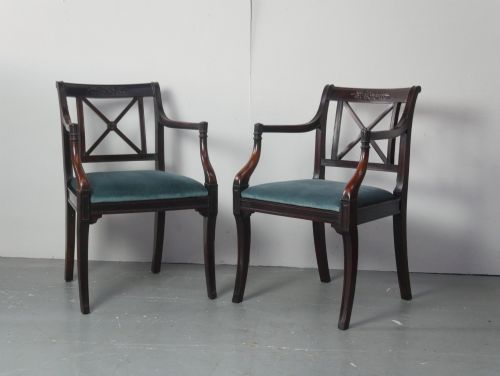
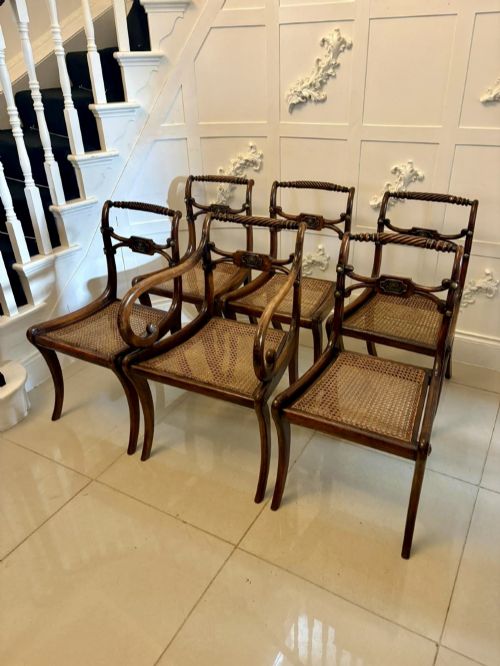
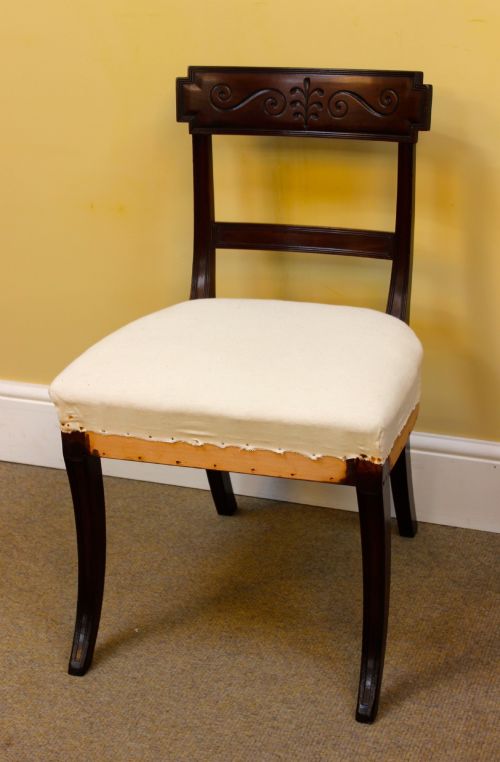
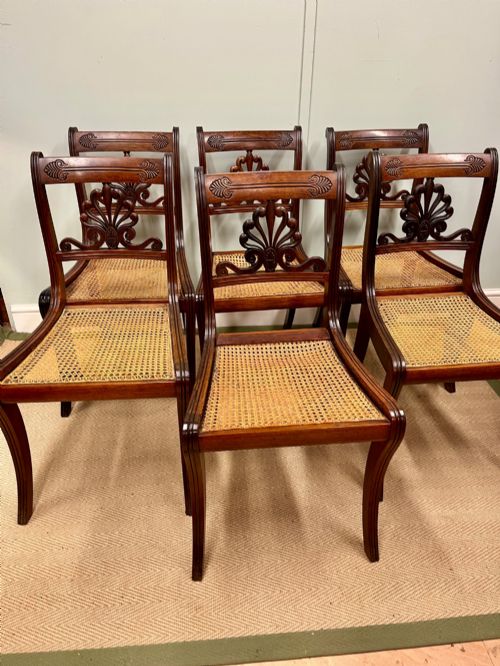
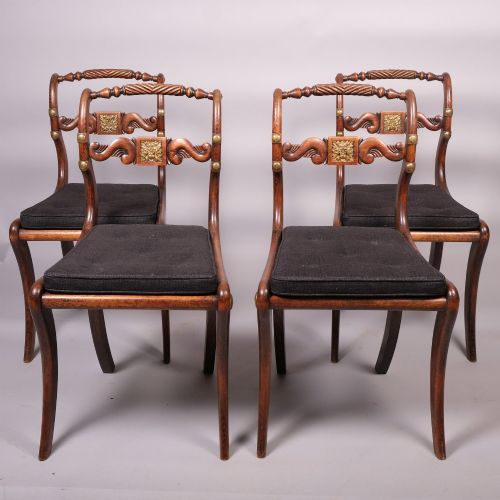
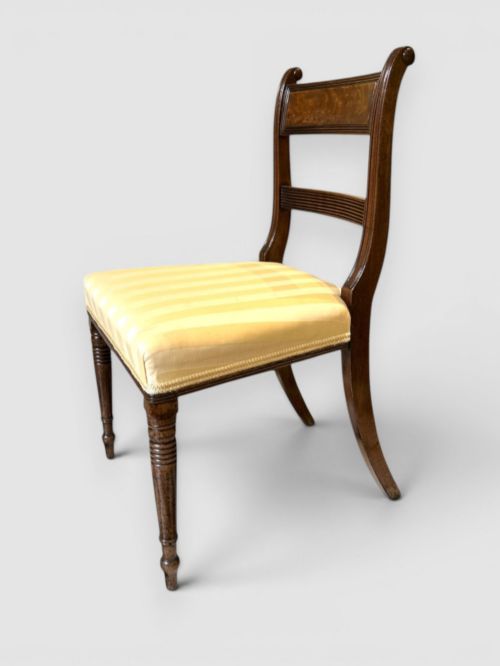
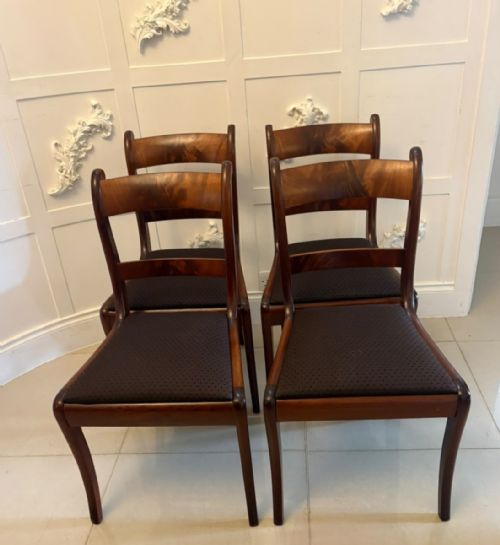
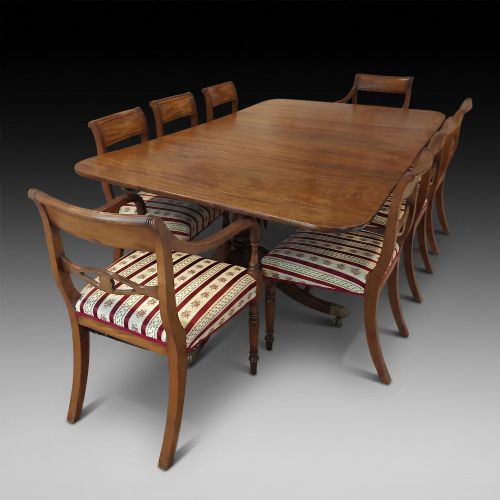
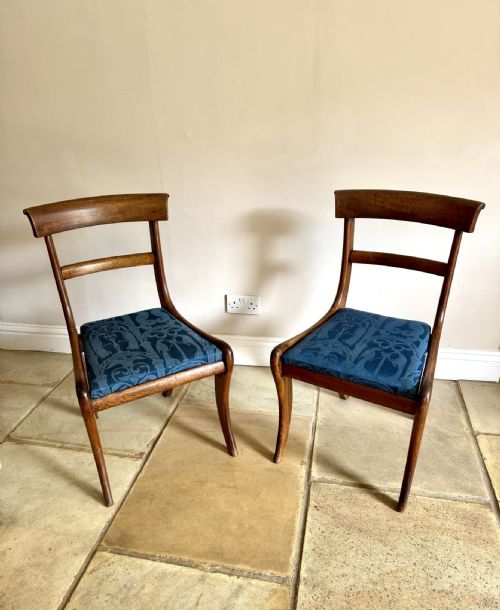
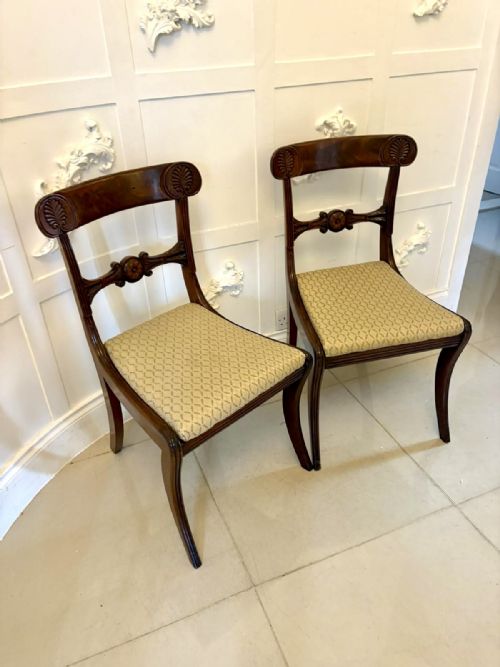
Georgian sabre leg chairs encompass dining chairs, armchairs, side chairs, and desk chairs originating primarily from the Regency and broader Georgian periods, alongside later nineteenth-century revivals. You will most frequently encounter sets of mahogany dining chairs featuring the distinctive sweeping rear and front legs that mimic a cavalry sabre.
Makers of the period produced these forms in variations ranging from simple bar backs and rope backs to grand brass-inlaid examples designed for formal reception rooms. The selection on this page stretches from single library pieces and pairs of hall chairs up to extensive dining suites numbering ten pieces.
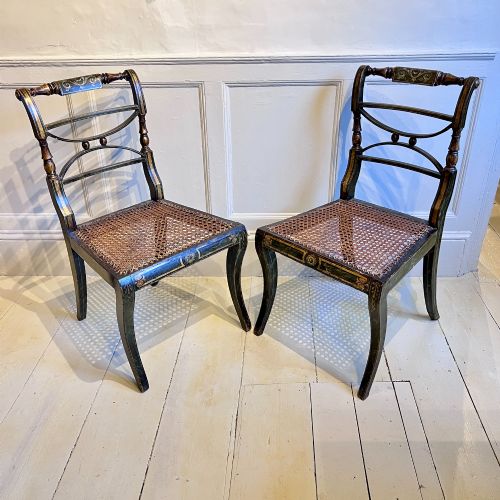
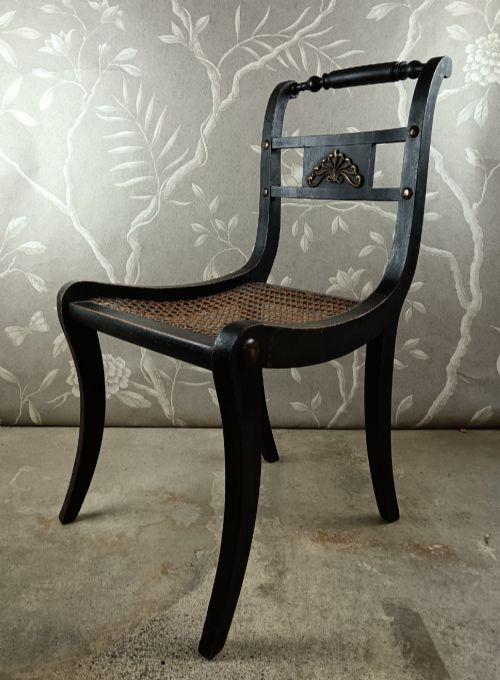
The aesthetic bridges neoclassical restraint and the bolder Regency taste, often pairing dark timbers with contrasting brass inlay, painted surfaces, or ebonised details. Whether configured as open armcarvers, side chairs, or child seats, the defining architecture remains the curved, tapering leg.
How they were made
Cabinetmakers utilised solid mahogany, Cuban mahogany, and occasionally pollard oak or elm, shaping the characteristic sabre leg to sweep outward from the seat rail for stability and balance. Turning, carving, and steam-bending allowed workshops to create the subtle curves of rope backs, bar backs, and scroll arms without compromising the structural grain.
Surface enrichment relied heavily on brass inlay set directly into the wood, alongside ebonising or paintwork designed to simulate exotic rosewood. Seats were constructed with cane panels for lightness, or padded for traditional upholstery finished in velvet, fabric, or leather.
Mahogany and fabric dominate the material records here, complemented by brass, cane, and ebonised wood across the Regency and nineteenth-century listings.
What varies in quality
Quality reveals itself in the harmony of the proportions and the crispness of the turning and carving along the back rails and legs. Superior sets maintain matching grain patterns across multiple chairs and exhibit precise, tight joinery where the sabre leg meets the seat frame.
The distinction between standard utility seating and high-status pieces rests on secondary details such as elaborate brass marquetry, finely figured mahogany timbers, and original cane or well-sprung upholstery frameworks.
The Georgian Sabre Leg Chairs Glossary
- Sabre leg
- A chair leg that curves outward and backward from the seat in a continuous, tapering line reminiscent of a cavalry sword.
- Carver
- An armchair designed with elbow supports, traditionally placed at the head of a dining table or used as a desk chair.
- Rope back
- A chair back featuring horizontal carved rails shaped like twisted rope, popular during the Regency era.
- Bergere
- An enclosed armchair with stuffed upholstery and cane-work sides, offering generous proportions for library or drawing-room use.
- Ebonised
- Wood treated with a dark stain or finish to imitate the dense, black appearance of ebony.
- Faux rosewood
- Timber painted or stained to replicate the distinctive dark grain and figuring of genuine rosewood.
Georgian Sabre Leg Chairs: Frequently Asked Questions
How do I identify a true sabre leg?
A true sabre leg sweeps outward in a concave curve from the seat rail down to the floor, tapering toward the foot.
This distinct forward-and-backward flow distinguishes it from straight tapered or cabriole legs found in earlier furniture eras.
Can I mix singles and carvers in a dining set?
Mixing single side chairs with matching elbow carvers is entirely authentic to the period.
Dining sets from the early nineteenth century frequently combined a majority of singles with one or two matching carvers for the heads of the table.
Were these chairs meant for dining or libraries?
These chairs served multiple functions across the home, appearing as formal dining suites, individual hall chairs, and dedicated desk or library chairs.
Sturdier mahogany models suited the dining room, while caned or bergere versions furnished studies and parlours.
How should I care for cane seats?
Cane seating requires moderate humidity to prevent the natural fibres from drying out and becoming brittle over time.
Light dusting and occasional wiping with a damp cloth keep the material flexible, though heavy weight should be avoided on fragile historic weave.