

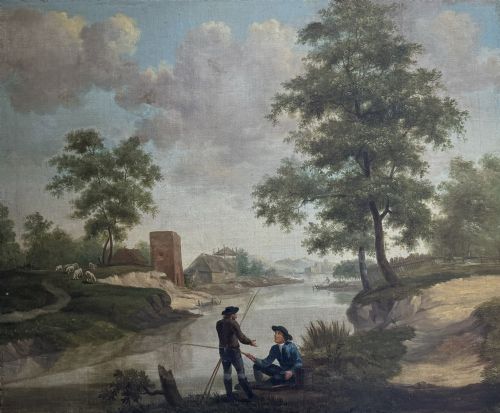


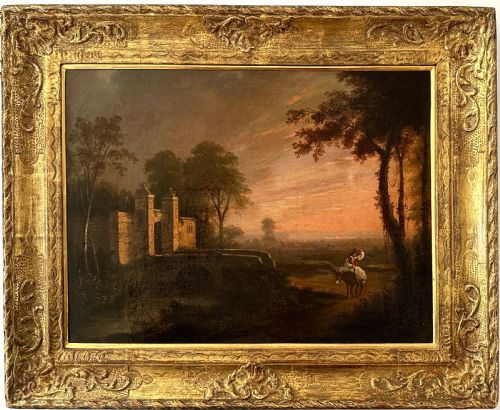


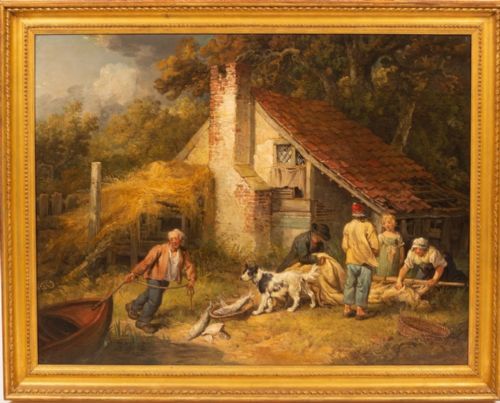

Georgian Rustic Landscape
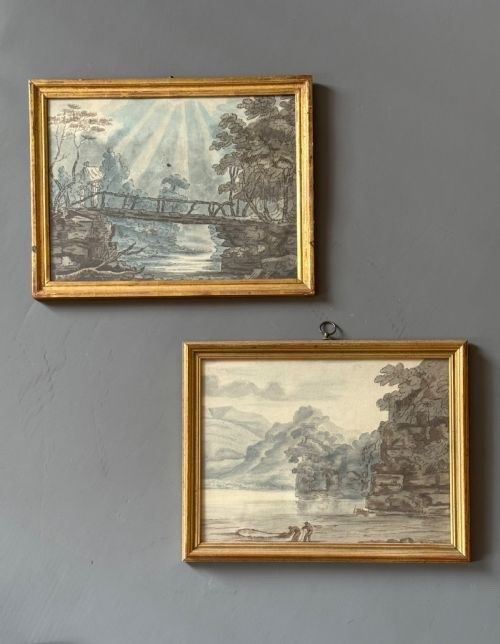
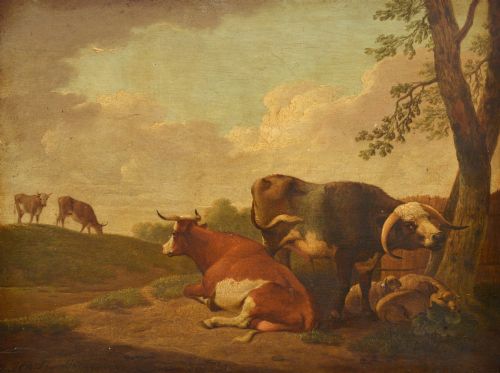
Georgian rustic landscape works capture pastoral country scenes, farmyards and riverbanks in oil paint, watercolour and sand pictures.
Georgian Rustic Landscape
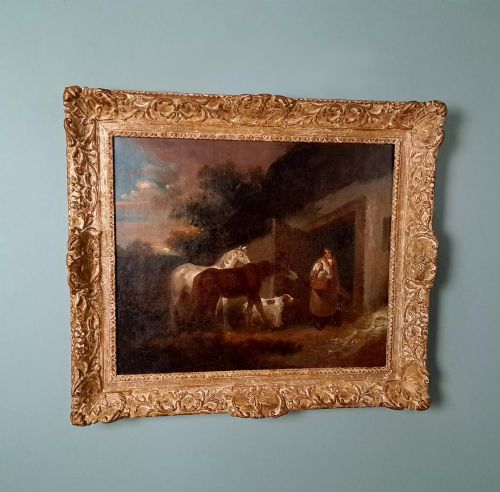
A georgian rustic landscape depicts rural life, farming scenes, cattle drinking, and cottage doorways in pastoral settings. These works record the British countryside and Dutch-influenced rural views through the eighteenth and nineteenth centuries.
Buyers meet original oil paintings on canvas and board, watercolours on paper, mezzotint prints and sand pictures. Many bear attributions or follow the style of landscape painters from the period.
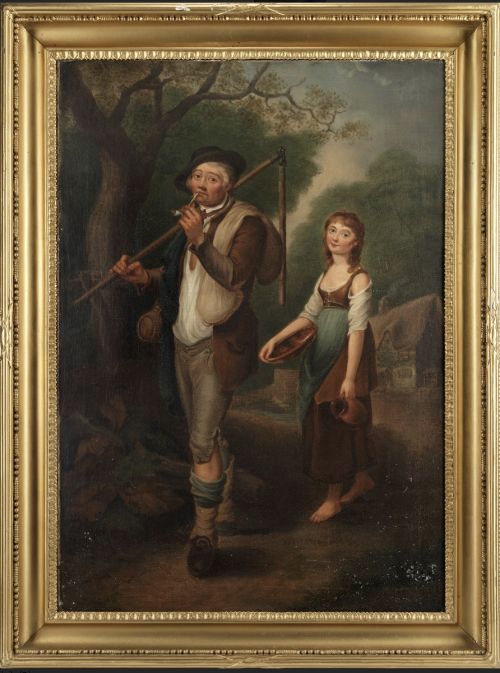
The common form is a framed pastoral view showing livestock, farm workers, travellers, or rural buildings by rivers and woodland. These pieces range from naive country scenes to accomplished works by followers of known painters.
Materials and construction
Painters applied oil paint or watercolour onto woven canvas, wooden board, or heavy paper. Some canvases are later laid onto board for structural support, while framed art prints and mezzotints utilise paper and ink.
Frames often incorporate wood and gold leaf, creating gilt borders around the painted or printed surface. Sand pictures combine tinted sand and adhesives to build textured farmyard scenes under glass.
Listings feature works from the eighteenth and nineteenth centuries, spanning oil on canvas, watercolour, gouache, mezzotint prints, and sand pictures.
Assessing quality and execution
Quality rests upon the confidence of the brushwork, the handling of light across cattle and cottages, and the depth of the pastoral composition. Finer works display lively livestock figures and atmospheric skies, whereas simpler pieces rely on naive charm.
The preservation of the original canvas, board, and period gilt frame influences the integrity of the piece. Provenance or attribution to a recognised school or follower adds context to the execution.
William Joseph Shayer Senior·Hendrik Willem Schweickhardt·Thomas Barker of Bath·George Morland·John Constable·John Inigo Richards·James Ward
The Georgian Rustic Landscape Glossary
- Mezzotint
- A printmaking process where the copper plate is roughened to achieve tonal gradations in dark areas. W Ward produced notable mezzotints in colours during the period.
- Gouache
- An opaque watercolour medium used for detailed works on paper. It provides solid flat areas of colour in picturesque landscape views.
- Provenance
- The documented history of ownership tracing a work from its creation to the present day. Some eighteenth-century framed oil paintings retain this recorded background.
- Naive
- A term for art created with a direct, unschooled perspective. Naive landscape oil paintings show simple forms and flat perspective rather than academic rules.
- Pastoral
- A genre focusing on rural life, shepherds, cattle and farming scenes. These depictions present an idealized view of country living.
Georgian Rustic Landscape: Frequently Asked Questions
What subjects appear in these landscapes?
These works typically show cattle drinking, horses by public house doors, farmyards, cottages, and riversides with figures. Animals and agricultural workers form the central focus of the pastoral composition.
Artists also recorded specific rural occupations such as milkmaids, collectors of water, and fishermen bringing in the catch across British and Dutch-influenced scenes.
How do oil paintings differ from watercolours here?
Oil paintings utilise oil paint on stretched canvas or wooden panels, allowing for rich colour layering and textured brushwork. Watercolours employ pigment suspended in water on paper, offering lighter and more translucent tones.
Both mediums capture rural scenery, though oils often survive in heavier gilt wood frames while watercolours require protection behind glass.
Are these works signed by the artists?
Many examples are unsigned or attributed to followers of major painters rather than bearing a master's signature. Attributions rely on stylistic similarities to artists like George Morland or Thomas Barker of Bath.
Some pieces emerge from the British School of a specific century without an individual creator recorded on the canvas or board.
How should I frame and display them?
Display these works away from direct sunlight and damp conditions to protect oil paint, canvas, paper, and gilt wood frames. Period gilt frames complement the traditional aesthetic of eighteenth and nineteenth-century pastoral views.
Ensure wall fixings securely support the weight of framed canvases or heavy oil paintings on board.