


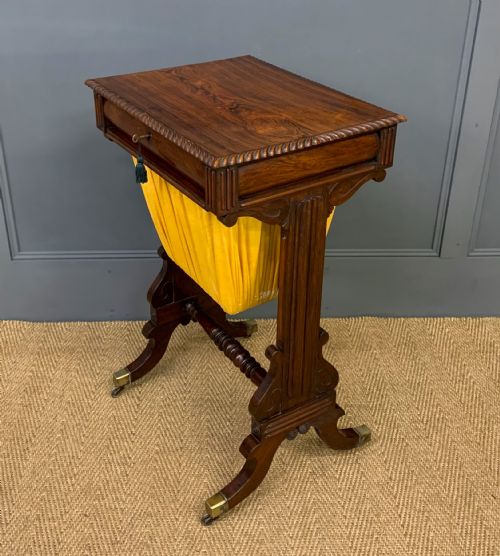


Georgian Rosewood Work Table
A georgian rosewood work table is a nimble nineteenth-century piece designed for needlework and small writing tasks, offering rich timber grain and clever compartmented drawers.

Georgian Rosewood Work Table
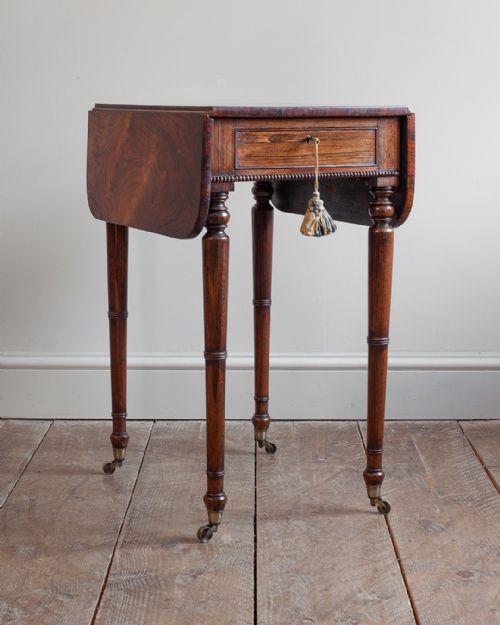
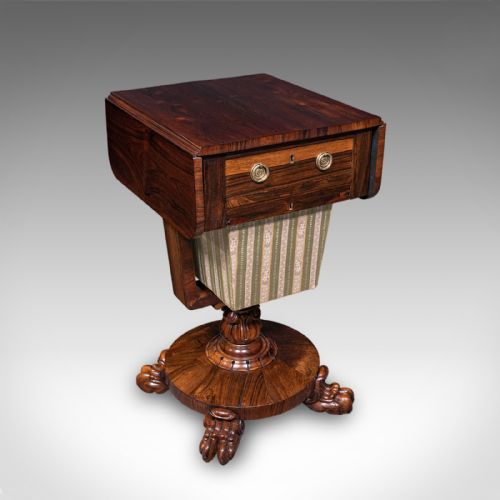
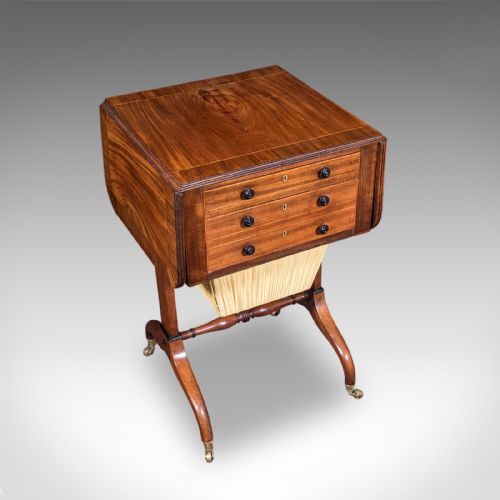
A georgian rosewood work table serves as a compact, multi-purpose piece designed primarily for domestic sewing and needlecraft, featuring fitted interior drawers and suspended fabric bags. These tables date predominantly from the nineteenth century, spanning Regency, William IV, George IV, and English Empire styles.
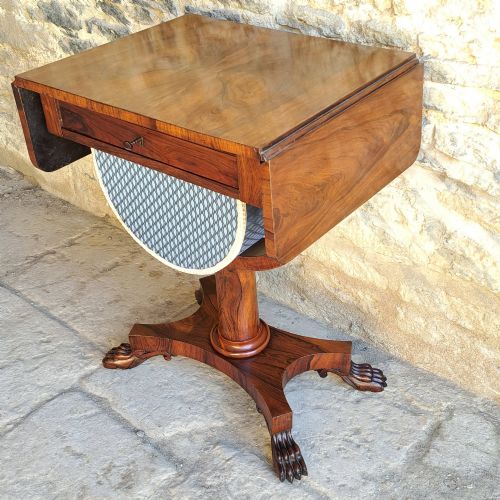
Drop leaves, rectangular tops, and pedestal bases define the silhouettes seen here, alongside occasional Pembroke and console variants. The pieces combine utility with elegance, functioning equally well beside a parlour sofa or as a refined lamp table.
Materials and Construction
Cabinetmakers utilised dense rosewood timber, often selected for its rich grain patterns, complemented by secondary woods such as mahogany and silky oak. Surfaces frequently incorporate intricate wood inlay, boxwood stringing, and elaborate brass marquetry or brass stringing.
Structural elements rely on turned pillars, swept pedestal legs, and drop-leaf hinges, while the internal sewing compartments utilise fine silk or gathered fabric bags suspended beneath the main drawer.
Many tables retain their original gathered silk hanging bags, once designed to hold scraps of lace and half-finished embroidery.
Distinctions in Execution
Quality rests upon the selection of figured rosewood veneers and the precision of the brass inlay work or boxwood stringing. Finer examples display meticulous cabinetmaking in the internal compartment layout and the turning of the central pedestal columns.
Proportion and stability separate standard utility pieces from masterworks attributed to notable workshops like Gillows of Lancaster or makers working in the manner of George Smith and John Maclean.
Gillows of Lancaster·John Maclean·George Smith
The Georgian Rosewood Work Table Glossary
- Rosewood
- A dense, heavily grained dark timber prized for cabinetmaking during the nineteenth century. Its natural oils and deep colour take a high, lustrous polish.
- Pembroke table
- A small occasional table featuring two hinged drop leaves on opposing sides. It often includes a single drawer and slender legs.
- Work table
- A specialised domestic table equipped with drawers and storage bags for sewing materials, needlework, and correspondence. Also frequently termed a sewing table.
- Drop leaf
- A hinged flap on a table top that can be raised to extend the surface area or lowered when space is restricted. It relies on pivoting wooden brackets for support.
Georgian Rosewood Work Table: Frequently Asked Questions
What is a georgian rosewood work table used for?
These tables were originally created for domestic needlework, embroidery, and correspondence, providing a dedicated surface and internal compartments for sewing accessories.
Today, collectors utilise them as elegant side tables, lamp tables, or occasional tables in sitting rooms and studies.
How do I identify a Regency period table?
Regency pieces typically display classical restraint, incorporating elements like brass inlay, scrolled pedestal bases, and dark rosewood veneers dating from the early nineteenth century.
Characteristics often include rectangular tops with single drawers, turned pillars, and sometimes drop leaves for adjustable surface space.
What distinguishes a work table from a sewing table?
The terms are largely interchangeable in period descriptions, both referring to multi-purpose occasional furniture equipped with internal compartments and fabric storage bags.
Some variants emphasise writing functions with fitted ledges, whilst others focus entirely on needlecraft organisation.
Are these tables suitable for modern homes?
Their compact proportions make them exceptionally practical for placement beside sofas or in hallways where space is limited.
The rich rosewood grain and brass detailing add warmth and historical character to contemporary interiors.