
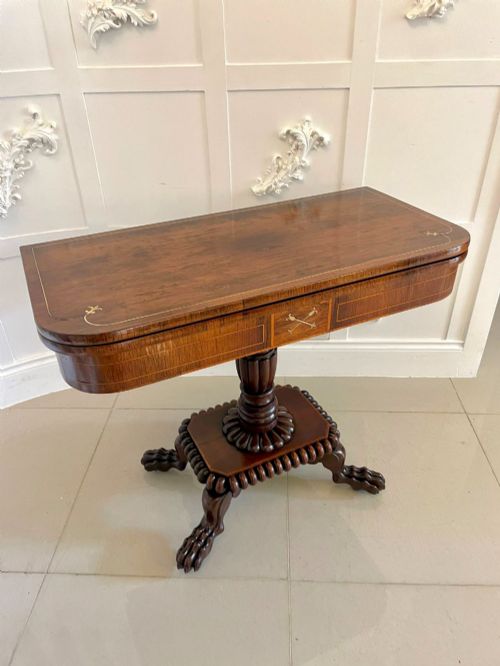
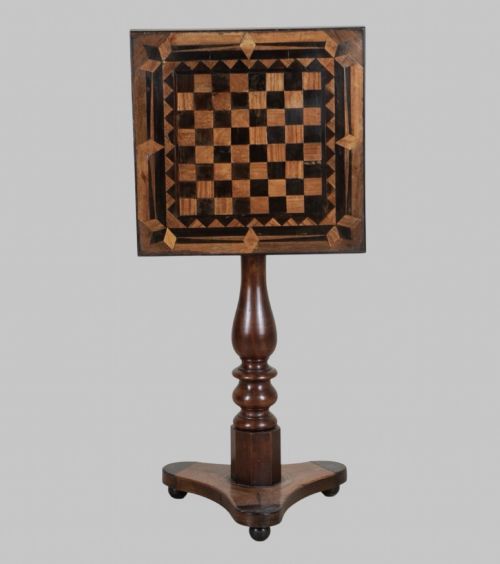
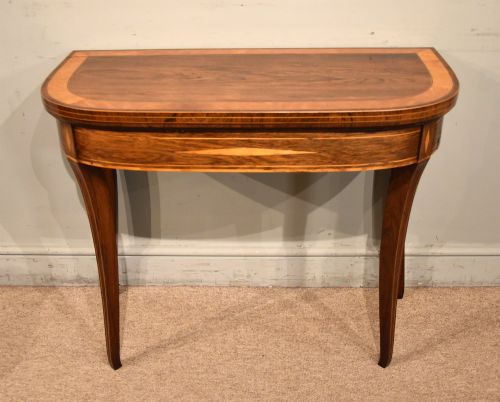
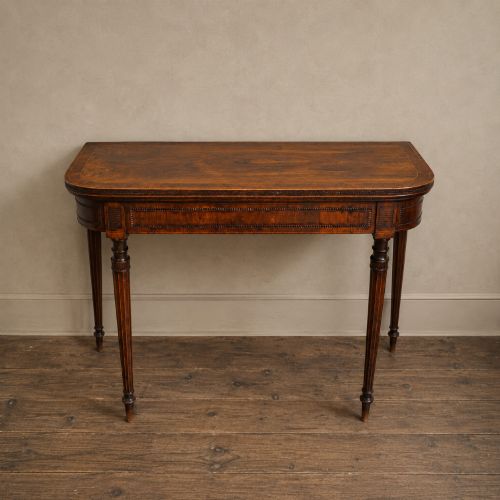
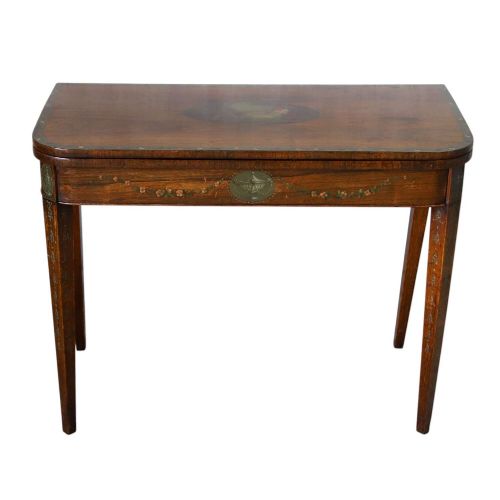
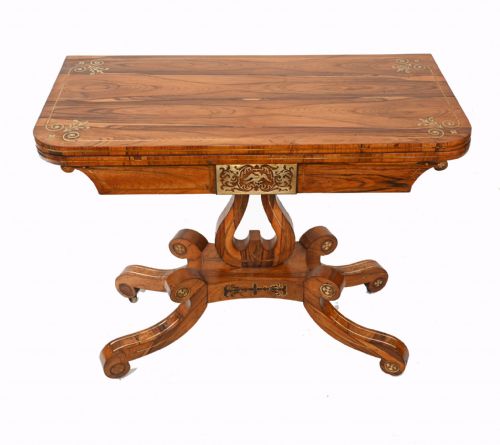
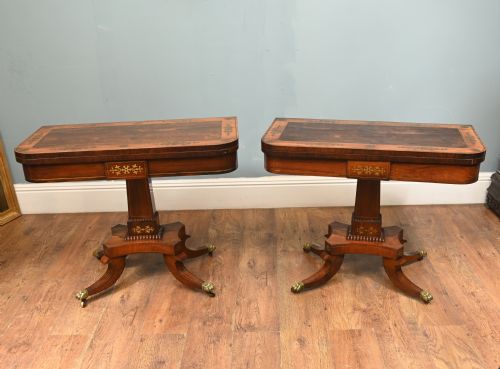


Georgian Rosewood Games Table
A georgian rosewood games table brings folding functionality and rich timber figuring into a room, serving as both a console and a card surface.
Georgian Rosewood Games Table
When searching for a georgian rosewood games table, a buyer encounters fold-over card tables and occasional multi-use pieces primarily originating from the Regency and late Georgian periods. These items typically feature a pivoting or folding top that opens to reveal a playing surface lined with baize.
The form developed to accommodate card playing and social gaming in domestic interiors. Most examples on this page date from the early nineteenth century, aligning with Regency and George III or George IV stylistic preferences.
Makers utilised timber flexibility to create demilune and rectangular formats that functioned as side consoles when closed. The survival of pairs and nested configurations indicates the diverse social demands these furniture forms met.
How they were made
Construction relies heavily on solid rosewood and mahogany framing, enhanced by decorative veneers including satinwood, boxwood, and burr yew crossbanding. Workshops applied these timbers to carcases using traditional joinery methods suited to folding top mechanisms.
Surface enrichment frequently involves brass inlay, stringing, and occasional gilding or painted decoration. The interior playing surfaces incorporate baize lining designed to cushion counters and cards during use.
Georgian Rosewood Games Table Retail Price Guide 2026
Typical asking prices for georgian rosewood games table among the pieces listed under this phrase on Sellingantiques today, from the lower quarter to the upper quarter. They describe what is for sale here now, not the wider market.
Listings feature rosewood combined with satinwood, boxwood, and mahogany across Georgian and Regency periods.
What varies in quality
Quality differences emerge in the selection and matching of rosewood veneers across the fold-over top. Superior examples display symmetrical grain patterns and precise contrasting stringing in boxwood or satinwood.
The execution of brass inlay and the stability of the swivelling mechanism distinguish finer workshops from standard production. Cabinetmakers who achieved seamless integration of brass mounts and robust leg construction produced the pieces that command greater attention.
Gillows
The Georgian Rosewood Games Table Glossary
- Crossbanding
- A border of veneer applied to the edges of a tabletop with the grain running perpendicular to the centre. This technique frames the primary timber figuring.
- Baize
- A coarse woolen fabric used to line the playing surfaces of card and games tables. It provides a durable, tactile mat for cards and gaming pieces.
- Demilune
- A half-moon shape used for console and games tables designed to sit flush against a wall when closed. The top unfolds to form a full circle or square for play.
- Quartetto
- A set of four graduated nesting tables designed to slide one beneath another. Regency examples in rosewood served occasional tea and game functions.
- Sabre leg
- A curving, outward-splaying leg of square or round section that tapers toward the foot. This support style appears frequently on Regency games tables.
Georgian Rosewood Games Table: Frequently Asked Questions
How do I use a fold-over games table?
The hinged top swivels and folds out to double the surface area, resting on a pivoting frame or gateleg support.
When closed, the piece functions as a slim console or side table against a wall.
What is the difference between George III and Regency styles?
George III furniture often exhibits classical restraint with mahogany and subtle inlay, spanning the later eighteenth century.
Regency design embraces bolder rosewood grain, brass inlay, and classical revival motifs from the early nineteenth century.
Why is baize used inside the table?
The woollen textile provides a soft, grippy surface that prevents playing cards and counters from sliding during games.
It also protects the wooden interior bed from friction and wear when the table top is closed.
How can I tell if the rosewood is original?
Original rosewood surfaces display warm, deep patination with natural grain variation acquired through centuries of light exposure and wax polishing.
Examining the underside and secondary timbers confirms period construction methods matching the outer veneers.