


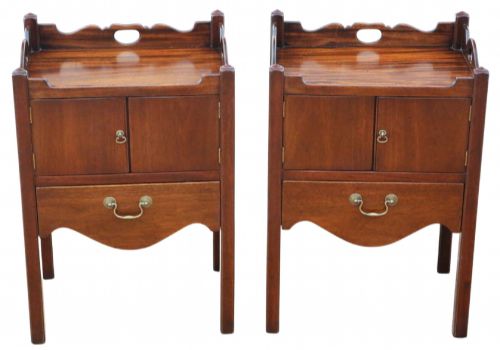
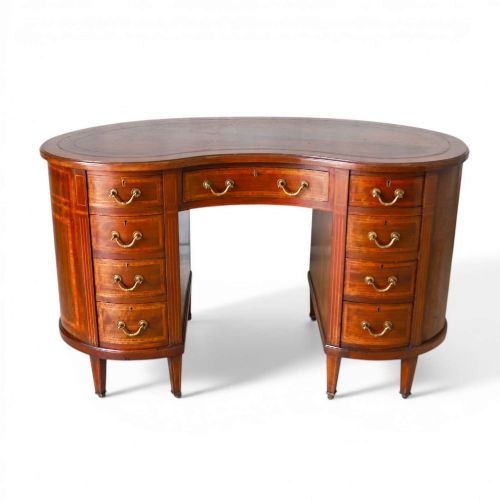

Georgian Revival Mahogany Table
A georgian revival mahogany table brings the balanced proportions and warm timber of eighteenth-century design into nineteenth- and twentieth-century rooms.
Georgian Revival Mahogany Table
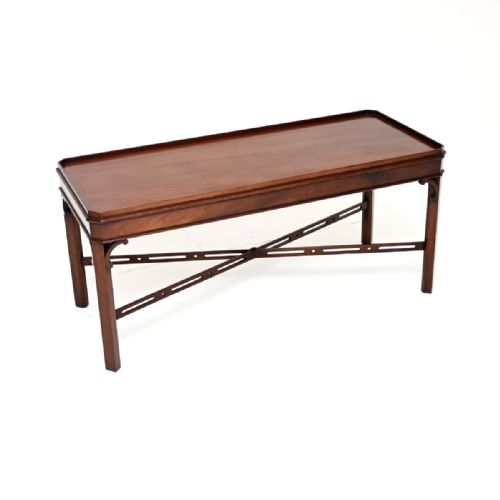
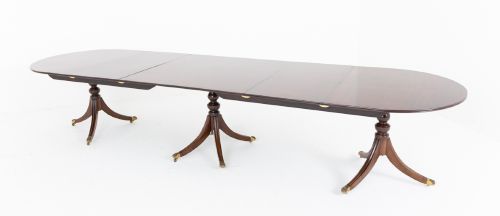
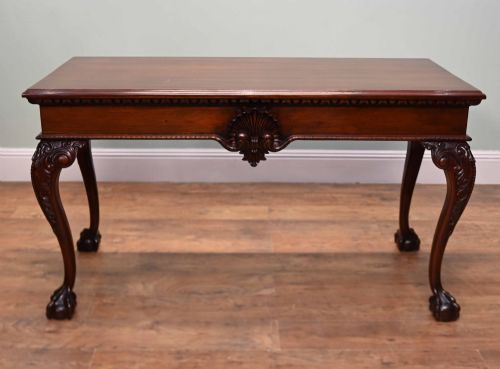
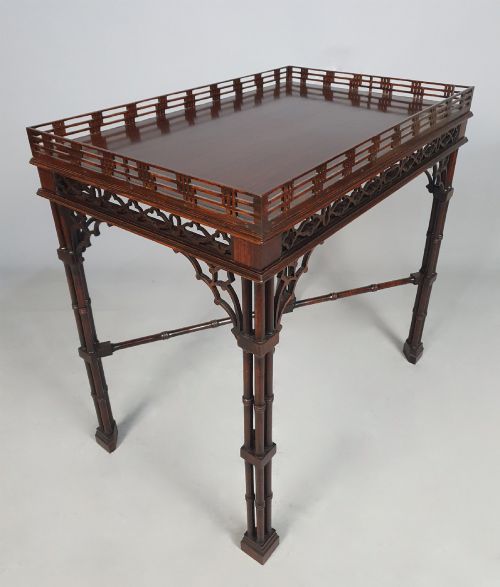
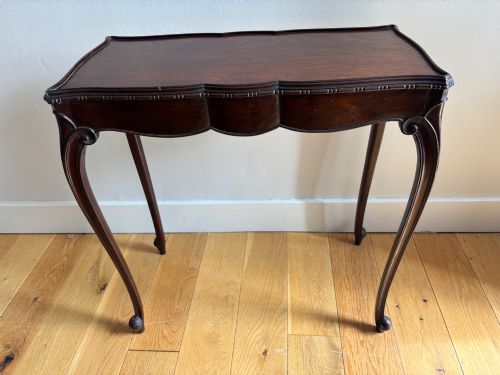
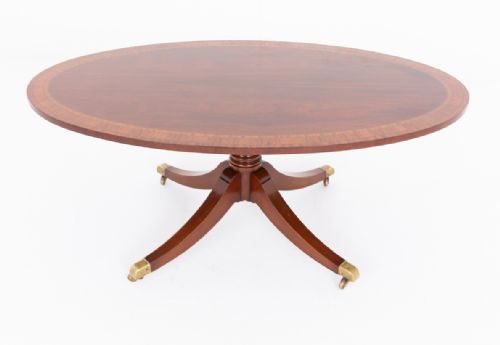
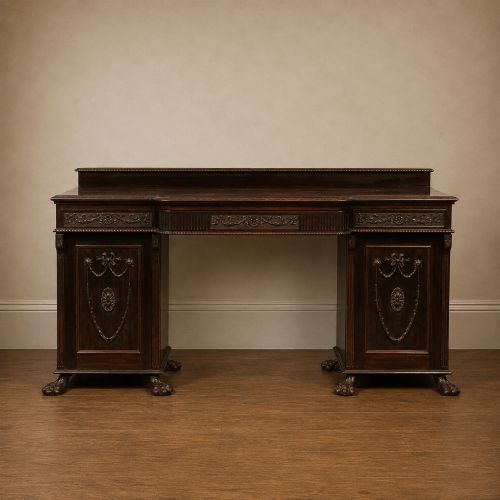
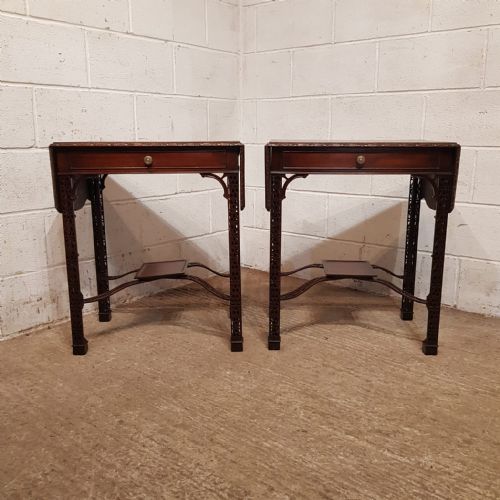
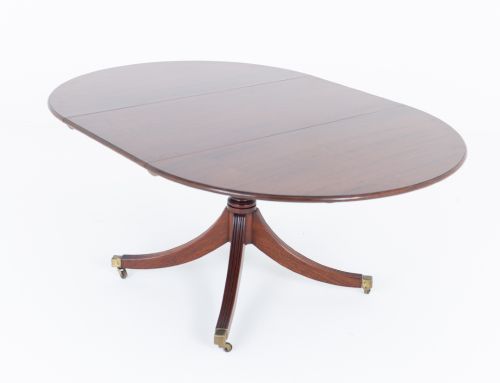
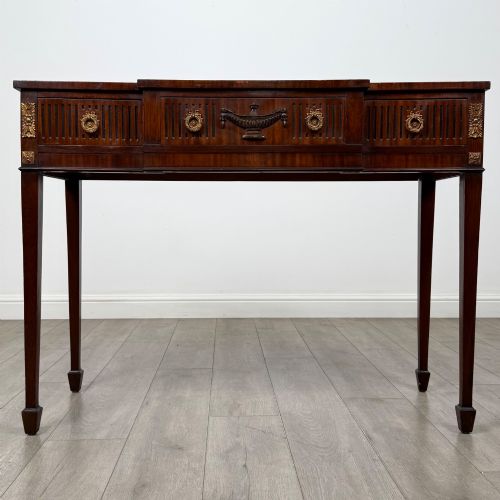
When you search for a georgian revival mahogany table, you encounter pieces built mostly between the late nineteenth century and the interwar years that draw on earlier George III, Chippendale, Sheraton, and Regency forms. Side tables, dining tables, wine tables, and card tables dominate the selection, often produced in Edwardian workshops that favoured classical proportions.
The version you are most likely to meet on this page is an occasional table, wine table, or dining table made around nineteen hundred to nineteen thirty, utilising solid mahogany and mahogany veneers with traditional edge moulding and turned supports.
How they were made
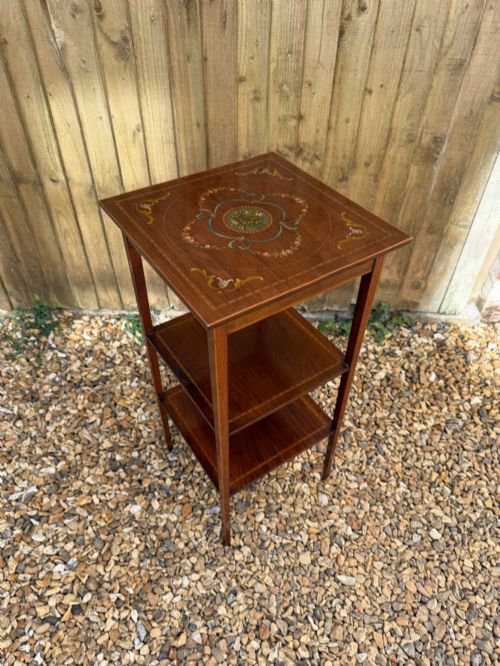
Cabinetmakers constructed these tables using solid mahogany and carefully selected mahogany veneers applied to secondary framing timbers, frequently incorporating boxwood and satinwood inlay for decorative contrast. Edges often receive crossbanding or stringing, while structural joints rely on traditional mortise and tenon techniques.
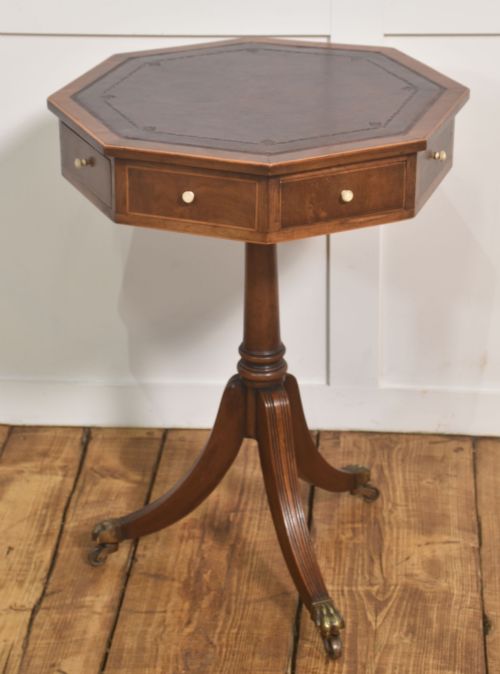
Surfaces were finished with shellac polish to reveal the natural grain and rich colour of the timber, sometimes supplemented by inset leather writing surfaces with blind tool stamping or brass fittings such as castors and handles.
Georgian Revival Mahogany Table Retail Price Guide 2026
Typical asking prices for georgian revival mahogany table among the pieces listed under this phrase on Sellingantiques today, from the lower quarter to the upper quarter. They describe what is for sale here now, not the wider market.
Listings feature mahogany, satinwood, and boxwood combined with brass hardware, spanning the Edwardian period through the nineteen thirties.
What varies in quality
The division between standard production and superior craftsmanship rests in the selection of the timber and the precision of the joinery. Figured mahogany with strong flame patterns and careful book-matching elevates a piece far above plain stock.
Execution of carved details, such as acanthus leaves on cabriole legs or reeded edges on pedestals, shows whether a maker worked by hand with confidence or relied on cast pressings. Hardware choices and the neatness of satinwood stringing further mark the standard of the workshop.
Edwards and Roberts
The Georgian Revival Mahogany Table Glossary
- Georgian Revival
- A design movement spanning the late nineteenth and early twentieth centuries that recreated eighteenth-century furniture forms. It adapts the proportions of Chippendale, Sheraton, and Hepplewhite for later homes.
- Satinwood Inlay
- Contrasting light-coloured timber set into recesses within the darker mahogany surface. This technique creates delicate borders, fan motifs, or geometric lines.
- Tilt Top Table
- A small occasional or wine table featuring a hinged mechanism that allows the tabletop to pivot vertically. This design enabled compact storage against a wall when not in use.
- Drum Table
- A circular library or occasional table resting on a central pillar with radiating feet, featuring drawers around the deep perimeter skirt. The top is frequently lined with tooled leather.
- Card Table
- A folding table designed for gaming or correspondence, typically featuring a hinged top that opens to reveal a baize- or leather-lined surface over concertina or swing-leg supports.
Georgian Revival Mahogany Table: Frequently Asked Questions
How do I identify a Georgian revival table?
Examine the timber, construction methods, and secondary woods beneath the tabletop or inside drawers. Revival pieces usually date from the late Victorian, Edwardian, or interwar periods, displaying machine-sawn framing alongside hand-finished surfaces.
Compare the decorative vocabulary against eighteenth-century examples to spot differences in proportions, polish finish, and hardware fixings that reveal a later date of manufacture.
Where should I place a wine table?
Wine tables work effectively beside armchairs, in small reception corners, or positioned between windows where their slender pedestals occupy minimal floor space. Their compact dimensions make them adaptable for holding small lamps or drinks.
Keep them away from direct heat sources and strong sunlight to protect the polished mahogany surface and prevent timber shrinkage.
Can I use an antique card table daily?
Card tables function well for occasional dining, writing, or display, provided you treat the folding leaf and hinge mechanisms with care. The pivot joints and supporting legs were engineered for social use rather than heavy daily loads.
Use coasters and protective pads to safeguard the polished top from moisture rings and scratches during regular use.
What is the difference between a drum table and a wine table?
A drum table is a substantial circular piece featuring a deep frieze fitted with drawers around its circumference, supported by a central pillar and heavy legs. It is designed to stand centrally in a room or beside a large sofa.
By contrast, a wine table is a lightweight, portable piece with a small circular or shaped top intended for holding a single glass or candle.