



Fold Out Tea Table
A fold out tea table brings eighteenth-century craftsmanship into a modern home, offering a compact surface that expands instantly for evening games.
Fold Out Tea Table
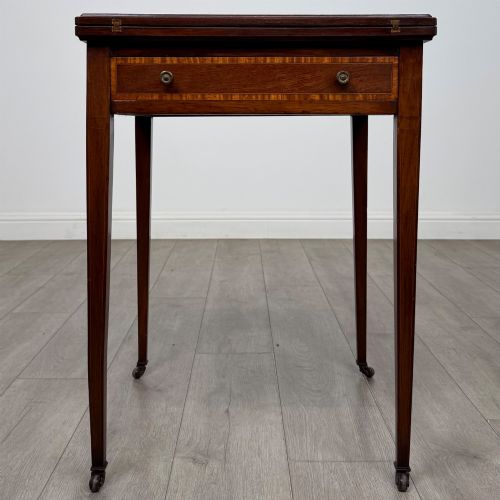
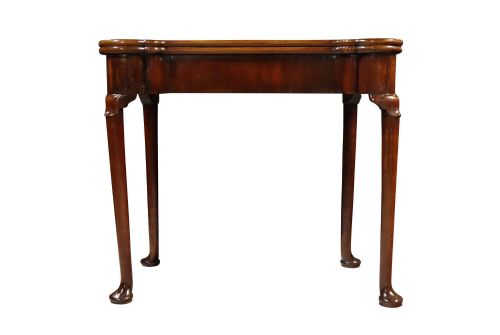
A fold out tea table combines a hinged top with a concealed surface, shifting easily from a console against the wall to a full table for cards or tea. The pieces seen here span the Georgian, Regency, and Edwardian eras, with mahogany forming the majority of the surviving examples.
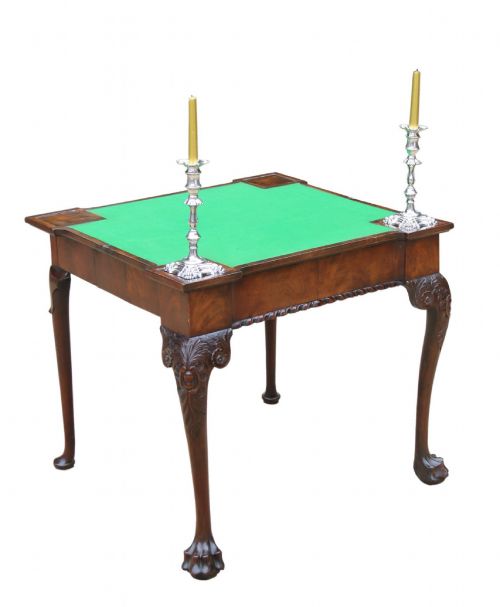
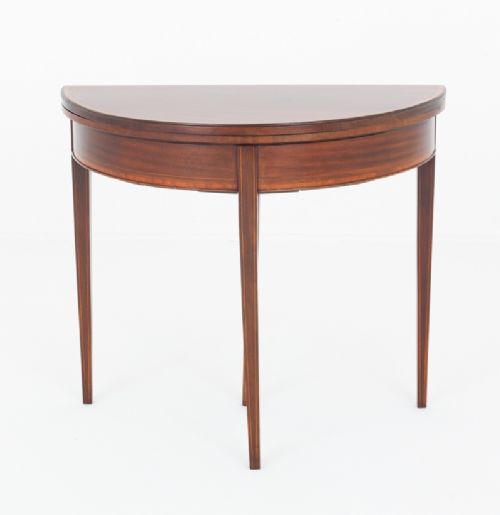
Makers shaped these items primarily as demi-lune or rectangular forms, often incorporating baize-lined interiors for gaming. The domestic habits of the eighteenth and nineteenth centuries drove the demand for such versatile furniture in polite drawing rooms.
Most examples encountered on this page belong to the Georgian and Edwardian periods, utilising timber frames that open on concertina actions or swing-out rear legs. Buyers select them for their dual capacity to serve as decorative side tables and functional game surfaces.
How they were made
Cabinetmakers constructed these frames using solid mahogany, Cuban mahogany, satinwood, and oak, often mounting brass hinges and mechanisms to support the pivoting leaves. Selected examples introduce boxwood inlay and marquetry across the top surface to frame the timber grain.
Internal components relied on concertina actions and twin swing-out drawers to bear the weight of the unfolded leaf. Interiors frequently incorporate baize lining for card play and dished gaming wells carved directly into the solid wood.
Fold Out Tea Table Retail Price Guide 2026
Typical asking prices for fold out tea table among the pieces listed under this phrase on Sellingantiques today, from the lower quarter to the upper quarter. They describe what is for sale here now, not the wider market.
The listings on this page span the 18th Century, Regency, Victorian, and Edwardian periods, executed in mahogany, satinwood, and oak.
What varies in quality
Quality rests upon the selection of timber figures, such as burr or Cuban grain, and the precision of the joinery where the leaves meet when closed. Pieces utilising complex concertina actions show a higher standard of workshop execution than simpler rule-joint hinges.
The integration of decorative elements like boxwood inlay, marquetry, and finely turned legs separates standard domestic output from more ambitious cabinet work. Preservation of the original baize and structural hardware also influences the standing of an individual table.
The Fold Out Tea Table Glossary
- Demi-lune
- A half-moon shape used for table tops designed to sit flat against a wall. This profile became particularly popular during the Georgian period.
- Concertina action
- An expandable frame mechanism that stretches outward to support the hinged leaf of a table. It allows the rear legs to move centrally when the top is opened.
- Baize
- A coarse woolen fabric traditionally used to line the playing surface of card and games tables. It provides a soft texture for handling cards.
- Marquetry
- The art of applying pieces of veneer to a structure to form decorative patterns. Craftsmen utilised contrasting timbers like satinwood and boxwood for this work.
- Dished gaming wells
- Hollowed circular recesses carved into the wooden surface of a card table to hold counters or coins during play. They appear in specific Georgian pieces.
Fold Out Tea Table: Frequently Asked Questions
How did people use a fold out tea table?
These pieces functioned primarily as side or console tables during the day, keeping the room tidy when folded against the wall.
In the evening, the top unfolded to reveal a baize-lined surface for tea drinking, cards, or social games.
What woods appear most often?
Mahogany forms the primary material across the majority of surviving examples, including Cuban variants.
Satinwood and oak appear alongside inlaid boxwood details and brass hardware.
How do I date a table?
Structural traits like concertina actions and specific leg profiles help identify Georgian or Regency origins.
Edwardian pieces often display lighter inlay work and distinct proportions compared to eighteenth-century examples.
Can I use it for daily dining?
The hinged tops and internal support mechanisms are built for tea and card playing rather than heavy family meals.
Placing hot dishes or heavy loads on the unsupported leaf can strain the antique timber joints.