
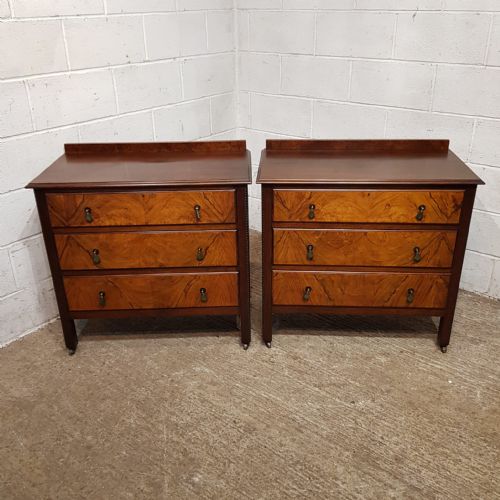


Georgian Revival Commode
A georgian revival commode brings neoclassical proportion and warmth of timber to a room without the museum price.
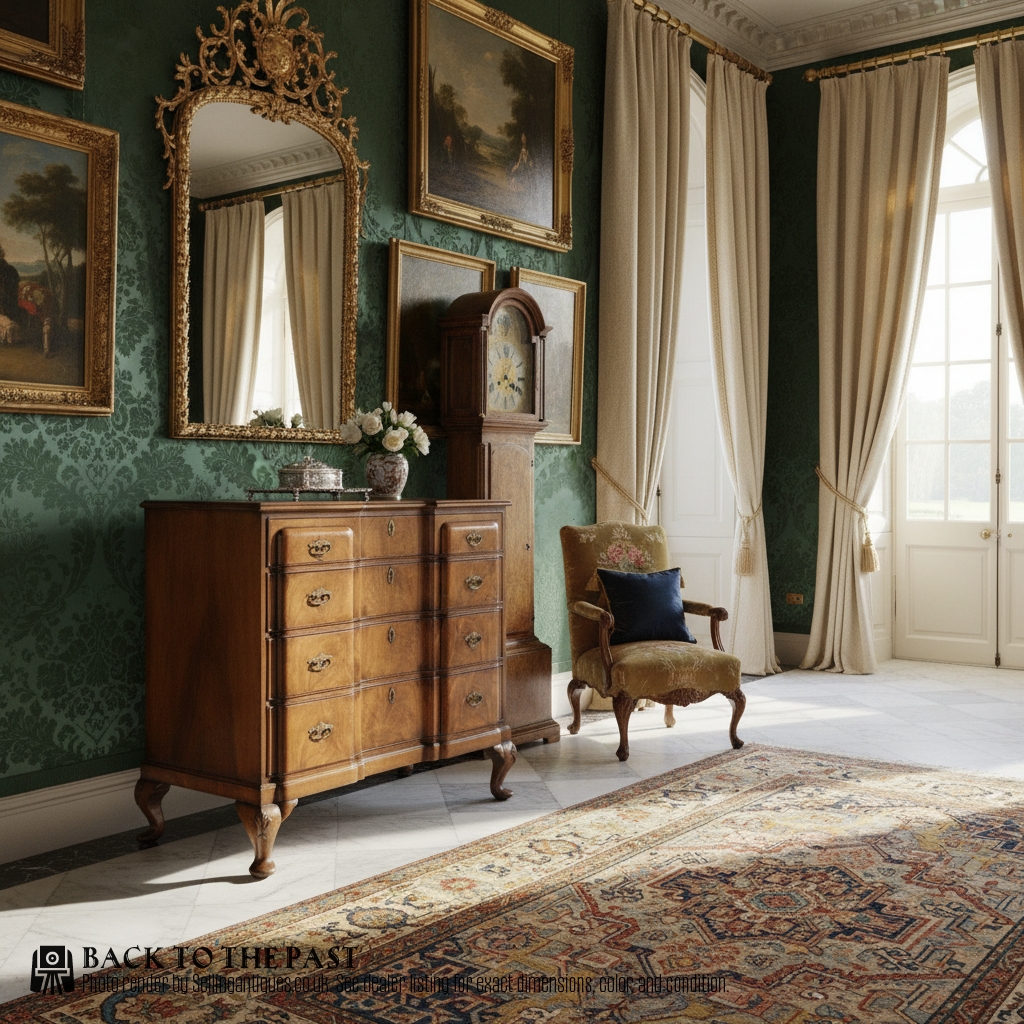
Georgian Revival Commode
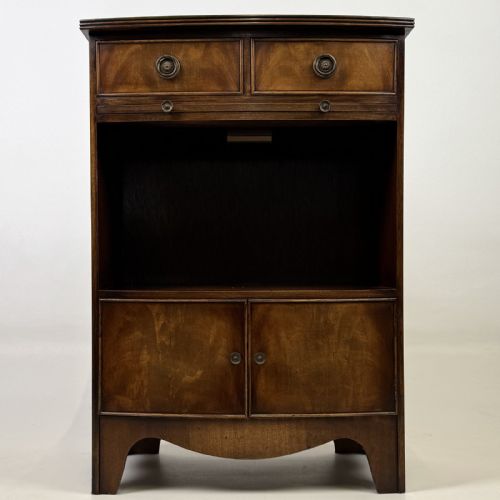
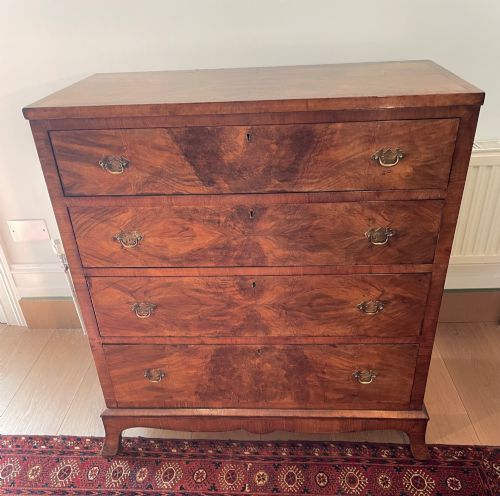
A georgian revival commode encompasses chests of drawers and side cabinets built during the nineteenth and twentieth centuries in imitation of eighteenth-century forms. You will most frequently meet mahogany, walnut, and satinwood examples dating from the Edwardian period through to the nineteen-thirties.
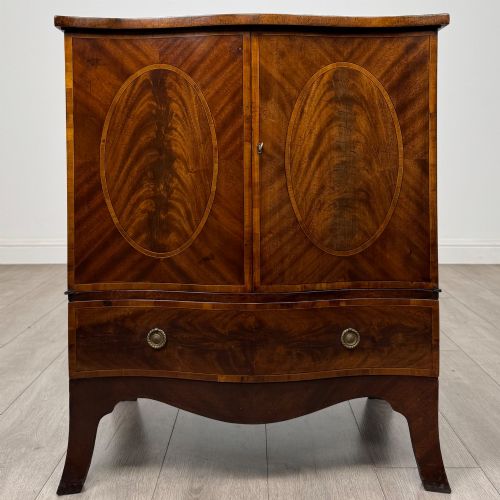
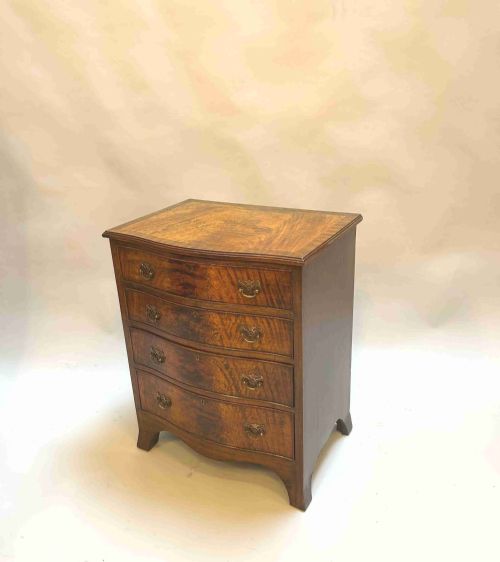
The objects take various functional shapes, including serpentine fronts, bow fronts, and block fronts, alongside side cabinets and chests on stands. Makers of these revival pieces drew heavily upon Sheraton, Chippendale, Queen Anne, and Adam vocabularies.
These items served historically to provide storage in principal rooms while displaying taste through figured veneers and decorative stringing. Today, buyers select them for bedrooms and living spaces where standard modern furniture lacks character and scale.
How they were made
Carpenters constructed carcasses in solid oak or pine, then applied face veneers of mahogany, walnut, burr walnut, and figured walnut to create rich surface movement. Boxwood inlay and painted decoration frequently accent the primary timber.
Brass handles, escutcheons, and bracket feet complete the construction, mirroring the hardware of the original Georgian periods. Joinery techniques rely on traditional drawer dovetails and closely fitted secondary timbers.
Some chests hide their drawers behind cupboard doors, keeping your socks a secret from polite company.
What varies in quality
The selection of timber veneer dictates much of the visual success, with matched figure work and symmetrical grain patterns lifting a piece above standard production. Crispness in the boxwood inlay and the delicacy of painted details further distinguish finer examples.
Proportion and scale separate workshop output, as successful revival pieces maintain the balanced sightlines of the eighteenth-century prototypes rather than appearing heavy or overly congested in their ornament.
Edwards and Roberts·Whytock and Reid
The Georgian Revival Commode Glossary
- Serpentine
- A front shape curving outward at the centre and inward toward the ends. This undulating profile requires skilled woodworking to follow the contours accurately.
- Bow front
- A convex curved cabinet front that projects outward in a smooth arc. It gained popularity during the late eighteenth century and was frequently revived.
- Block front
- A cabinet front divided vertically into three panels, where the outer two project forward and the central section recedes. It creates a strong architectural shadow.
- Satinwood
- A pale, hard timber from tropical trees displaying a lustrous golden sheen. It serves as a contrasting veneer for inlay work and banded borders.
- Escutcheon
- A protective plate surrounding a keyhole. In these pieces, cast brass examples often match the period style of the handles.
Georgian Revival Commode: Frequently Asked Questions
What is a georgian revival commode?
A georgian revival commode is a chest of drawers or side cabinet made in the nineteenth or twentieth century based on eighteenth-century designs.
These pieces use traditional timbers like mahogany and walnut to recreate historical styles for domestic use.
How do I date these pieces?
Dating relies on secondary timbers, construction methods, and the specific revival style favoured at the time of manufacture.
Edwardian and nineteen-thirties pieces often show machine assistance alongside hand joinery, unlike original eighteenth-century work.
Where should I place a commode?
These cabinets suit bedrooms, hallways, or living rooms where they provide surface space and enclosed drawer storage.
Their compact proportions mean they fit easily against walls without dominating smaller interior volumes.
How do I care for walnut veneer?
Protect walnut and mahogany surfaces from direct sunlight and excessive heat fluctuations to prevent veneer lifting.
Regular dusting with a dry cloth and occasional application of appropriate wax maintains the timber's lustre.