


Shaped Front Walnut Drawers
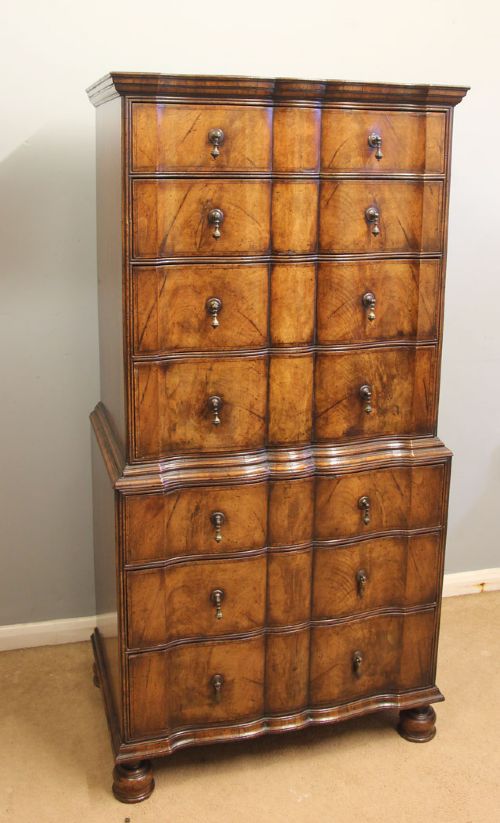
Shaped front walnut drawers offer rich timber grain and sculptural curves, bringing refined presence to traditional rooms.
Shaped Front Walnut Drawers
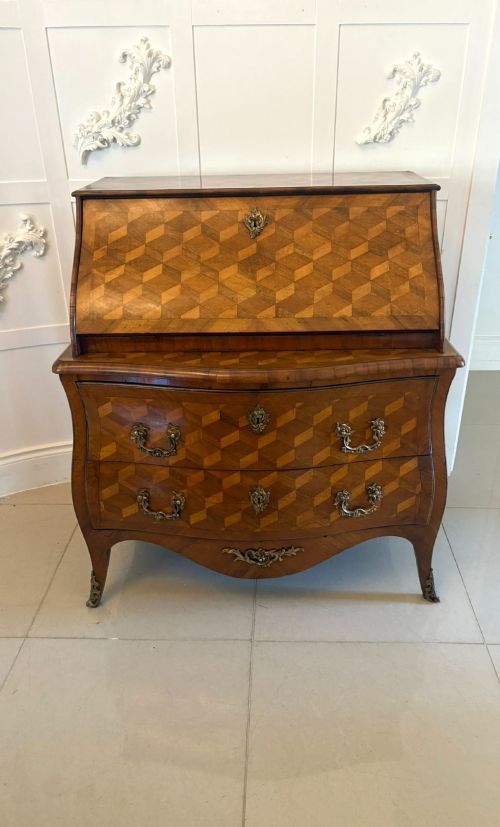
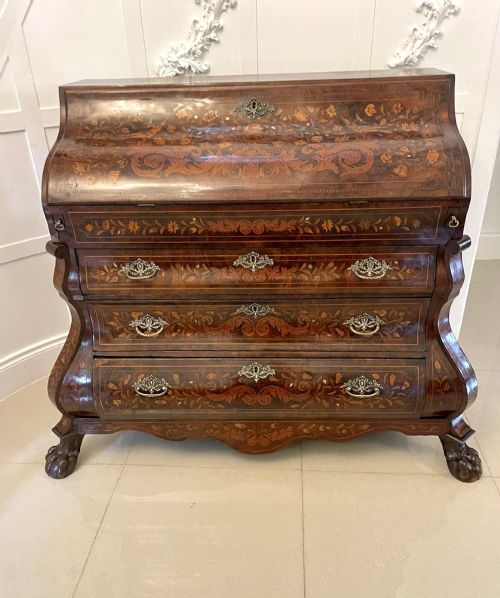
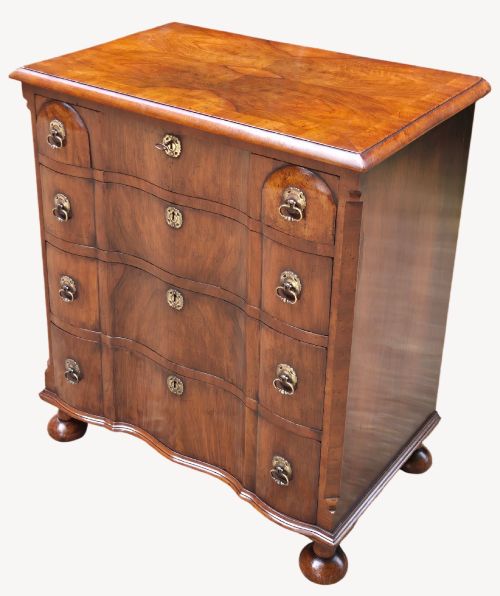
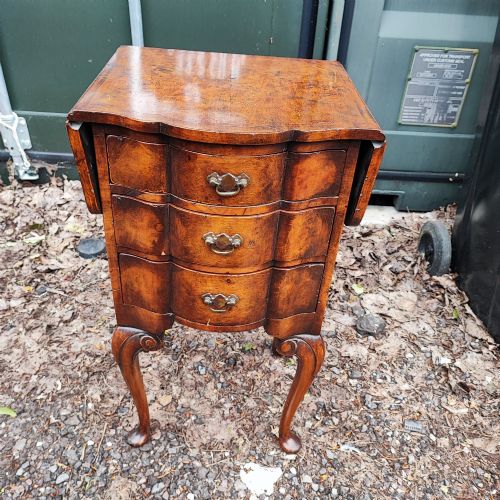
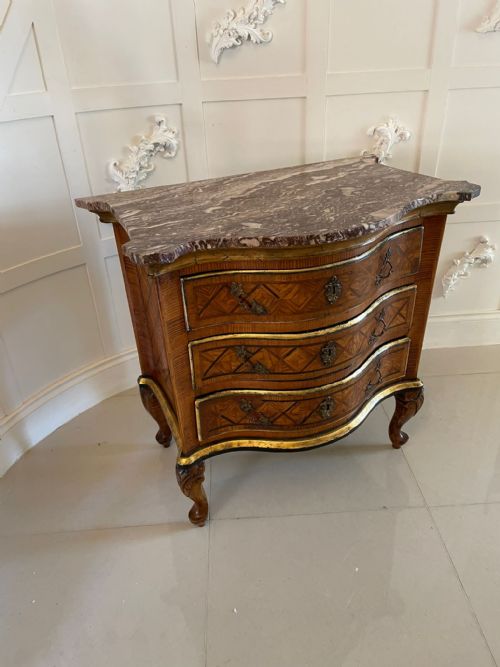
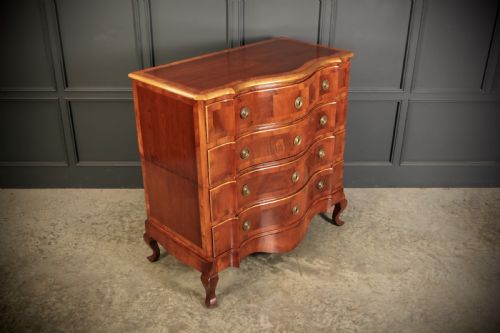
Buyers frequently encounter chests of drawers and commodes featuring serpentine, bombe, or block fronts. These items originate from British, Dutch, French, and Italian workshops, employing timber varieties that showcase distinctive grain patterns.
How they were made
Cabinetmakers utilised walnut, burr walnut, and figured walnut veneers applied over secondary woods such as oak and fruitwood. Marquetry and parquetry techniques incorporated floral motifs and geometric designs into the surfaces.
Brass handles, escutcheons, and mounts complemented the woodwork, while certain commodes integrated marble tops. Structural integrity relied on dovetailed drawer construction and shaped framing to achieve the characteristic contours.
Some 18th-century bureau desks conceal secret compartments behind miniature drawers for hiding private correspondence.
What varies in quality
Quality differences emerge in the selection and matching of walnut veneers across curved surfaces. Finer examples display continuous grain flow and intricate marquetry details that align precisely with the contours of the piece.
The execution of the shaped carcass, whether serpentine or bombe, determines the structural refinement of the furniture. Superior pieces maintain harmonious proportions and crisp moulding details throughout the drawer fronts and sides.
Druce And Co
The Shaped Front Walnut Drawers Glossary
- Burr walnut
- A highly figured wood grain obtained from walnut tree growths, prized for its swirling patterns. Cabinetmakers utilised burr veneers on prominent surfaces to create decorative visual impact.
- Bombe
- A bulging, convex furniture shape swelling outward toward the base, prominent in continental designs. This curved form required skilled carpentry to fit drawers into an undulating carcass.
- Serpentine
- A front contour characterised by a convex centre flanked by concave curves, creating an undulating line. This shape appeared frequently on 18th-century chests and commodes.
- Parquetry
- A geometric mosaic of wood pieces used for decorative veneer on furniture surfaces. Craftsmen arranged contrasting timber tones to form precise patterns.
- Marquetry
- The art of applying pieces of veneer to a structure to form decorative pictures or designs. Floral motifs often adorned the drawer fronts of bureau desks and commodes.
Shaped Front Walnut Drawers: Frequently Asked Questions
How do I care for walnut furniture?
Keep walnut furniture away from direct sunlight and heat sources to prevent the timber and veneers from drying out.
Dust surfaces regularly with a soft, dry cloth and avoid commercial silicone polishes.
What is a bombe commode?
A bombe commode is a chest of drawers or cabinet featuring strongly rounded, swelling sides and front.
Originating in continental Europe during the 18th century, these pieces showcase advanced veneering and cabinetmaking skills.
How do I distinguish Queen Anne style?
Queen Anne style pieces typically exhibit restrained elegance, featuring graceful curves and subdued ornamentation rather than heavy carving.
Walnut became the predominant timber during this period, often highlighting figured grain patterns.
Where were these pieces made?
These items originated in workshops across Britain, France, Italy, and the Netherlands.
Regional differences appear in the hardware, secondary timbers, and specific interpretations of baroque and rococo styles.