
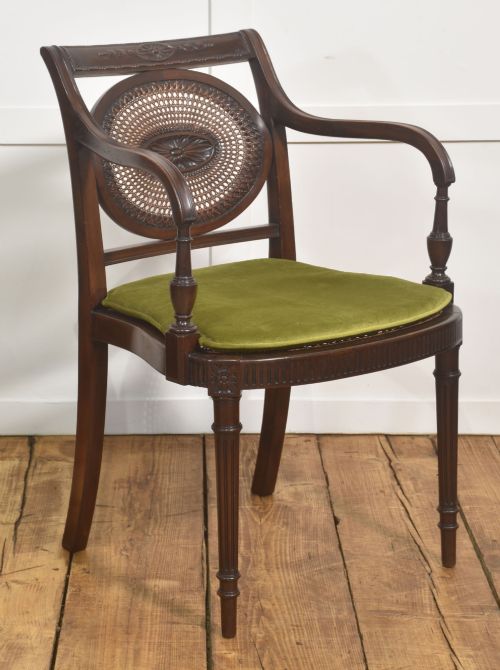
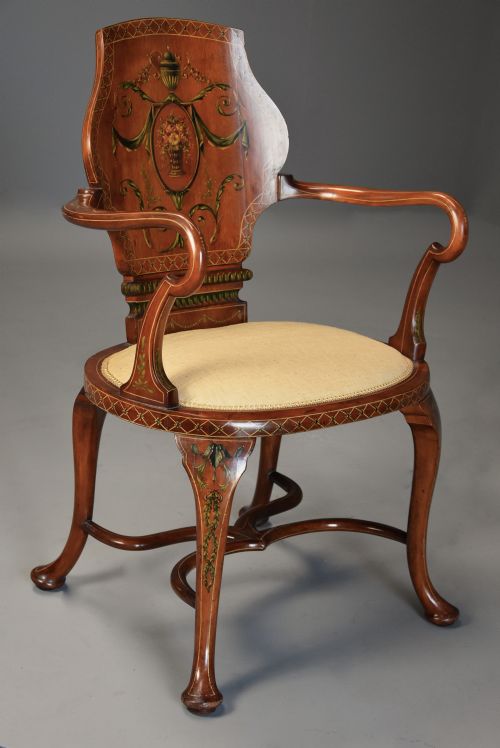
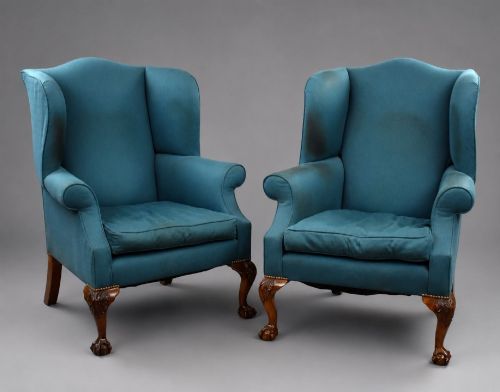
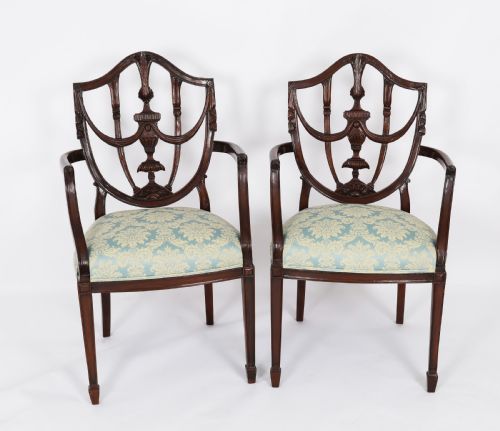
Georgian Revival Chairs
Georgian revival chairs bring eighteenth-century elegance into later interiors through skilled interpretation of Chippendale, Hepplewhite, and Sheraton forms.
Georgian Revival Chairs
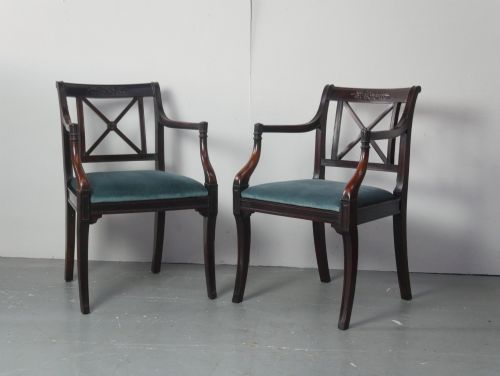
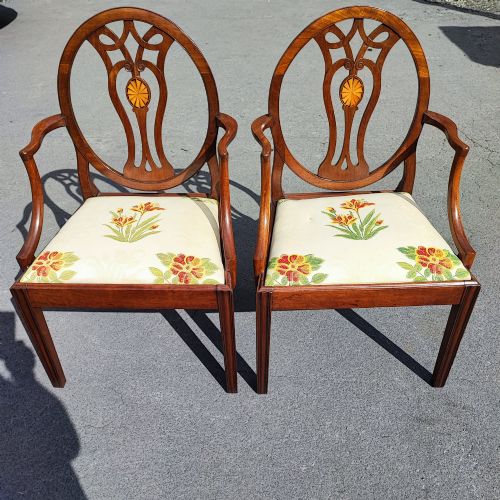
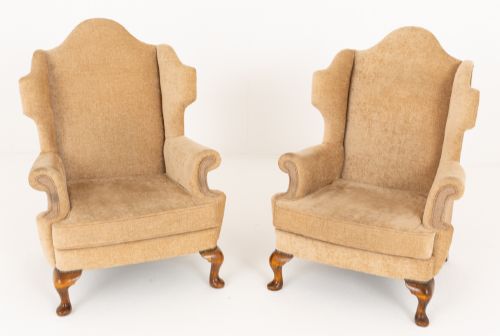
Georgian revival chairs are decorative and functional seating options produced mainly during the late nineteenth and early twentieth centuries, drawing heavily on earlier eighteenth-century designs. When exploring georgian revival chairs, buyers frequently encounter large dining sets alongside individual armchairs, library chairs, and wing backs.
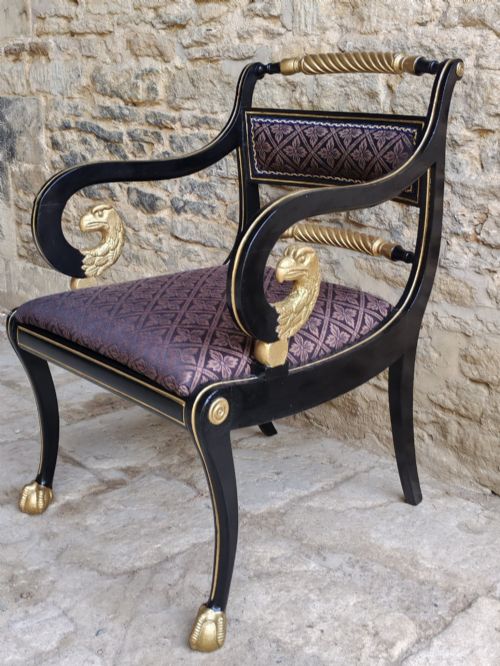
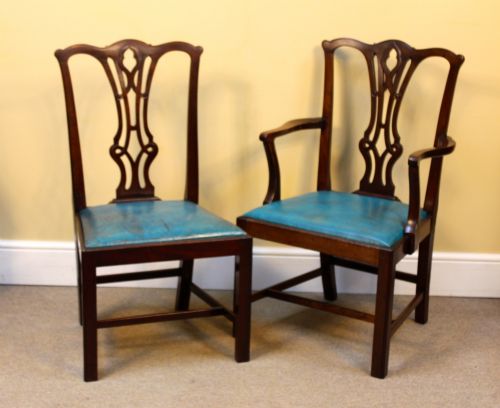
The selection ranges from elaborate Chippendale style carved mahogany dining chairs to satinwood painted pieces and leather upholstered Gainsborough chairs. Many examples date from the Edwardian era up to the 1930s, capturing the formality and proportion of the Georgian period using timbers and upholstery typical of their actual production date.
How they were made
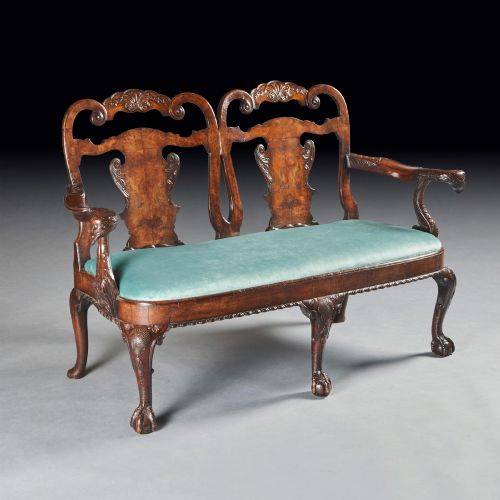
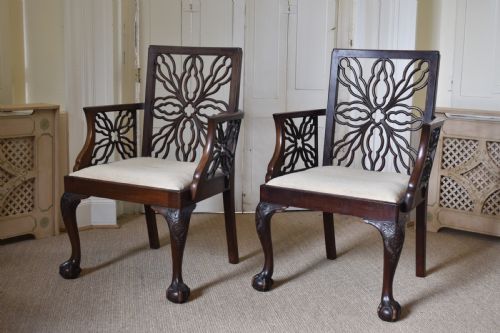
Makers relied primarily on solid mahogany, walnut, and satinwood to construct these frames, frequently incorporating detailed hand carving on splats, knees, and rails. Upholstery materials like leather, velvet, fabric, and textile were fastened over padded seats, whilst brass details and cane panels appeared on specific library and open armchairs.
Construction techniques balanced traditional joinery with the industrial capabilities of the late nineteenth and twentieth centuries. Cabinetmakers utilised mahogany frames designed to emulate George II, Chippendale, and Hepplewhite aesthetics, applying inlay and painted decoration where the lighter Sheraton style was desired.
Georgian Revival Chairs Retail Price Guide 2026
Typical asking prices for georgian revival chairs among the pieces listed under this phrase on Sellingantiques today, from the lower quarter to the upper quarter. They describe what is for sale here now, not the wider market.
The listings span mahogany, satinwood, walnut, fabric, leather, brass, and cane across Edwardian and early twentieth-century production periods.
What varies in quality
The distinction between standard commercial seating and exceptional craftsmanship rests in the depth and crispness of the wood carving. Superior pieces display precisely executed pierced splats, robust jointing, and carefully selected timber grains rather than superficial surface moulding.
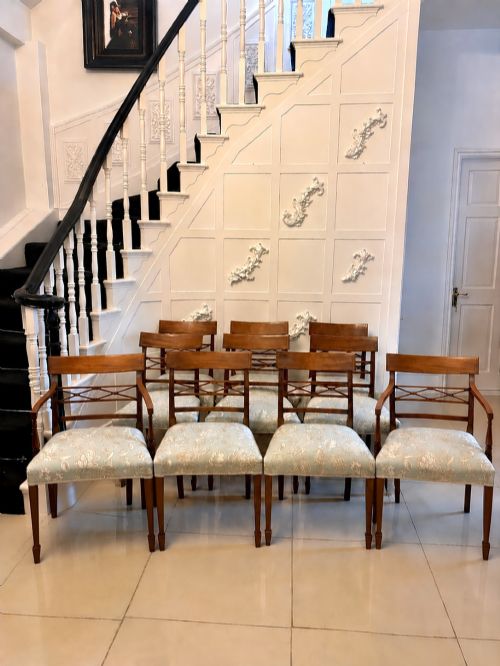
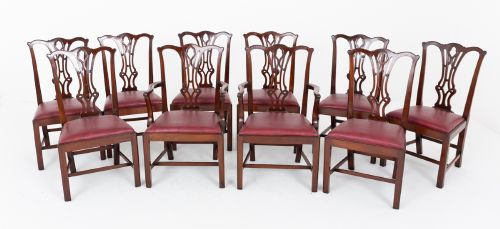
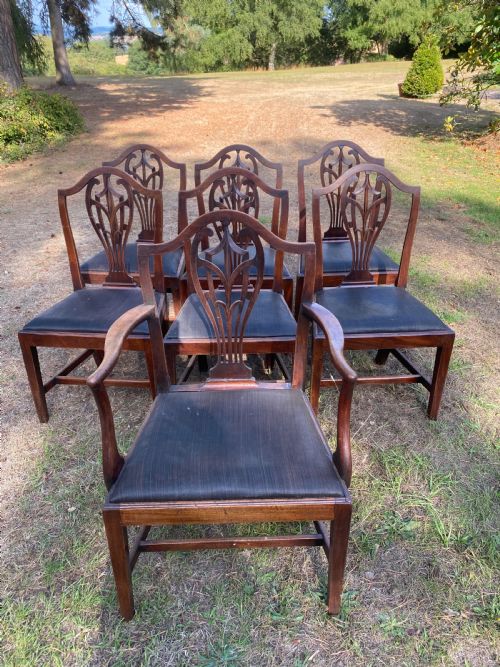
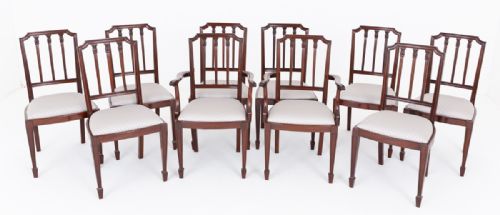
Proportion and fidelity to original eighteenth-century blueprints also dictate value, as does the completeness of larger dining sets. Greater investment is typically justified by matched sets of eight or ten chairs retaining their original leather or textile upholstery and harmonious timber patination.
The Georgian Revival Chairs Glossary
- Carver armchair
- An armchair with wooden armrests, traditionally placed at the head of a dining table or used alongside matching side chairs.
- Shield back
- A chair back shaped like a heraldic shield, popularised by Hepplewhite design books and widely re-created during the revival period.
- Gainsborough chair
- A wide, upholstered armchair with open padded arms and short legs, commonly covered in leather for library use.
- Splat
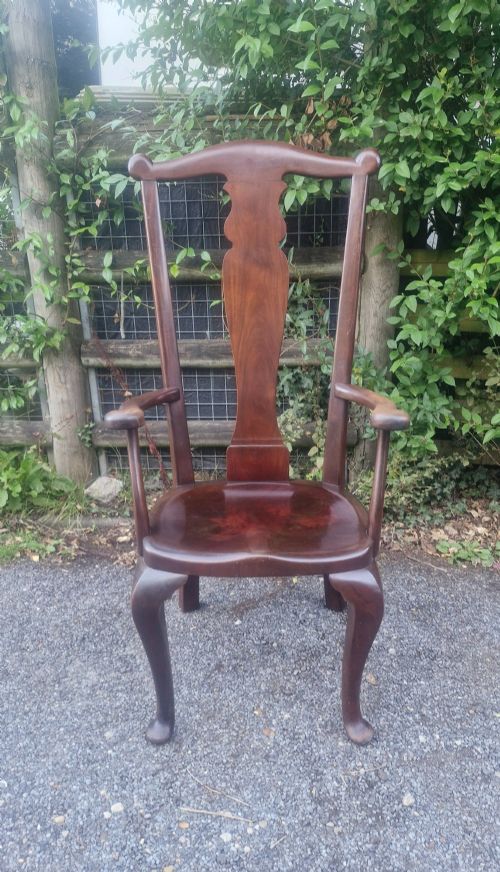
- The vertical central strip of wood within a chair back, often intricately carved or pierced in Chippendale and revival models.
- Wing chair
- An armchair featuring protective side panels designed to deflect draughts, frequently upholstered in leather or heavy fabric.
Georgian Revival Chairs: Frequently Asked Questions
How do I identify a Georgian revival chair?
Georgian revival chairs display eighteenth-century stylistic traits such as cabriole legs, carved splats, or shield backs, but employ nineteenth or twentieth-century timber preparation, secondary woods, and hardware.
Closer inspection of the construction methods, tool marks, and upholstery webbing usually reveals whether a piece is an authentic Georgian original or a later revival interpretation.
Were these chairs used for dining?
Many of these pieces were produced as large dining sets comprising numerous side chairs and a pair of matching carver armchairs for the heads of the table.
Makers also built individual armchairs, library chairs, and hall chairs intended for studies, bedrooms, and reception rooms rather than formal dining.
What woods were used for these chairs?
Mahogany remains the predominant timber found across these listings, valued for its stability, rich colour, and suitability for intricate carving.
Other examples incorporate walnut, satinwood, ash, or elm, particularly when replicating specific regional seating forms like Windsor kitchen chairs or Sheraton inlaid furniture.
How do I care for leather upholstery?
Leather upholstered library and Gainsborough chairs require regular dusting with a soft, dry cloth and occasional treatment with appropriate leather dressings to prevent drying.
Keeping these chairs away from direct sunlight and strong heat sources protects both the leather hide and the underlying wooden frame from splitting.