


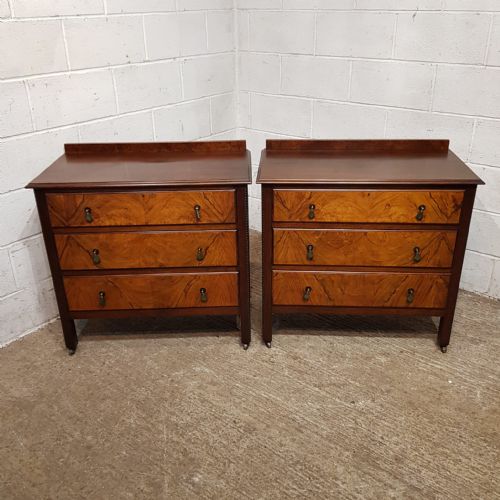
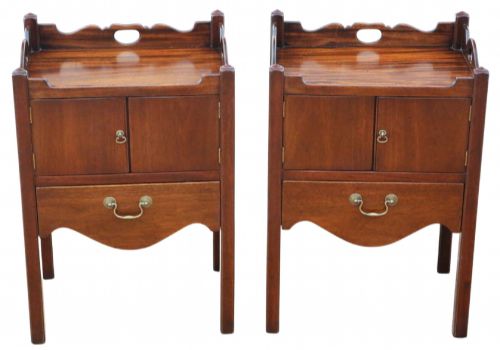


Georgian Revival Bedside
Georgian revival bedside tables bring refined 18th-century forms into early 20th-century bedrooms with timeless cabinet-making skill.
Georgian Revival Bedside
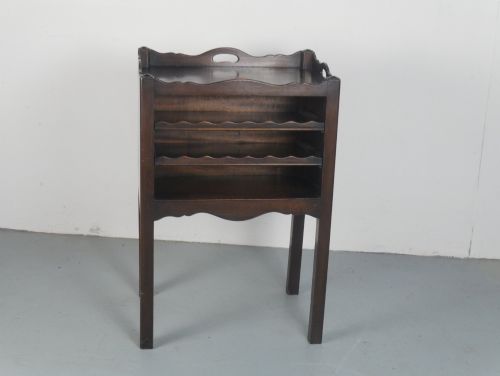
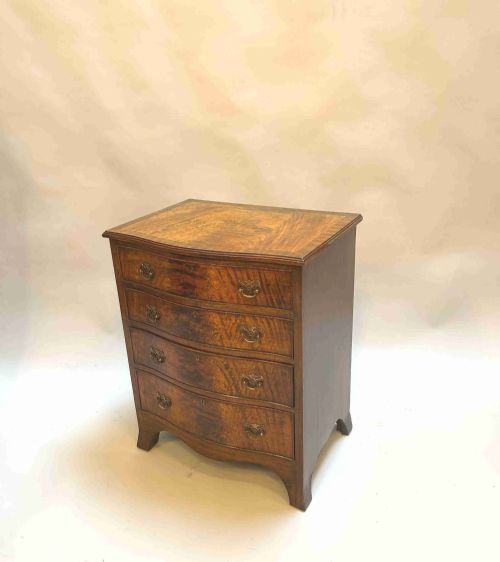
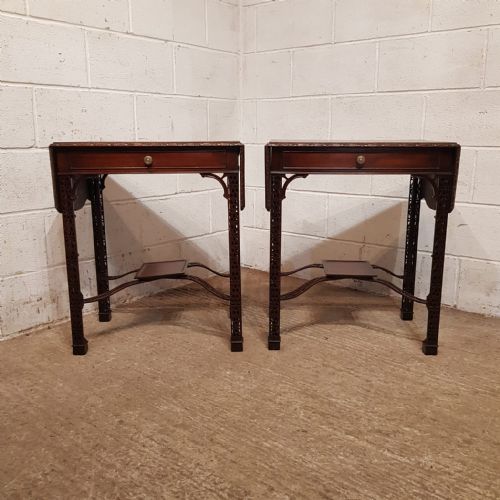
When you search for georgian revival bedside, you encounter cabinets, small chests of drawers, and drop-leaf side tables. These pieces date predominantly from the early 20th century, drawing directly upon 18th-century proportions and stylistic motifs.
Makers of this era also utilised simpler occasional tables and lamp conversions alongside traditional cupboards. Each variant maintains the restrained elegance characteristic of the revival movement.
Materials and construction
Mahogany and walnut form the structural core of these items, frequently paired with burr walnut veneers for decorative grain patterns. Selected pieces also incorporate satinwood and inlaid details.
Cabinet makers employed traditional joinery techniques, mounting doors and drawers within solid timber frames. Brass hardware and occasional hand-painted detailing complete the surface finishes.
Georgian Revival Bedside Retail Price Guide 2026
Typical asking prices for georgian revival bedside among the pieces listed under this phrase on Sellingantiques today, from the lower quarter to the upper quarter. They describe what is for sale here now, not the wider market.
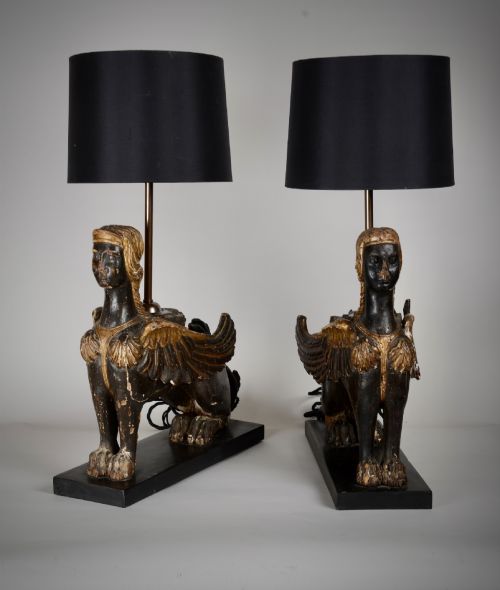
Sphinx lamp conversions bridge ancient Egyptian revival tastes with practical 18th-century lighting adaptations.
Distinctions in quality
Quality rests upon the selection of timbers and the precision of the cabinet work. Matched veneers and carefully chosen secondary woods indicate a higher standard of manufacture.
Proportion and execution of historical details differentiate standard production from finer workshops. The crispness of carved elements and the integration of inlay set the better examples apart.
Edwards and Roberts
The Georgian Revival Bedside Glossary
- Georgian Revival
- A design movement spanning the late 19th and early 20th centuries that reinterprets 18th-century British furniture styles. It borrows heavily from Chippendale, Sheraton, and Queen Anne aesthetics.
- Satinwood
- A durable, yellowish-grey timber with a lustrous sheen, often utilised for fine cabinet work and decorative veneers. It gained popularity during the neoclassical period and subsequent revivals.
- Burr Walnut
- Timber taken from the warted growth on a walnut tree, yielding complex and highly decorative grain patterns. It is typically sliced into veneers for furniture facades.
- Drop Leaf
- A table design featuring hinged flaps on the sides that can be folded down to save space or raised to expand the surface area. These leaves are supported by swing legs or brackets.
Georgian Revival Bedside: Frequently Asked Questions
What periods do these bedside pieces come from?
The listings span from the late 19th century through the 1930s, capturing the height of the revival movement. Earlier 19th-century and 18th-century examples also appear.
These dates reflect when the physical pieces were manufactured, rather than the historical era of the original designs.
Are pairs commonly found together?
Many listings feature matched pairs of bedside cabinets or side tables, which are particularly sought after for symmetry in bedroom design. Near pairs also occur, showing subtle variations.
Single tables appear alongside these pairs to suit different spatial requirements.
How do I identify different revival styles?
Chippendale revival pieces often display carved wooden details and classical proportions, while Sheraton revival items lean towards delicate inlay and satinwood. Gothic revival variants introduce pointed arches.
Examining the specific decorative motifs on the cabinet doors or legs reveals the stylistic influence.
How do I care for mahogany and walnut surfaces?
Keep these timber surfaces away from direct sunlight and heat sources to prevent the wood and veneer from drying out. Regular dusting with a soft, dry cloth preserves the polished finish.
Avoid using silicone-based polishes that can build up a residue over time.