
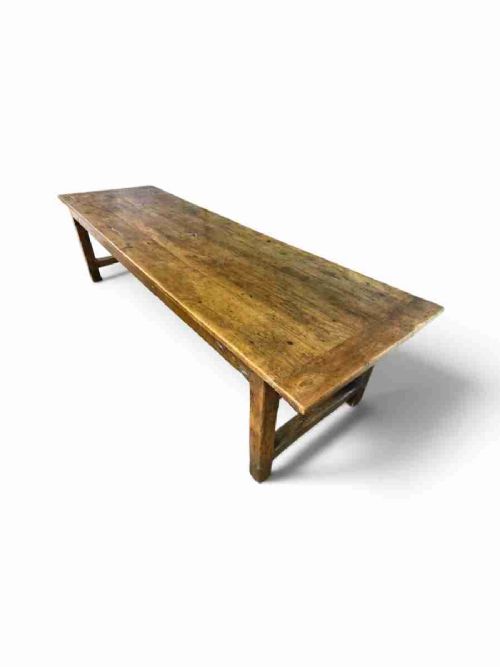
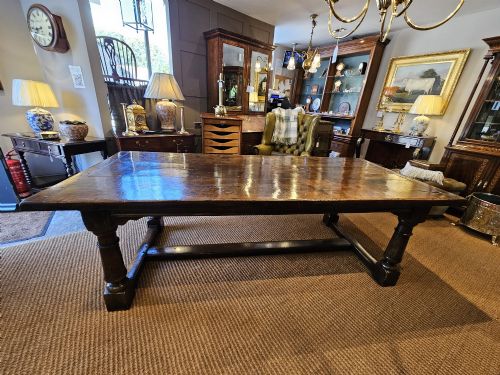
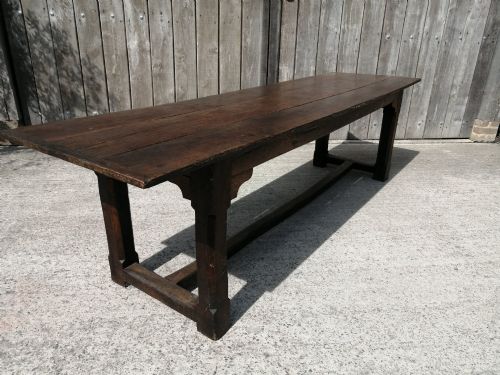
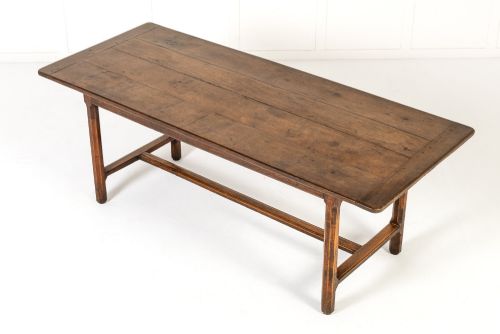


Georgian Refectory Table
A georgian refectory table brings solid domestic history to the dining room, offering long timber planks and honest construction designed for daily gatherings.
Georgian Refectory Table
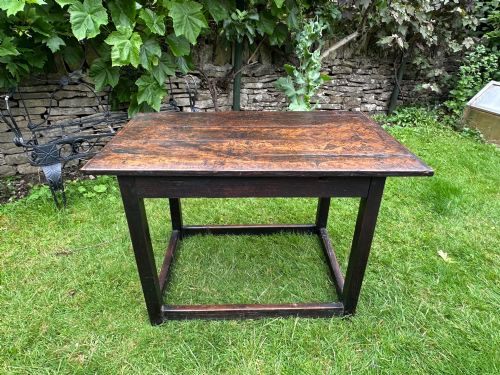
A georgian refectory table provides a sturdy surface built for communal dining, typically originating from the eighteenth and early nineteenth centuries. These pieces span formal dining tables down to rustic farmhouse and tavern variants suited for kitchens and dairies.
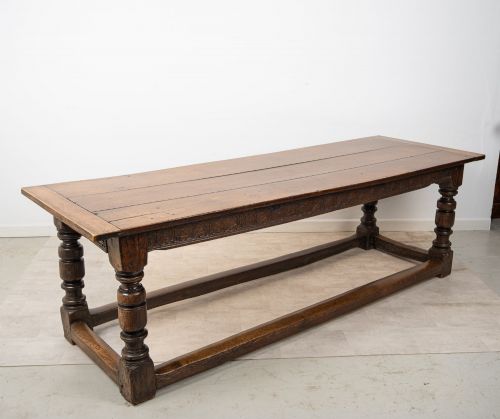
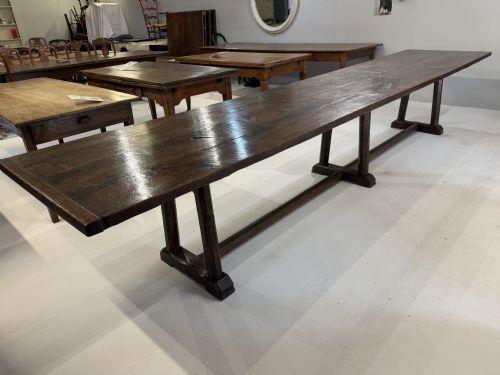
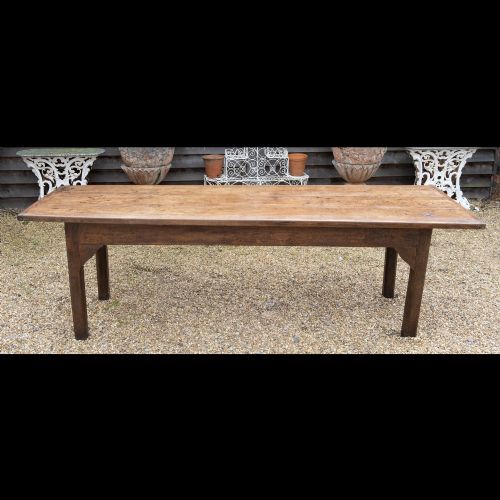
The version most commonly encountered on this page is constructed from sturdy oak, often featuring a plank top supported by stretcher frames. Examples stretch from compact six-seater proportions up to substantial lengths accommodating eight or more diners.
Origins heavily lean towards English country workshops, with occasional regional pieces such as Welsh kitchen tables appearing. Makers utilised resilient local timbers to create functional furniture that has survived centuries of use.
Materials and construction
Makers built these tables primarily from solid oak, supplemented by elm, pine, beech, and walnut for secondary elements or specific regional styles. Timber was selected for durability, allowing wide plank tops to withstand heavy daily domestic tasks.
Joinery relied on traditional pegged joints, mortise and tenon connections, and sturdy stretcher bases to stabilise long spans without modern metal fasteners. Surfaces were planed and finished by hand, developing deep patinas over generations of use and polishing.
Some tavern tables carry centuries of spilled ale embedded deep within their sturdy elm grain.
Variations in quality
Quality rests upon the integrity of the timber selection, particularly the thickness and width of the original top planks. Tables retaining their unreduced timber boards and stable structural framing sit at the higher end of the range.
Proportion and the depth of surface patina dictate desirability, with untouched waxed finishes and honest timber grain commanding greater appreciation. Later alterations or replaced boards alter the historical integrity of the piece.
The Georgian Refectory Table Glossary
- Refectory table
- A long dining table originally designed for communal eating in monastic or large domestic settings. These items evolved into central pieces for country houses and farmhouses.
- Plank top
- A table surface constructed from multiple parallel boards of timber joined together. This method allowed makers to utilise wide planks before modern sheet materials existed.
- Trestle
- A structural support system consisting of horizontal beams and vertical feet holding up a tabletop. This design maximises legroom along the length of the table.
- Patina
- The surface sheen and colour acquired by timber through decades of handling, waxing, and exposure to light. A rich patina indicates age and continuous domestic use.
- Stretcher
- A horizontal wooden brace connecting the legs of a table to provide structural rigidity. These supports prevent the legs from wobbling under heavy weight.
Georgian Refectory Table: Frequently Asked Questions
How do I clean a wooden table top?
Maintain the timber surface by wiping it gently with a soft, slightly damp cloth to remove everyday dust and crumbs. Avoid harsh chemical sprays that strip the historic wax finish.
Nourish the wood periodically using traditional beeswax applied sparingly and buffed with a clean cloth. This preserves the patina without creating a artificial shine.
Can I seat eight people comfortably?
Many examples on this page are explicitly proportioned to seat six to eight diners along their long timber spans. Measure the distance between the table legs to ensure chairs slide underneath easily.
Consider the placement of any structural stretchers when planning seating arrangements. Trestle designs often offer more generous legroom than traditional four-leg configurations.
Are these tables suitable for daily use?
These pieces were originally constructed for heavy domestic tasks in farmhouses, taverns, and kitchens, making them exceptionally robust for modern family life. The dense timbers used by period makers absorb normal wear and tear gracefully.
Use protective mats under hot dishes and liquids to prevent marking the antique finish. Accepting minor surface marks as part of the furniture's ongoing history is standard practice.
How can I tell the period of the timber?
Examine the underside of the top boards and the framing for hand-tool marks, peg construction, and uneven board widths. Eighteenth-century carpentry displays subtle irregularities absent in later industrial production.
Assess the colour and depth of the wood grain across the entire structure. Genuine age shows consistent oxidation and wear patterns that modern reproductions struggle to replicate.