



Georgian Primitive Chair
These georgian primitive chair examples are honest country seating shaped by local hands from sturdy native woods.
Georgian Primitive Chair
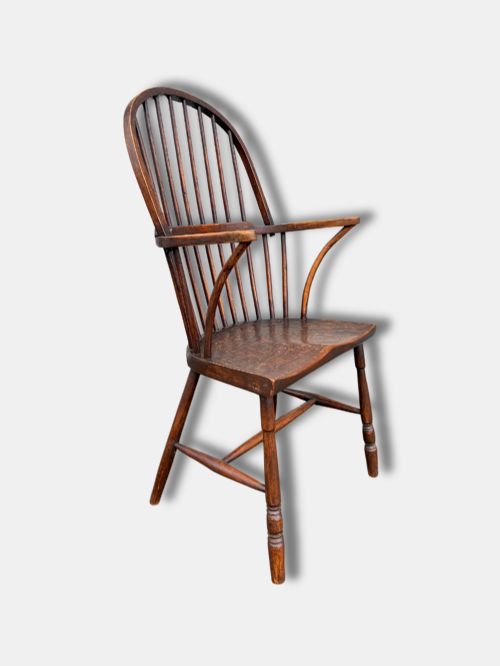
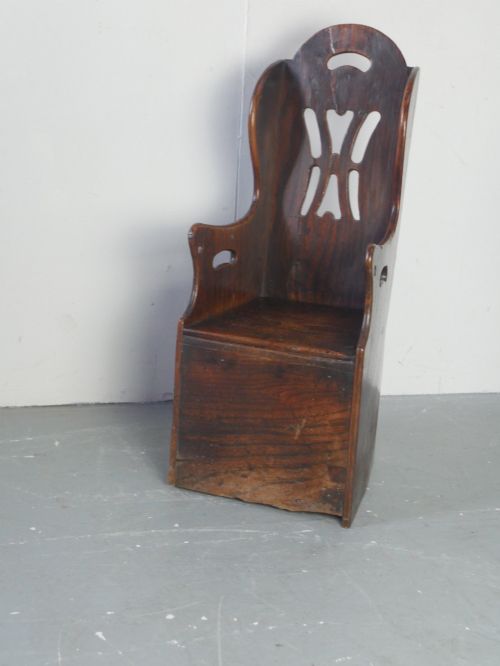
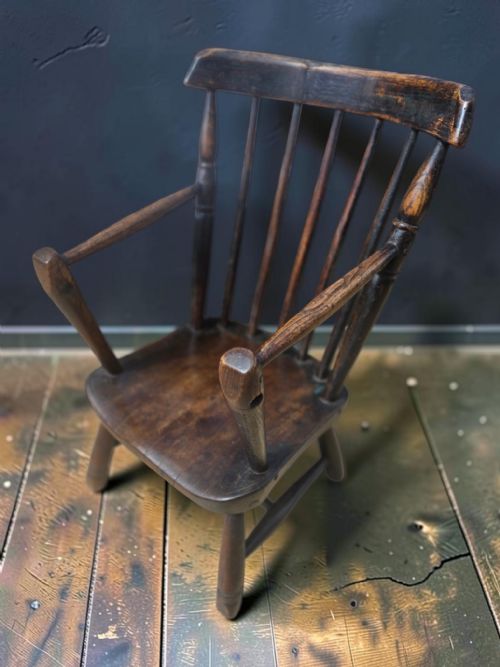
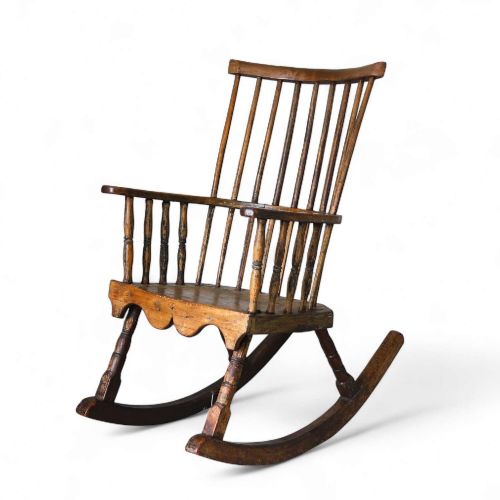
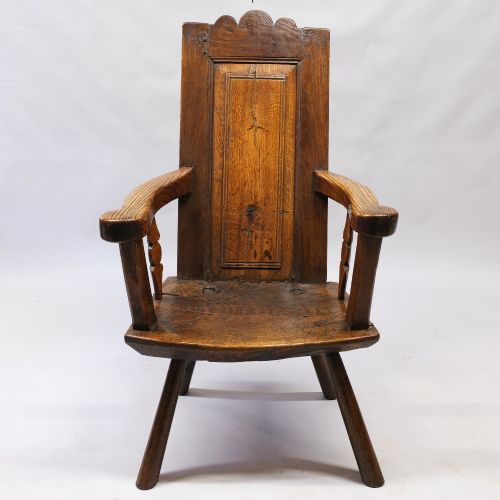
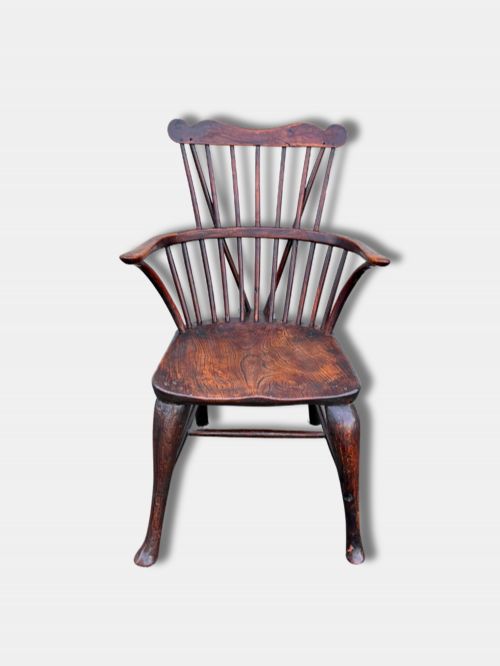
The selection ranges from panel-backed windsors and comb-back rocking chairs to small children's seats and robust dining chairs. Most examples emerge from English and Welsh workshops, reflecting local building traditions rather than metropolitan fashions.
How they were made
Country makers relied on native timbers such as ash, elm, oak, yew, sycamore, and pine, frequently combining woods within a single frame for strength and contrast. Seats were often carved from thick elm slabs, while spindles, legs, and bent backs utilised flexible ash or fruitwood.
Construction techniques combined simple pegged joints, wedged tenons, and steam-bent components to withstand heavy daily wear. Surface treatments varied from scrubbed bare wood to remnants of early paint.
Georgian Primitive Chair Retail Price Guide 2026
Typical asking prices for georgian primitive chair among the pieces listed under this phrase on Sellingantiques today, from the lower quarter to the upper quarter. They describe what is for sale here now, not the wider market.
Listings span the eighteenth and nineteenth centuries, featuring ash, elm, pine, and yew across Welsh and English regional styles.
What varies in quality
The distinction rests in the harmony of proportion, the character of the timber grain, and the integrity of the original construction. Chairs featuring rarer combinations of woods like burr elm and yew display greater visual depth.
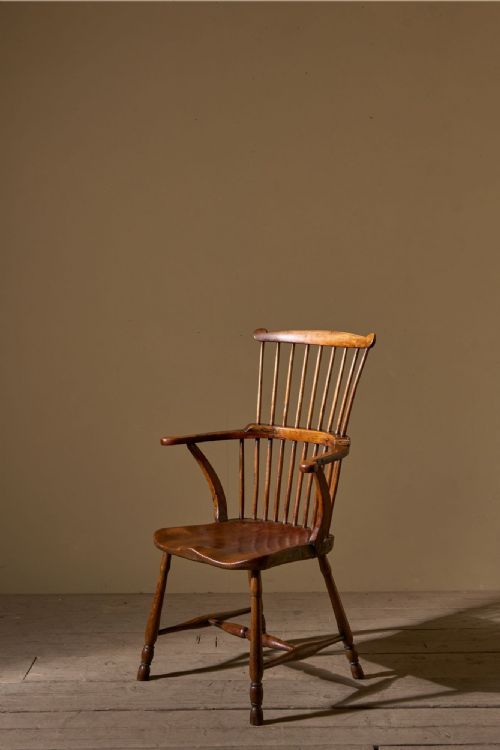
Well-balanced comb backs and deeply sculpted seats show the maker's eye for comfort and line. Alterations to legs or spindles reduce the purity of the piece.
The Georgian Primitive Chair Glossary
- Comb-back
- A chair design where the central vertical spindles extend upward to support a top rail resembling a traditional hair comb.
- Stick chair
- A form of vernacular seating where turned or cleft sticks form the back and arms, slotted directly into a solid wooden seat.
- Lobster pot
- A regional comb-back windsor variant featuring outward-splaying spindles that recall the shape of traditional fishing traps.
- Vernacular
- Objects shaped by local traditions, materials, and practical needs rather than academic architectural styles.
- Panel-backed
- An early form incorporating a solid wooden panel within the backrest for extra draught protection.
Georgian Primitive Chair: Frequently Asked Questions
How do I date a primitive chair?
Dating relies on observing construction methods, tool marks, and timber wear alongside stylistic clues like comb-back formations or panel backs.
Comparison with regional examples helps narrow the decade of origin.
Are these chairs comfortable for daily use?
Most feature solid sculpted wooden seats designed for practical utility rather than cushioned lounging.
Adding a small pad or sheepskin makes them suitable for regular sitting.
What woods were commonly used?
Makers utilised accessible native timbers like ash, elm, and oak for their structural strength and local availability.
Pine, sycamore, and fruitwood also appear depending on the region.
How do English and Welsh chairs differ?
Welsh vernacular pieces often employ distinct stick-chair construction methods tied to specific valleys and local timber supplies.
English examples frequently follow windsor traditions with bent-wood bows.