







Georgian Pottery Charger
A georgian pottery charger brings the bold scale of eighteenth and early nineteenth-century earthenware directly to a wall or table.
Georgian Pottery Charger
When you search for a georgian pottery charger, you enter a field dominated by large circular earthenware plates and platters produced across the eighteenth and early nineteenth centuries. These expansive dishes served practical purposes at dining tables before transitioning into purely decorative wall hangings or display items.
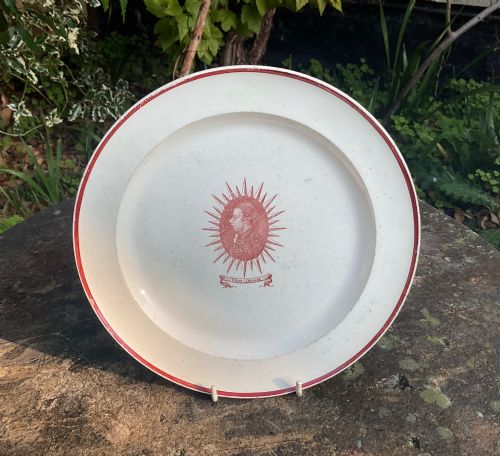
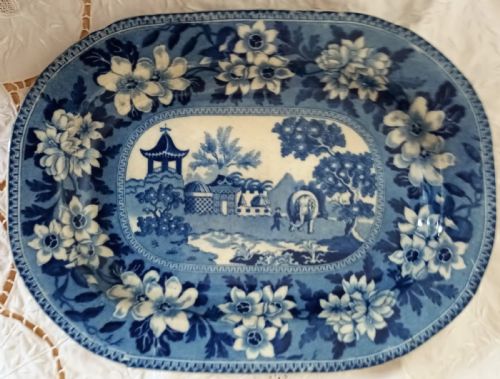
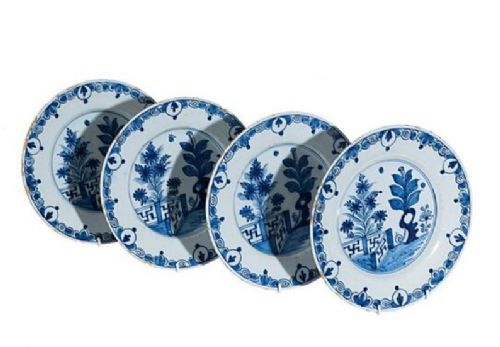
The pieces you are most likely to meet on this page span the delftware tradition, pearlware, and early transfer-printed earthenwares. Examples range from eighteenth-century English and Dutch delft chargers to nineteenth-century Staffordshire and Spode transfer-printed platters.
Forms vary from broad, shallow chargers intended for display to robust serving platters and plates. Many carry hand-painted chinoiserie motifs, geometric borders, or pastoral scenes executed in cobalt blue or polychrome palettes.
Materials and production techniques
Potters built these chargers using earthenware bodies covered with tin glazes or clear lead glazes over pearlware bodies. Tin-glazed earthenware provided an opaque white surface suitable for hand-painted decoration, while pearlware utilised a subtle blue-tinted glaze to enhance transfer-printed designs.
Decoration relied heavily on cobalt oxide for blue and white schemes, alongside copper, antimony, and iron pigments for polychrome works. Designs were either applied directly by hand with a brush or transferred from engraved copper plates onto the ceramic surface.
Georgian Pottery Charger Retail Price Guide 2026
Typical asking prices for georgian pottery charger among the pieces listed under this phrase on Sellingantiques today, from the lower quarter to the upper quarter. They describe what is for sale here now, not the wider market.
Some eighteenth-century chargers bear thumbprint indentations on the underside where potters steadied the wet clay before it entered the kiln.
Distinctions in quality and execution
Quality in a georgian pottery charger rests upon the crispness of the painted brushwork or the clarity of the transfer print. Finer pieces display confident, fluid hand-painting or sharply defined transfer lines without blurring or smudging in the glaze.
The stability of the ceramic body and the evenness of the glaze application also separate standard kitchen wares from superior display pieces. Early tin-glazed surfaces often show subtle pooling and minor firing imperfections that evidence genuine age rather than mechanical production.
John Rogers And Son·Caughley·Spode·Herculaneum
The Georgian Pottery Charger Glossary
- Charger
- A large decorative plate or platter, typically exceeding twelve inches in diameter, designed primarily for display on a wall or dresser.
- Delft
- Tin-glazed earthenware produced in England, the Netherlands, and elsewhere, known for an opaque white background and absorbent ceramic body.
- Pearlware
- A refined earthenware developed in the late eighteenth century featuring a fine white body and a glaze tinted slightly blue with cobalt.
- Transfer printing
- A decoration technique where an engraved copper plate impresses an inked design onto tissue paper, which is then transferred onto the ceramic biscuit or glaze before firing.
- Polychrome
- Decoration employing multiple colours, typically applied by hand over a tin glaze using mineral pigments such as iron red, manganese purple, and green.
Georgian Pottery Charger: Frequently Asked Questions
How were chargers used in georgian homes?
Larger chargers were utilised at formal dining tables to serve meats or display communal dishes before shifting to decorative wall hangings. Smaller companion plates functioned as tableware for daily dining.
Over time, homeowners displayed these broad circular pieces on plate racks and dressers to showcase imported blue and white designs or colourful chinoiserie patterns.
What is the difference between delft and pearlware?
Delft utilises a porous earthenware body covered in an opaque tin glaze that accepts hand-painted cobalt or polychrome pigments directly. Pearlware employs a refined white earthenware body beneath a clear glaze tinted with subtle cobalt to mimic Chinese porcelain.
While delft dates predominantly through the eighteenth century, pearlware emerged towards the end of that century and supported advanced transfer-printing techniques.
How do I care for antique ceramic chargers?
Antique earthenware chargers require gentle handling and should be kept away from direct sunlight, moisture, and temperature fluctuations. Display them securely using padded hangers designed specifically for heavy ceramic plates.
Cleaning should be limited to dusting with a soft, dry cloth rather than washing, as moisture can penetrate historic glaze crazing and fragile earthen bodies.
How can I tell eighteenth-century pieces from nineteenth-century ones?
Eighteenth-century examples rely heavily on tin-glazed earthenware bodies with hand-painted blue and white or polychrome decoration, often showing characteristic glaze pooling at the edges. Nineteenth-century pieces frequently exhibit refined pearlware or ironstone bodies with mechanical transfer-printed patterns.
Makers' marks, where present on the reverse, also help distinguish earlier hand-painted wares from nineteenth-century factory production.