
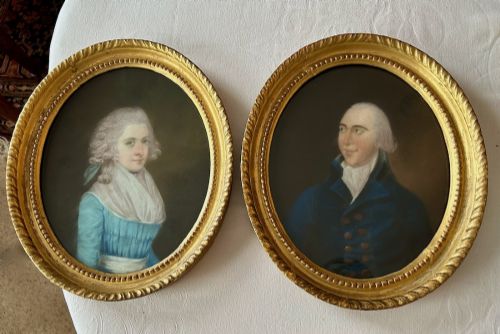
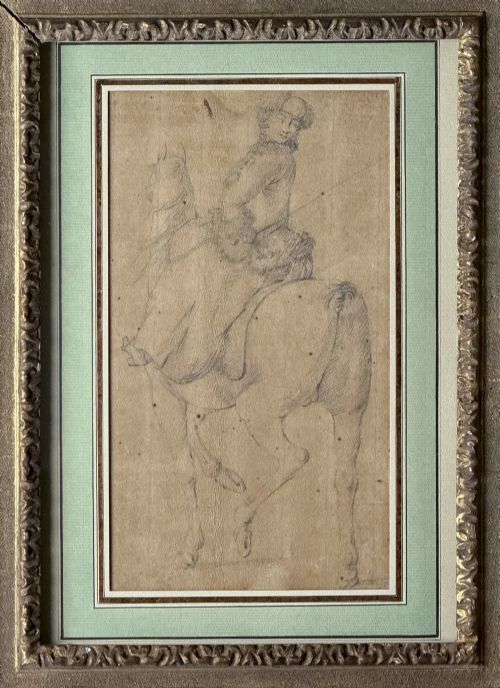
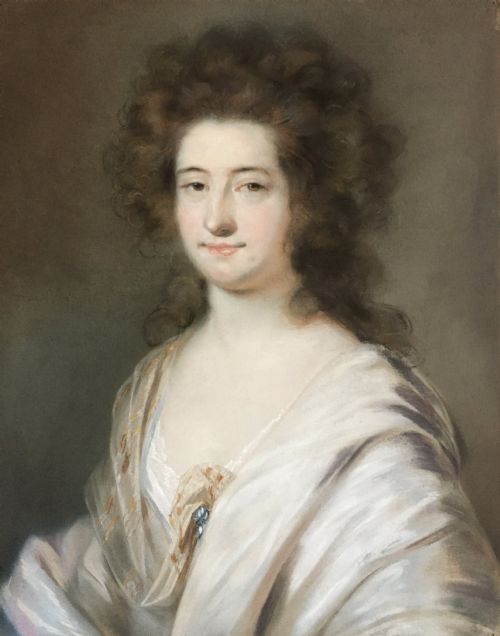
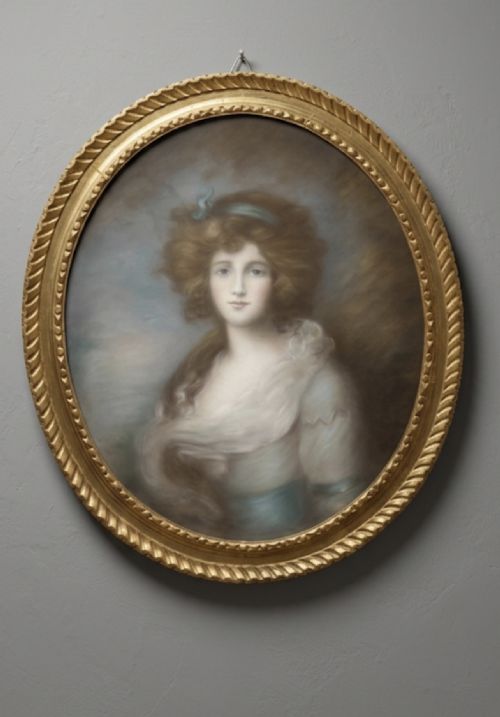
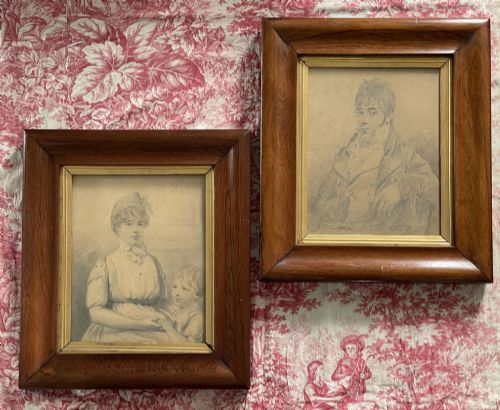
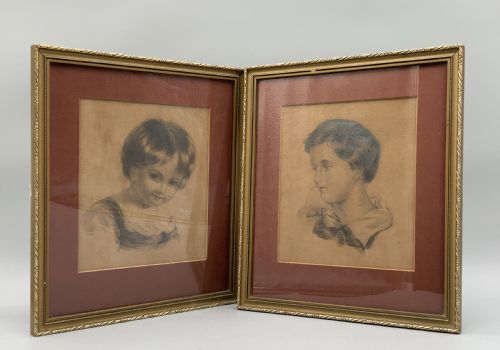


Georgian Portrait Drawing
Georgian portrait drawing captures likenesses in graphite, pastel, and ink from the eighteenth and nineteenth centuries.
Georgian Portrait Drawing
A georgian portrait drawing records the faces of past sitters through intimate works on paper produced across the eighteenth and nineteenth centuries. These pieces encompass delicate graphite sketches, soft pastel studies, and precise pen and ink compositions framed for domestic display.
Most examples encountered on this page date from the Georgian, Regency, and early Victorian eras, reflecting shifting domestic tastes in portraiture. Works range from modest pencil drawings of children to elaborate pastel likenesses executed by accomplished regional and academic hands.
Buyers will find individual framed artworks alongside paired family groupings and miniature sets mounted in original giltwood or dark wood surrounds. The selection spans straightforward graphite records, finished watercolour tinted drawings, and detailed plumbago studies.
Materials and Techniques
Artists relied primarily on paper supports, applying dry media such as graphite, charcoal, and pastel to build form and shadow. Plumbago drawings utilised processed graphite to achieve fine, miniature-like precision that rivalled painted portraiture in detail.
Framing materials recorded in the archive include original maple, ebony, giltwood, and gesso.
Evaluating Quality and Execution
Quality rests upon the draughtsmanship and the artist's ability to capture realistic anatomy and expression within the chosen medium. Superior pieces demonstrate confident handling of line in graphite or subtle blending in pastel, whereas lesser examples appear stiff or hesitant.
The survival of original framing and uncompromised paper surfaces heavily influences the desirability of a piece. Fading, heavy foxing, or later reframing alter the integrity of the work compared to examples preserved in untouched period condition.
John Taylor·James Ferguson·John Raphael Smith·Ozias Humphry·Henry Edridge·George Richmond·Sir Nathaniel Dance-Holland·Sir William Charles Ross
The Georgian Portrait Drawing Glossary
- Plumbago
- An early form of graphite drawing executed with extreme fineness, often taking the appearance of a detailed monochrome miniature.
- Pastel
- A dry medium composed of powdered pigment and a binder, yielding velvety colour textures popular for eighteenth-century portraiture.
- Giltwood
- Timber carved and coated with gold leaf, frequently used to create ornate decorative frames for period artworks.
- Silhouette
- A solid dark profile likeness cut from paper or painted onto a pale ground, sometimes enhanced with gilt highlights.
- Foxing
- Brown age spots caused by chemical reactions in historic paper stocks, commonly observed in works from this era.
Georgian Portrait Drawing: Frequently Asked Questions
How do I date a Georgian drawing?
Dating relies on stylistic clues such as the sitter's clothing, hairstyles, and framing conventions typical of the eighteenth or nineteenth century. Inscriptions on the reverse or accompanying documentation often provide specific years or sitter identifications.
Paper characteristics and watermark analysis also help narrow the production period when the artist remains anonymous.
Where were these drawings displayed?
These works hung in private homes, often grouped in drawing rooms, parlours, or private studies alongside family silhouettes and painted miniatures. Their modest scale suited intimate domestic spaces rather than grand public galleries.
Pairs and sets were frequently commissioned to record family lineages or close friendships across generations.
How should I care for antique paper art?
Paper and pastel drawings require protection from direct sunlight to prevent fading of pigments and yellowing of the paper support. Maintaining stable indoor humidity levels prevents mould growth and structural stress to the historic frame.
Glazing should remain intact, and works ought to be hung away from damp exterior walls or heat sources.
What is the difference between plumbago and pencil?
Plumbago refers specifically to early graphite work characterised by needle-sharp precision and meticulous detail akin to engraving. Standard pencil drawings often display broader, softer strokes and less miniaturised precision.
Both media utilise carbon-based drawing materials on paper but yield distinct visual textures.