


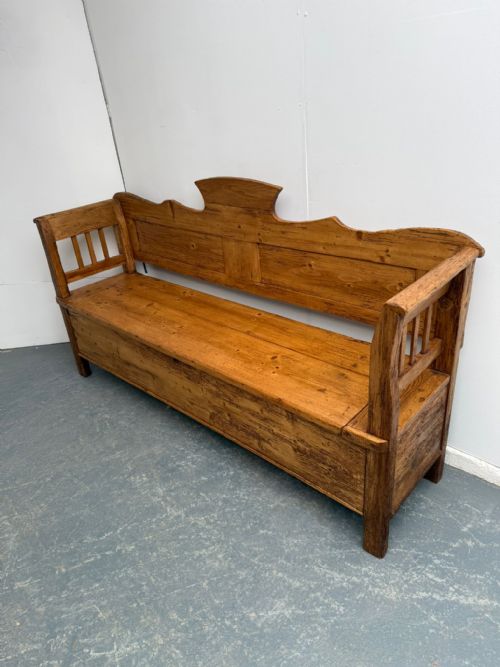

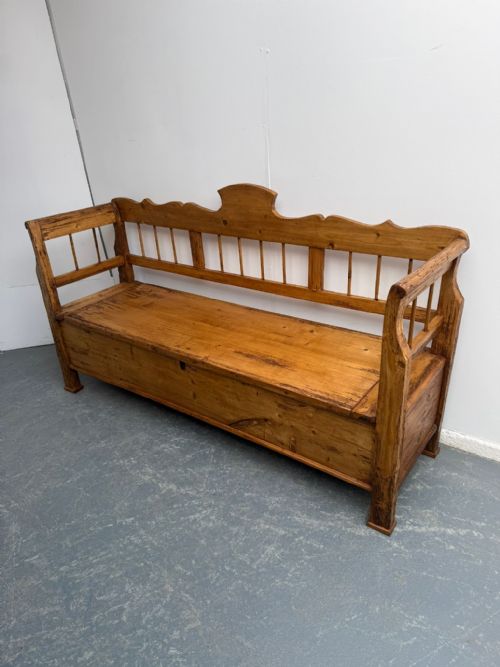


Georgian Pine Settle
A georgian pine settle is a high-backed wooden bench built to block draughts and seat multiple people in traditional domestic spaces.
Georgian Pine Settle
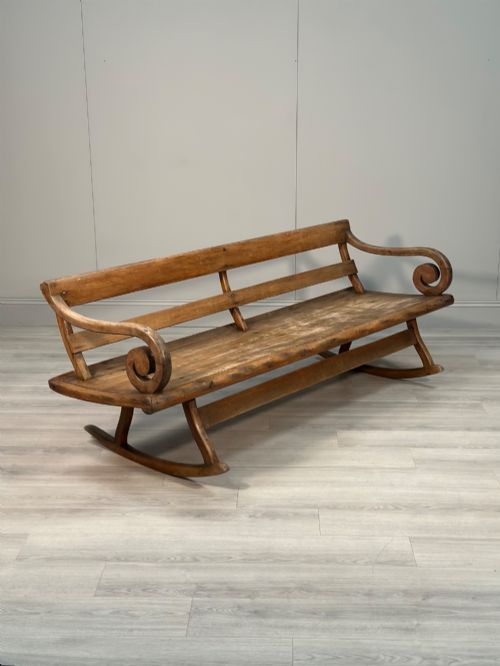
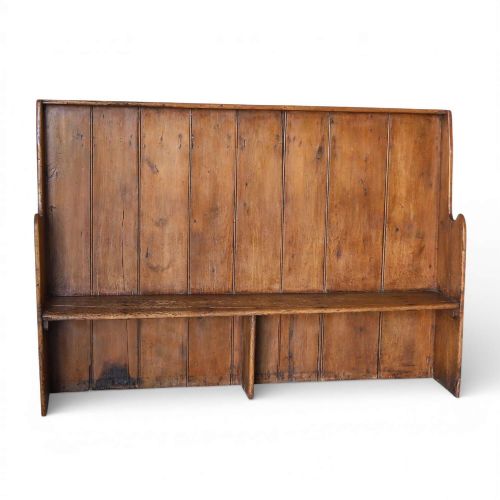
A georgian pine settle takes the form of a long bench featuring a tall solid back designed to keep cold air away from seated occupants near the hearth. The examples found here span the eighteenth and nineteenth centuries, including regional English pieces from Wales, Cumbria, and the West Country alongside continental European workshop pieces.
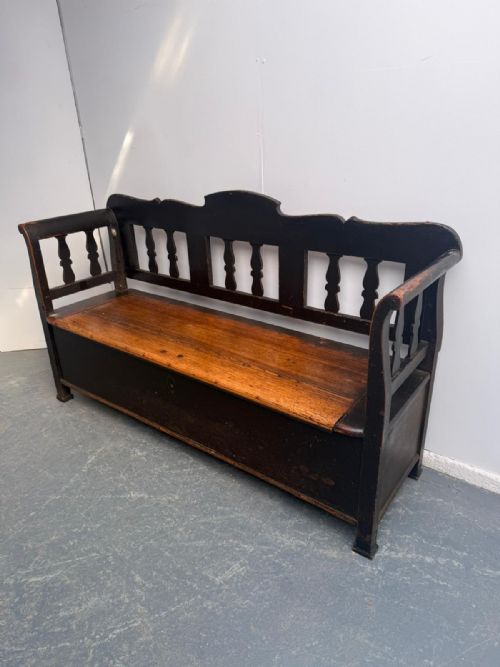
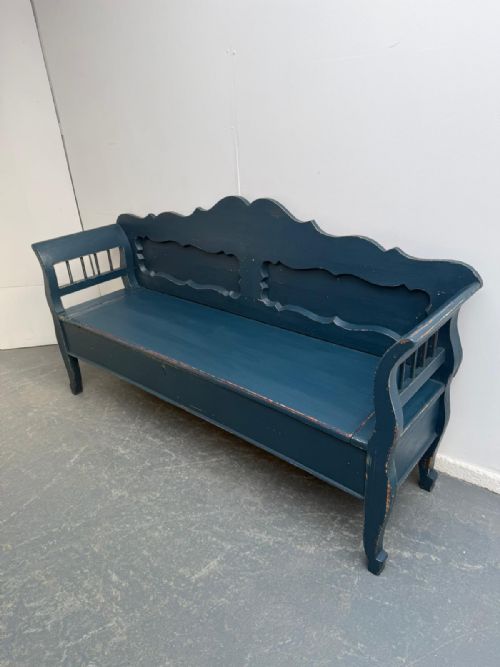
Forms range from simple open tavern benches to enclosed box settles with hinged seats for storage, as well as specialised variants like barrel-backed designs, curved panelled seats, and lambing chairs. These seating pieces served as primary furniture in farmhouses, cottages, and public houses before modern upholstery became common.
Materials and Construction
Makers built these pieces primarily using solid timber, relying on pine boards supplemented by occasional secondary woods like elm, ash, or fruitwood for structural integrity. Joinery typically involved pegged mortise and tenon joints, tongue and groove paneling, and sturdy board construction capable of enduring heavy daily use.
Surface treatments vary between plain waxed finishes that highlight the natural grain of the wood and original painted or scumbled surfaces. Hardware such as hinges and brackets is generally forged from iron or wrought iron, securing lids and movable components.
Materials recorded across the archive include solid pine, wrought iron, wax, and secondary woods like elm and ash.
Factors That Separate Examples
Quality rests heavily on the integrity of the surface finish, distinguishing pieces retaining their original paintwork or early patinated wax from those stripped or repainted later. Proportion and form also dictate merit, with neat dimensions, curved barrel backs, and integrated box storage commanding greater interest than plain utility benches.
The degree of original structural preservation matters, particularly the survival of original floor-level footboards, paneled backs, and period ironwork without extensive timber replacement. Vernacular regional characteristics, such as specific Welsh or Cumbrian construction traits, add distinct regional authenticity.
The Georgian Pine Settle Glossary
- Box settle
- A bench featuring a hinged seat lid opening to a deep storage compartment beneath. This design kept blankets and household goods dry and close to the hearth.
- Barrel back
- A seating form featuring curved wooden sides and a high rounded back that wraps partially around the occupant. It offered maximum protection against draughts in large, cold rooms.
- Scumble
- A decorative painting technique involving a translucent top layer dragged or mottled over a lighter base coat. It created a faux grain or aged texture on vernacular furniture.
- Tavern bench
- A sturdy, long seating form made for public houses and inns. These pieces often omitted armrests to accommodate multiple patrons on a single bench.
- Patina
- The surface sheen and colour developed by wood through decades of handling, waxing, and exposure to light. It serves as an indicator of age and continuous use.
Georgian Pine Settle: Frequently Asked Questions
Where were settles placed in a home?
These benches sat directly beside the open hearth in kitchens, farmhouses, and country inns where warmth mattered most. Their solid backs shielded people from cold air currents moving across flagstone floors.
In larger rooms, they created a semi-enclosed seating area that held heat close to the body before central heating existed.
What is a box settle used for?
The enclosed compartment beneath the seat served as practical storage for heavy wool blankets, boots, or dry kindling close to the fire. It kept essential items out of the way while providing a secure place to sit.
This dual purpose made them valuable in smaller dwellings where floor space was limited.
How do I tell original paint from later coats?
Original painted surfaces show fine crackle, natural wear around high-touch areas like arms and edges, and uniform ageing across the entire timber frame. Under magnification, layers reveal the natural oxidation expected of eighteenth and nineteenth-century pigments.
Modern repainting often appears too flat, uniform, or lacks the underlying wear patterns found in genuine vernacular pieces.
Are pine settles sturdy enough for daily seating?
Solid pine and heavy plank construction make these benches remarkably robust and capable of handling regular weight. The joinery relies on thick timbers and pegged joints designed for enduring physical strength.
Routine maintenance requires only occasional waxing to nourish the dry timber and protect the surface from moisture.