
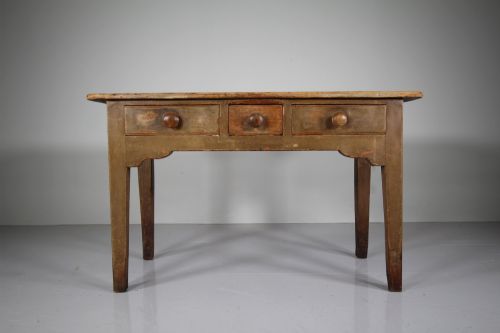
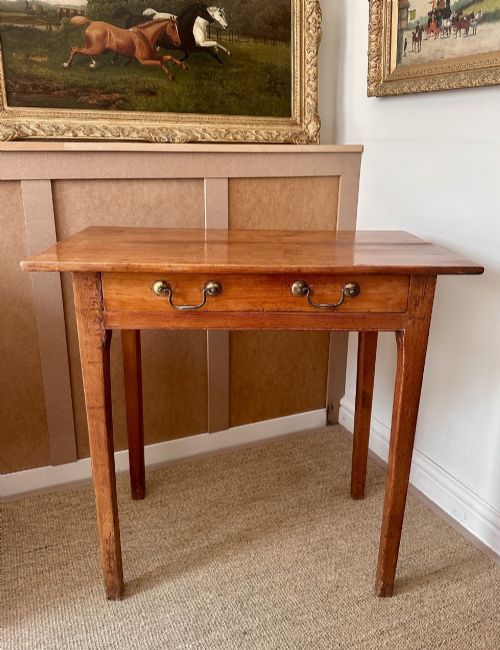


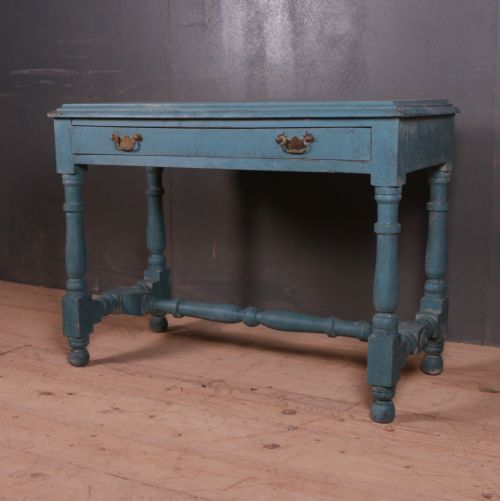
Georgian Pine Hall Table
A georgian pine hall table brings honest English utility and warm, characterful timber into an entryway with quiet presence.
Georgian Pine Hall Table
Most examples seen here share an English country aesthetic, often featuring painted timber surfaces or stripped pine boards that show decades of honest wear. They range from simple side tables to more substantial dresser bases and small bowfront sideboards adapted for hallway use.
Buyers seeking a georgian pine hall table want a practical piece of antique furniture that anchors a narrow space with historic charm. The proportions are naturally suited to corridors and landings, providing a surface for daily essentials while displaying the distinct grain and patina of softwood.
Construction and materials
Makers constructed these pieces primarily using solid pine, sometimes enhanced with painted finishes or traditional paint layers that have aged over generations. Brass hardware frequently appears on drawers, adding functional contrast to the pale timber.
Joinery methods relied on traditional cabinet-making techniques suited to softwood, ensuring structural durability despite the softer nature of the material. Surfaces were often left bare to absorb daily use or finished with historic paint that now exhibits characteristic crazing and wear.
Listings feature pieces spanning the Georgian period through the nineteenth century, utilising pine, painted wood, and brass.
Judging quality and character
Quality in these tables rests on the integrity of the original construction and the preservation of surface patination. Untouched painted finishes or deep, waxed timber patinas separate superior examples from pieces that have lost their historic character through over-restoration.
Proportion and structural balance dictate the visual success of the piece, particularly in narrower forms like side tables and small bowfront sideboards. Finer examples maintain crisp lines and original hardware, while simpler utility pieces rely entirely on the charm of their weathered timber.
The Georgian Pine Hall Table Glossary
- Pine
- A softwood commonly used in English country furniture for its workability and availability. It accepts paint well and develops a rich patina over centuries of use.
- Dresser base
- A lower storage unit featuring cupboards or drawers beneath a flat top. These sturdy pieces often double as large side tables in hallways.
- Bowfront
- A curved front profile that softens the rectangular geometry of a case piece. This curved shape appears on more refined sideboards of the period.
- Patina
- The surface sheen and colour acquired by wood and paint through age, handling, and light exposure. This layer confirms the historic authenticity of the piece.
Georgian Pine Hall Table: Frequently Asked Questions
How do I style a narrow hallway?
Choose a shallow side table or writing table that leaves adequate clearance for passage. Place a simple mirror or lamp above it to create a welcoming focal point.
Keep surface items minimal to highlight the aged pine timber and historic proportions of the furniture.
Are these tables sturdy enough for daily use?
Pine is a softwood, but eighteenth and nineteenth-century construction methods give these tables surprising resilience. They were originally built for heavy domestic service in kitchens and hallways.
Routine use will not harm them, provided you protect the surface from excessive moisture and heat.
How do I distinguish Georgian from later pine?
Georgian pieces display construction traits like hand-cut joints, older nail types, and timber grown and seasoned centuries ago. The overall proportions tend to be more restrained and elegant.
Later nineteenth-century examples often use machine-sawn elements and display slightly different edge mouldings and drawer framing.
Should I repaint a painted pine table?
Historic paint finishes carry significant value and character, recording the age and decorative history of the object. Preserving original or early paint layers is generally preferred by collectors.
If the paint is modern or failing, repainting in traditional muted colours can suit the English country aesthetic.