
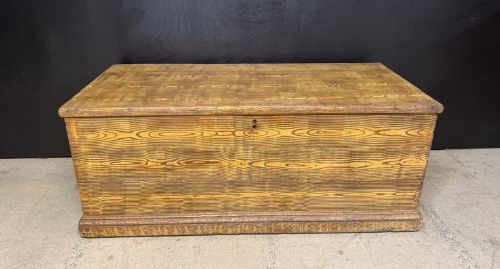
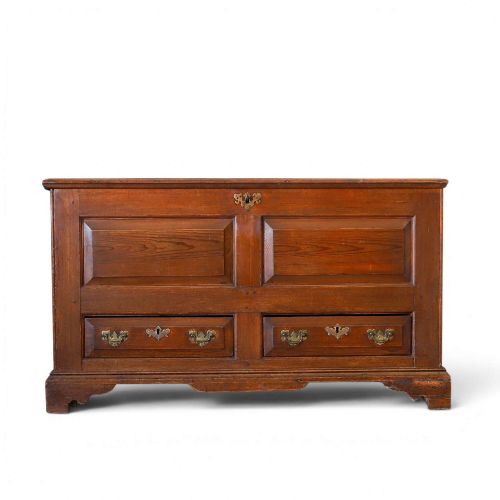
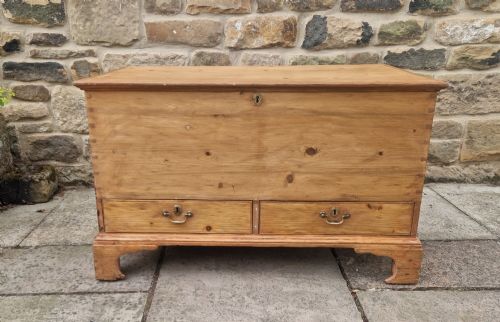
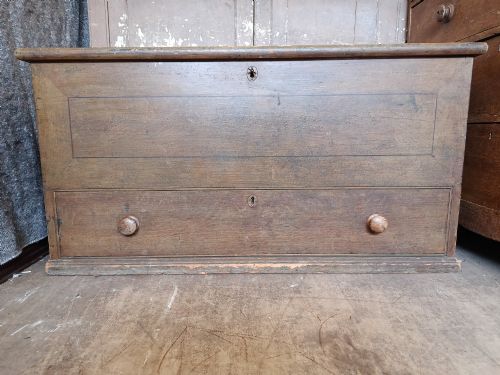




Georgian Pine Coffer Trunk
A georgian pine coffer trunk is a robust domestic storage box built to last, offering generous capacity and enduring vernacular charm.
Georgian Pine Coffer Trunk
When you search for a georgian pine coffer trunk, you encounter sturdy storage chests designed for blankets, linen, and personal possessions. These pieces emerge primarily from the Georgian and 19th Century periods, incorporating regional variations such as Welsh country and Scandinavian examples.
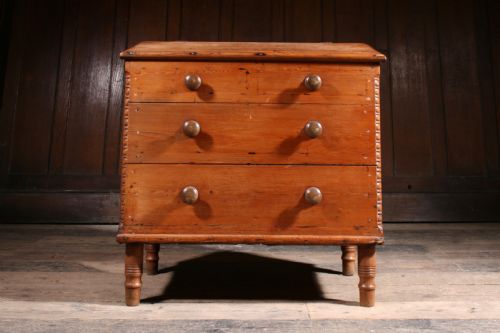
The selection encompasses simple blanket boxes alongside more elaborate mule chests featuring lower drawers. Formats range from panelled constructions to painted finishes and seaman's chests.
Most items reflect utilitarian origins combined with country craftsmanship, showing straightforward joinery intended for daily household use.
How they were made
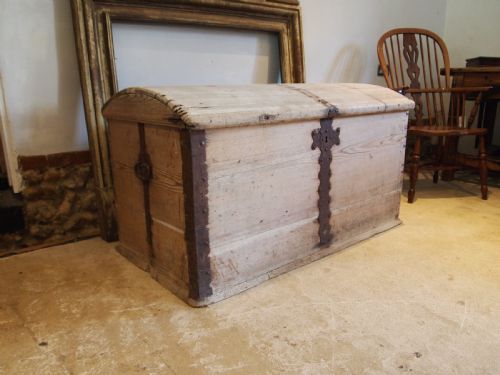
Makers utilised solid pine timber, frequently waxed or left in its natural state, alongside painted wood surfaces. Iron, brass, and wrought iron hardware such as hinges, handles, and lock plates provided structural reinforcement.
Construction techniques include panelled sides and bracket feet, with some pieces incorporating rope handles for transit. Secondary materials like paint served to decorate or protect the soft timber.
Listings span the eighteenth and nineteenth centuries, featuring regional styles from Wales, Scandinavia, and Great Britain.
What varies in quality
Quality depends upon the integrity of the timber and the presence of original structural elements such as boards, feet, and ironwork. Pieces retaining untouched painted surfaces or early waxed finishes stand apart from those stripped or heavily altered later.
Finer examples display sophisticated regional joinery, such as well-fitted drawers and panelled construction, whereas simpler boxes rely on straightforward board-and-nail assembly.
The Georgian Pine Coffer Trunk Glossary
- Cofer
- A large chest used for storing valuables, linen, or travel goods, typically featuring a hinged lid.
- Mule chest
- A storage chest with one or more drawers built into the base beneath the main compartment.
- Vernacular
- Architecture or furniture built by local craftsmen using traditional regional methods and materials, rather than following high-style academic designs.
- Bracket foot
- A foot shape resembling a bracket, supporting the corners of a case piece like a chest or coffer.
Georgian Pine Coffer Trunk: Frequently Asked Questions
What is a georgian pine coffer trunk used for?
These chests served primarily for storing household textiles, blankets, and personal belongings in domestic settings.
Today, they function as practical living room or bedroom storage that doubles as a coffee table or bench.
How do I date a pine coffer?
Dating relies on examining construction methods, nail types, hinges, and timber patination relative to known periods.
Earlier pieces often feature hand-cut boards and forged iron hardware, while later 19th-century examples show more standardised fixings.
What is the difference between a coffer and a mule chest?
A standard coffer or blanket box consists of a single top-opening compartment with no drawers beneath.
A mule chest incorporates one or more drawers at the base, bridging the transition between simple chests and full chests of drawers.
Are painted pine chests authentic?
Many country pieces received painted finishes either originally or during subsequent decades to protect the softwood.
Original folk art decoration significantly influences the character and identity of regional furniture.