
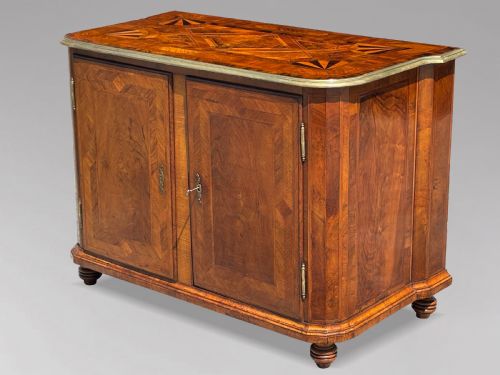
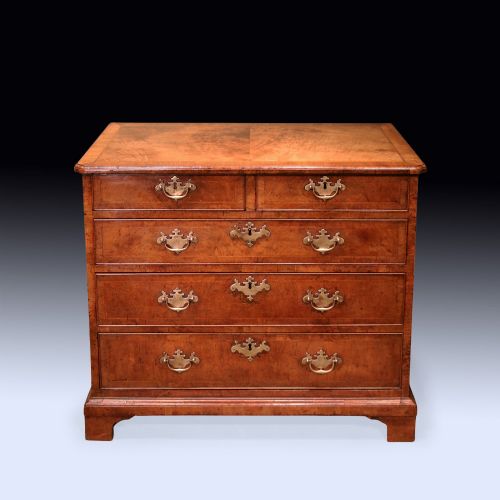

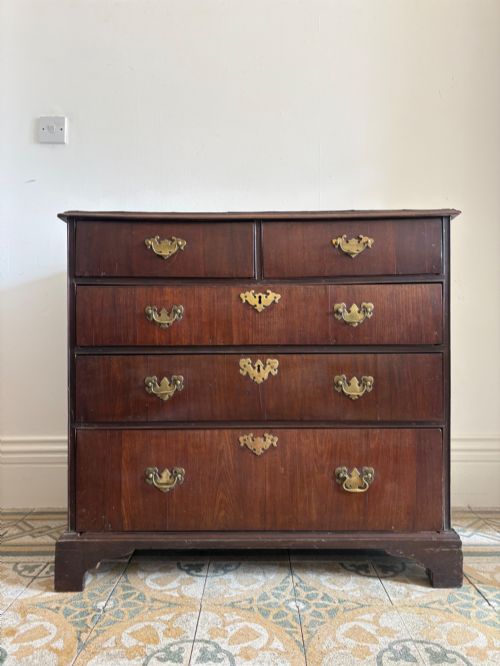


Georgian Period Walnut Commode
A georgian period walnut commode brings warmth and rich timber grain to a room through centuries of cabinet-making skill.
Georgian Period Walnut Commode
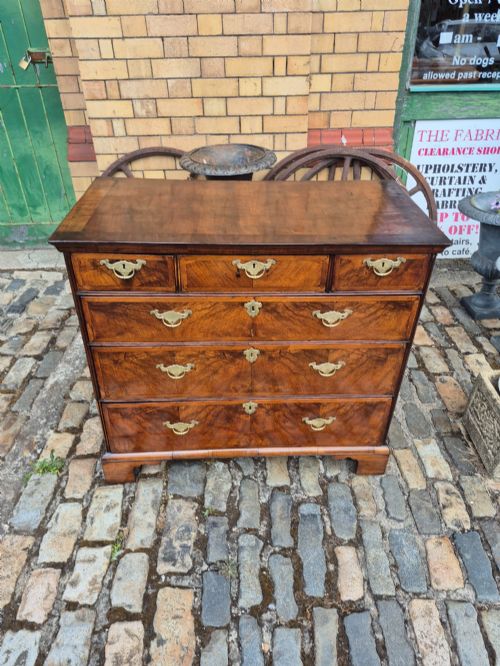
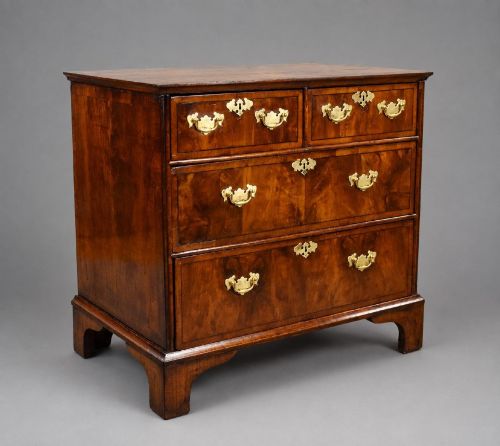
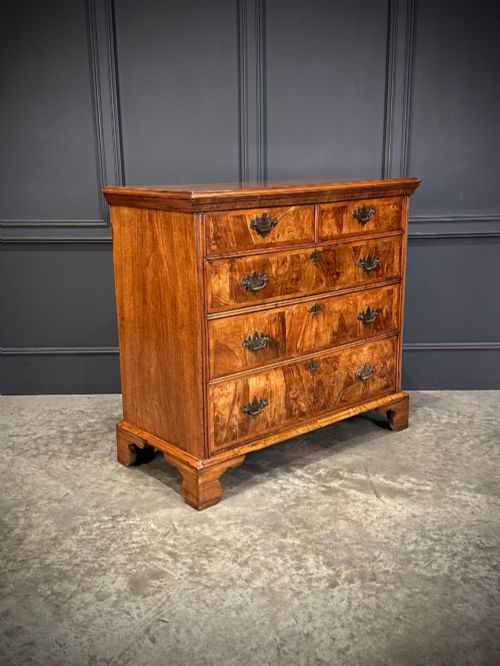
A georgian period walnut commode and related chests of drawers represent practical storage shaped by eighteenth-century design. The pieces available include standard chests of drawers alongside commode chairs and inlaid examples.
Makers utilised rich timbers during periods spanning from the late seventeenth century through to the Georgian era. Buyers frequently encounter forms featuring feathered banding, oyster veneers, and brass handles.
Origin points range from English workshops to continental centres such as Italy and Malta. The selection reflects diverse regional interpretations of Baroque, Queen Anne, and George styles.
How they were made
Cabinet-makers relied on walnut and burr walnut veneers laid over solid oak and fruitwood secondary timbers. Timber selection focused on dramatic grain patterns, enhanced through specialised cutting techniques like oyster veneering and wood inlay.
Metalwork played a key structural and decorative role, with brass handles and iron fittings securing drawers and doors. Traditional joinery methods united these elements without modern adhesives, ensuring structural longevity.
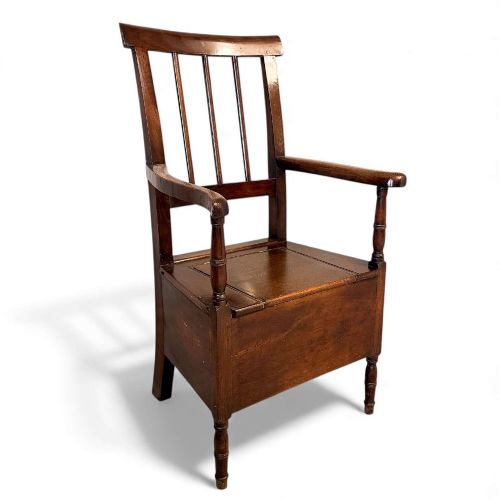
One listed chair cleverly disguises sanitation as seating by hiding a chamber pot inside an early Georgian frame.
What varies in quality
Excellence in these pieces rests on the choice of veneer and the precision of the timber matching across the facade. Superior examples display unbroken grain patterns and meticulous attention to inlay details.
The integrity of the underlying secondary wood, such as oak or fruitwood, dictates the long-term stability of the chest. Finer specimens retain their original brass handles and exhibit crisp carving without heavy restoration.
The Georgian Period Walnut Commode Glossary
- Burr walnut
- Timber taken from the wart or growth on a walnut tree, yielding a swirling, highly figured grain pattern. It was favoured for high-status cabinet fronts during the eighteenth century.
- Oyster veneer
- Circular slices cut transversely from small branches or roots, arranged to resemble the pattern of oyster shells. This technique appeared on furniture from the late seventeenth century.
- Feather-banded
- Narrow strips of veneer laid in a herringbone pattern around the edges of drawer fronts or tabletops. It created a decorative border that framed the primary timber.
- Commode chair
- A seating item designed to enclose a chamber pot beneath a removable seat or lid. These items combined upholstery or wooden frames with concealed sanitary utility.
Georgian Period Walnut Commode: Frequently Asked Questions
What is a walnut commode?
A walnut commode functions primarily as a set of drawers or a bedside cabinet constructed from walnut timber during the eighteenth century and related eras.
These pieces provided secure storage for garments and personal possessions while serving as decorative furniture within principal rooms.
How do I date a walnut chest?
Dating relies on examining construction methods, timber types, handle designs, and stylistic traits associated with specific monarchs or centuries.
Early pieces often feature oyster veneers and William and Mary or Queen Anne proportions, whereas mid-century examples show George II styling and refined brass hardware.
Where were these chests made?
The pieces originated in English workshops as well as continental centres including Italy and Malta.
Regional differences appear in the choice of secondary timbers like oak or fruitwood and the specific styles of inlay and veneer.
How should I care for walnut furniture?
Walnut furniture requires a stable environment away from direct sunlight and sudden humidity changes to prevent timber movement.
Regular dusting with a dry cloth maintains the surface sheen without the need for heavy modern polishes.