






Georgian Period Tall Clock
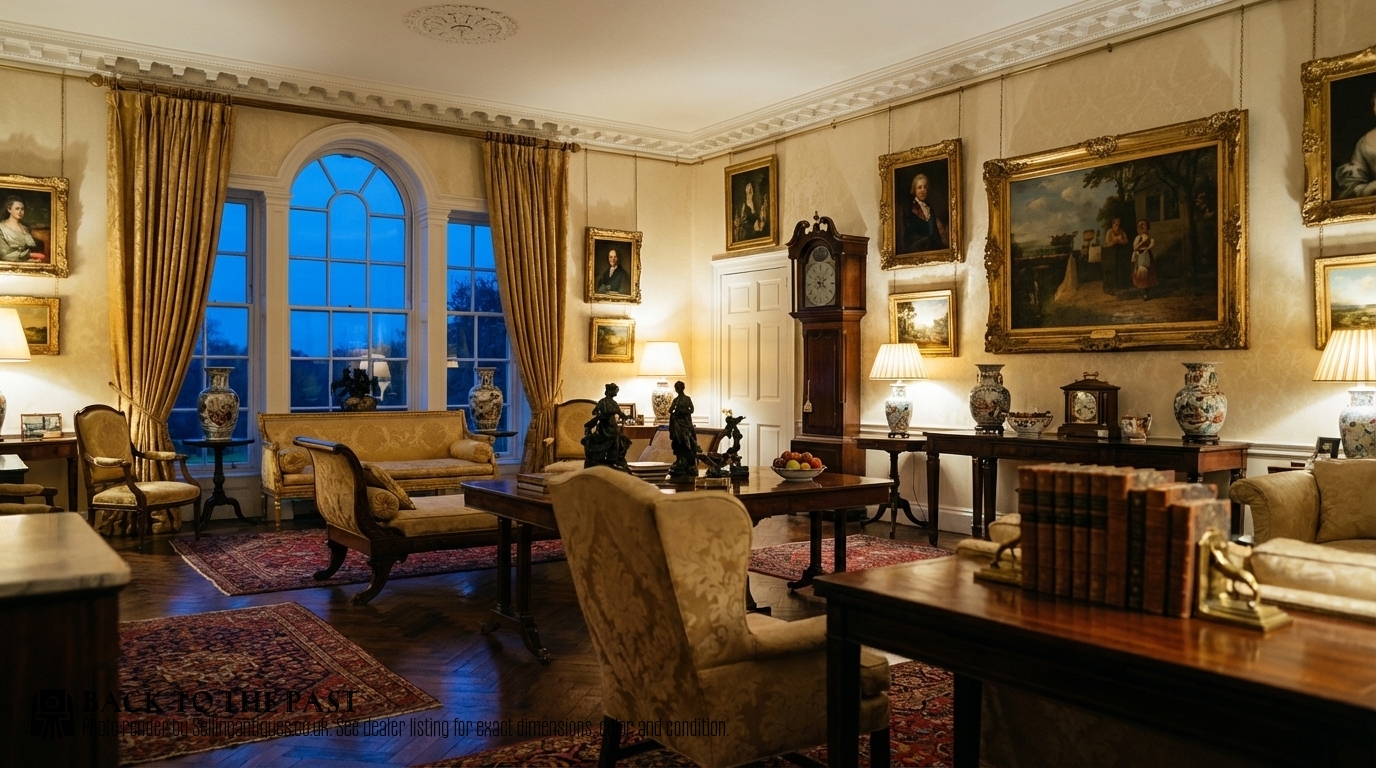
A georgian period tall clock brings architectural presence and reliable mechanical timekeeping to a hallway or drawing room.
Georgian Period Tall Clock
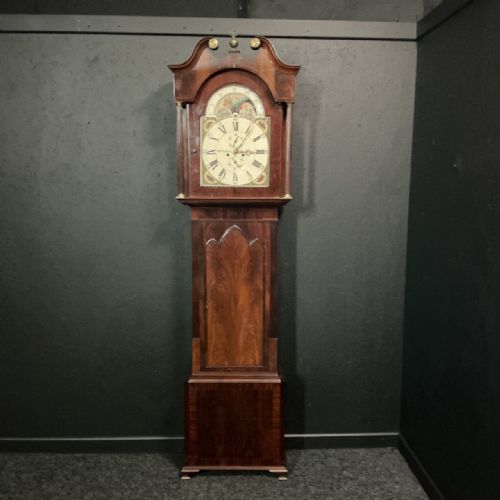
A georgian period tall clock encompasses the grand scale and vertical cabinetry designed to house pendulum-driven movements. These pieces typically take the form of longcase clocks, standing upright against the wall with substantial trunk doors and hoods enclosing the dial.
The versions most commonly met on this page span the georgian, 18th century, and early nineteenth century periods, reflecting classical domestic proportions. They appear in regional and London iterations, combining traditional joinery with weight-driven brass mechanisms.
Makers of these clocks housed them in tall floor-standing cases that served as both furniture and precision instruments. The overarching style connects simple country oak examples with more sophisticated mahogany and walnut urban commissions.
How they were made
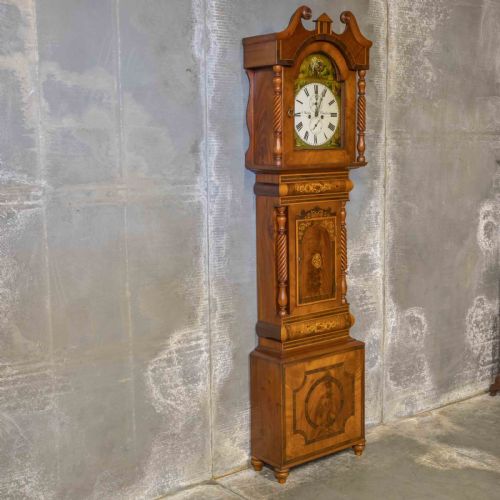
Cabinetmakers utilised sturdy hardwoods including mahogany, oak, walnut, and burr mahogany, often selecting timber for rich grain patterns on the trunk door and hood. Selected pieces feature ebonised wood details or polished glass panels to protect the dial.
Dial construction combined brass chapter rings and spandrels with later painted iron faces, driven by internal weight-driven brass gear trains. Workshops constructed the tall cases in sections, allowing the base, trunk, and hood to fit together around the long pendulum and weights.
Current listings feature oak, mahogany, walnut, burr mahogany, and ebonised wood across georgian and eighteenth-century forms.
What varies in quality
The refinement of the cabinetwork and timber selection determines the visual hierarchy across these tall clocks. Plain native oak housings contrast with figured burr mahogany or walnut surfaces finished with architectural mouldings and lancet tops.
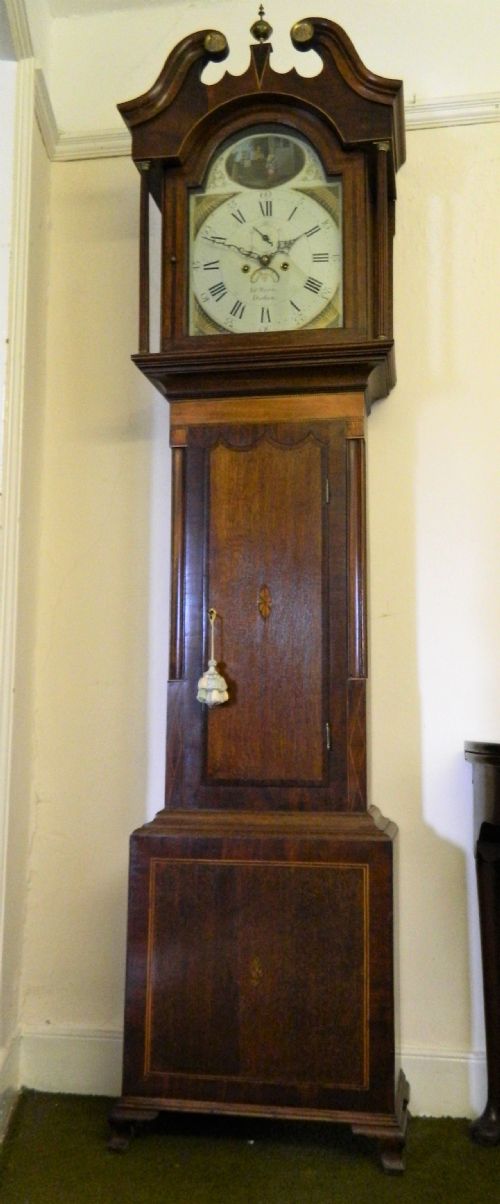
Movement execution and dial integration set the standard for horological merit. Signed dials from recorded urban clockmakers distinguish workshop pieces from unmarked provincial production.
Williams·Raine of Durham
The Georgian Period Tall Clock Glossary
- Longcase clock
- A tall pendulum clock enclosed in a wooden case that stands directly on the floor. These pieces are frequently called grandfather clocks in domestic settings.
- Chapter ring
- The circular ring on the dial that bears the hour numerals. This component is often engraved brass on earlier models.
- Spandrel
- The decorative corner ornament placed outside the circular chapter ring on the dial. These brass or painted elements define the period style of the face.
- Hood
- The upper glazed section of the tall clock that lifts or slides forward to reveal the dial and hands. It protects the delicate motion work from dust.
- Lancet top
- An arched architectural pediment shape topping the hood of the clock. This design element recalls Gothic revival and classical proportions.
Georgian Period Tall Clock: Frequently Asked Questions
Where should a tall clock stand?
These clocks require a stable, dry interior wall with a solid floor to ensure the pendulum swings evenly without interference from vibrations.
Placing them in hallways or principal rooms allows the striking mechanism to be heard clearly throughout the house while avoiding damp exterior walls.
How do I wind the clock?
Winding involves pulling the cords or chains to lift the internal weights back to the top of the case using a specialised key or crank.
Most eight-day movements require this maintenance once a week, while thirty-hour models need daily or weekly winding depending on the train.
What wood was used?
Cabinetmakers built these cases using native and imported hardwoods including oak, mahogany, walnut, and burr mahogany.
Regional makers relied heavily on accessible local timber like oak, whereas urban workshops favoured figured mahogany and walnut veneers.
How do I date a tall clock?
Dating relies on stylistic clues in the case architecture, such as fretwork, hood pediments, and the transition from brass dial spandrels to painted iron faces.
Signature engravings on the dial and the construction methods of the internal movement provide further chronological evidence.