

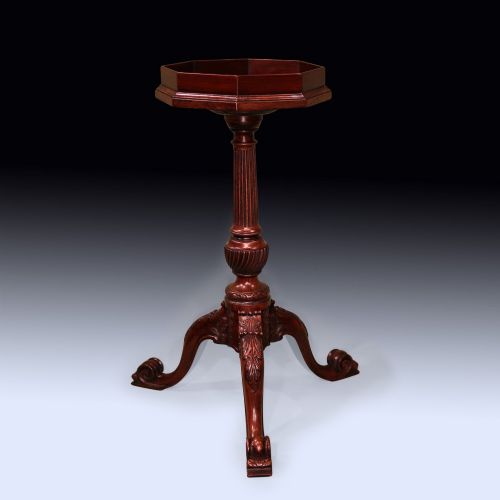


Georgian Period Kettle
These georgian period kettle items combine functional domestic copperware and mahogany kettle stands from the eighteenth century.

Georgian Period Kettle
When you search for georgian period kettle pieces, you encounter specialised eighteenth-century items designed for tea service and hearth use alongside related portrait paintings. The core of this category comprises small occasional tables intended specifically to support water heating vessels during tea preparation.
You are most likely to meet mahogany kettle stands and urn stands reflecting George III, Chippendale, and Sheraton styles. Heavy copper pots and kettles from around eighteen hundred also appear, alongside occasional pieces such as oil paintings connected to the maker name Tilly Kettle.
How they were made
The wooden stands utilise figured timbers including mahogany and satinwood, often featuring carved details characteristic of eighteenth-century cabinet making. These tables rely on solid timber construction designed to hold heavy liquid containers safely beside the hearth or tea table.
Metal vessels combine hammered copper with secure lids and functional handles shaped for daily kitchen or parlour service. Oil paintings in the selection employ oil paint on canvas to capture portrait subjects from the period.
Georgian Period Kettle Retail Price Guide 2026
Typical asking prices for georgian period kettle among the pieces listed under this phrase on Sellingantiques today, from the lower quarter to the upper quarter. They describe what is for sale here now, not the wider market.
Tea was once so costly that special mahogany furniture had to be invented just to hold the kettle safely.
What varies in quality
Quality in these stands rests on the crispness of the carved woodwork and the choice of timber figuring across the top and legs. Finer examples display refined proportions and sophisticated stylistic details associated with Chippendale or Sheraton workshop designs.
Metalware varies according to the thickness of the copper sheet and the integrity of the construction used to form the body and lid. Superior pots and kettles maintain structural robustness alongside clean hand-finished surfaces.
Tilly Kettle
The Georgian Period Kettle Glossary
- Kettle stand
- A small occasional table designed to hold a heated water vessel during the service of tea. These elevated surfaces kept hot metal pots safely off the floor or main tables.
- Urn stand
- A specialised small table used to support a heated water urn in eighteenth-century drawing rooms. They share the compact proportions and tall stance of kettle stands.
- Chippendale
- An eighteenth-century English furniture style named after Thomas Chippendale. Pieces in this manner utilise carved mahogany and classical decorative motifs.
- Sheraton
- A neoclassical furniture style from the late eighteenth century characterised by straight tapered legs and satinwood veneers. It represents a lighter aesthetic than earlier periods.
- George III
- The period of British history spanning from seventeen sixty to eighteen twenty. Furniture and metalware from this reign show distinct stylistic evolutions from rococo to neoclassical.
Georgian Period Kettle: Frequently Asked Questions
What is a kettle stand used for?
These small eighteenth-century tables supported heavy metal water vessels used during formal tea service. Their compact surface kept hot pots stable and accessible near the fireplace or tea table.
They allowed servants to manage hot water safely without crowding the main dining or parlour furniture. Many feature raised edges or slide-out shelves to handle spills and cups.
How do I identify a George III table?
George III stands typically display eighteenth-century mahogany or satinwood construction with proportions suited to tea equipage. Look for period joinery and stylistic indicators like carved fretwork or tapered legs.
Cabinet makers during this reign followed evolving neoclassical or rococo tastes. Comparing the leg profiles and timber selection helps confirm the manufacturing era.
Are copper pots from eighteen hundred heavy?
Authentic copper vessels from this period utilise thick hammered metal designed for regular hearth use. Their substantial weight reflects the manual fabrication methods of eighteenth-century coppersmiths.
This robust construction allowed them to withstand direct heat and constant handling. Lids and handles were securely attached to endure daily domestic service.
How do I style a kettle stand today?
These small tables fit easily beside armchairs or in corners as lamp tables or display surfaces. Their compact eighteenth-century footprint makes them practical for modern rooms without overwhelming the floor space.
Pairing a mahogany stand with simple contemporary decor highlights the timber grain and historical craftsmanship. They function well as bedside tables or plant pedestals.