

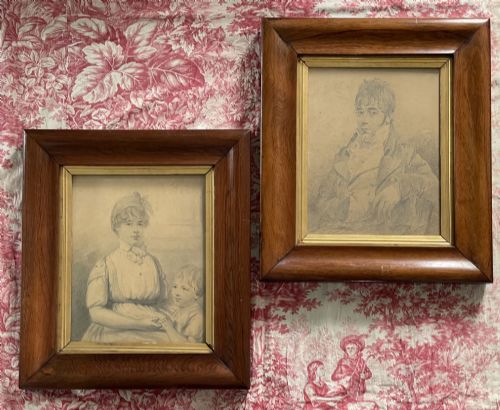

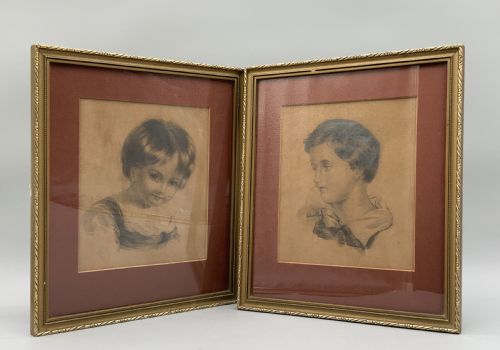


Georgian Pencil Portrait Drawing
A georgian pencil portrait drawing captures likeness with direct, quiet precision, offering an intimate window into past lives.
Georgian Pencil Portrait Drawing
A georgian pencil portrait drawing brings domestic likenesses and historical figures into sharp, monochrome focus, utilising graphite and plumbago on delicate paper surfaces. These works span the eighteenth century and the Regency era, presenting sitters ranging from young children and couples to notable historical personalities like George IV's mistress and engineers.
Buyers encounter both single framed artworks and matched pairs, occasionally accompanied by subtle washes of watercolour or gouache. The styles move from crisp Regency sketches to detailed Georgian plumbago works created in the manner of established portraitists.
Origins stretch across the eighteenth and nineteenth centuries, taking the form of oval portrait miniatures, framed drawings, and works on paper. These pieces survive in wood and gilt frames under glass, preserving the fine marks of the original hand.
How they were made
Framing materials typically included wood and gilt wood, protecting the delicate paper supports beneath glass through successive centuries. The construction of these frames ranges from simple mouldings to ornate gilt surrounds designed to complement the portrait within.
Georgian Pencil Portrait Drawing Retail Price Guide 2026
Typical asking prices for georgian pencil portrait drawing among the pieces listed under this phrase on Sellingantiques today, from the lower quarter to the upper quarter. They describe what is for sale here now, not the wider market.
Materials documented in these drawings include paper, graphite, pencil, watercolour, glass, wood, gilt, and gilt wood.
What varies in quality
Quality rests upon the precision of the line and the psychological depth captured in the sitter's expression. Master practitioners render bone structure and fabric with economy and assurance, whereas lesser works rely on stiff outlines and flat shading.
The survival of the paper support and the clarity of the graphite also dictate the standing of a piece. Tonal range, preservation beneath glass, and the presence of artist signatures or well-documented provenance elevate certain examples above standard studio output.
John Taylor·James Ferguson·Ozias Humphry·Sir Nathaniel Dance-Holland·Sir William Charles Ross
The Georgian Pencil Portrait Drawing Glossary
- Plumbago
- A drawing executed in graphite or a lead-carbon mixture, highly popular in the eighteenth century for its dark, metallic lustre.
- Regency
- The period of British history spanning from 1811 to 1820, noted in art for refined neoclassical restraint and elegant portraiture.
- Works on paper
- A collective term for drawings, watercolours, and prints where paper serves as the primary medium.
- Miniature portrait
- A small-scale painting or drawing designed for intimate viewing, often framed in wood or gilt cases.
- Gouache
- An opaque watercolour medium containing a white pigment filler, used to add highlights and body to pencil drawings.
Georgian Pencil Portrait Drawing: Frequently Asked Questions
How do I care for a paper portrait?
Keep works on paper away from direct sunlight and damp environments to prevent fading and foxing on the delicate sheet. Display them in rooms with stable temperature and humidity levels.
Ensure the protective glass remains sealed and clean the surrounding wood or gilt frame gently with a dry cloth.
Were these drawings meant for display?
These portraits served as intimate records of family members, friends, and notable public figures, usually displayed within private homes or kept in cabinets. Their modest scale suited domestic spaces of the eighteenth and nineteenth centuries.
Pairs and sets often commemorated marriages or friendships, recording social connections across generations.
How can I tell a Regency piece from a Georgian one?
Regency drawings often reflect the neoclassical tastes of the early nineteenth century in clothing, hair styling, and framing choices. Georgian examples tend to feature earlier eighteenth-century dress and distinct plumbago techniques.
Examining the paper type, framing style, and any period inscriptions on the reverse helps establish the precise era.
Do these drawings usually include colour?
While the majority rely strictly on graphite and plumbago, some examples incorporate subtle washes of watercolour or gouache. Artists added these touches to tint cheeks, render eyes, or highlight accessories.
Monochromatic graphite remains the defining characteristic across the selection, emphasising draughtsmanship over colour.