


Georgian Pembroke Desk
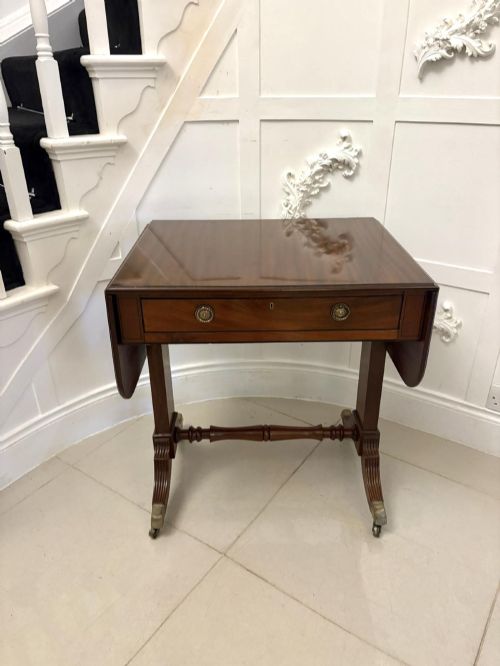
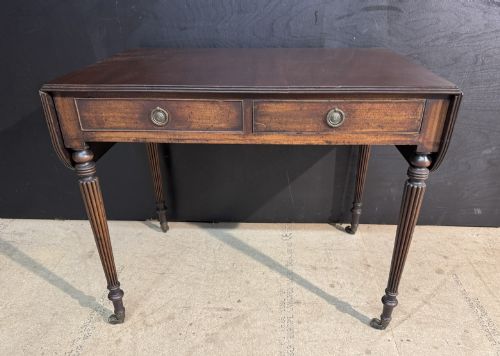
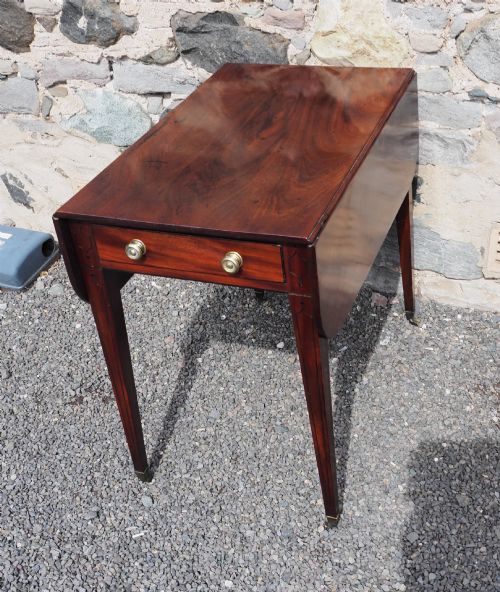
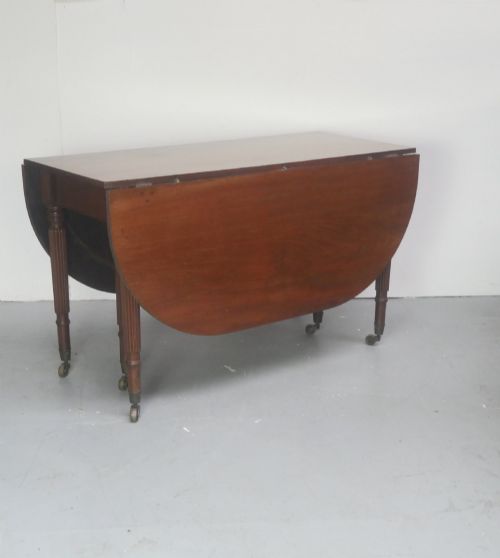
A georgian pembroke desk brings drop-leaf versatility and refined timber grain to a room, offering a compact writing surface that expands when the side flaps lift.
Georgian Pembroke Desk
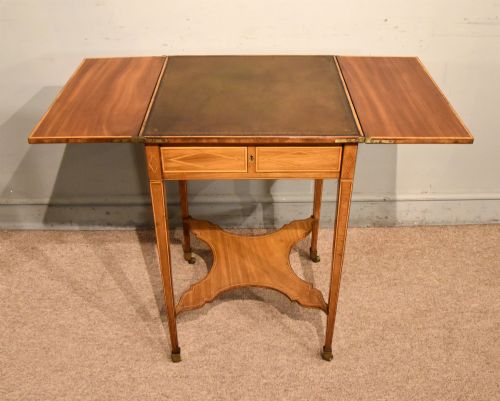
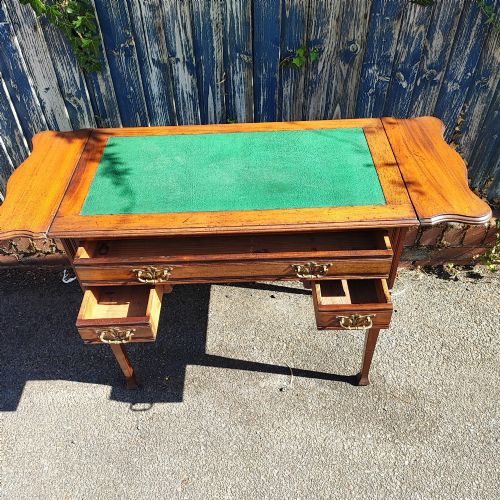
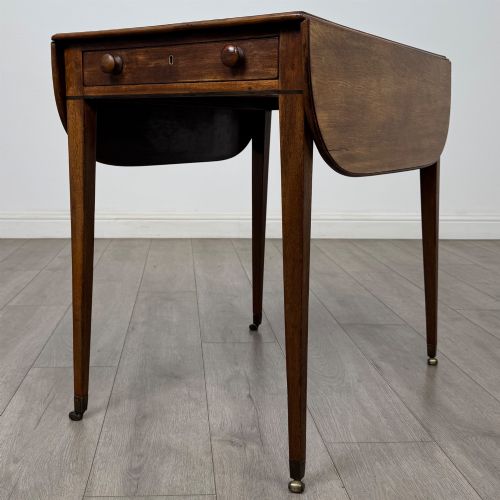
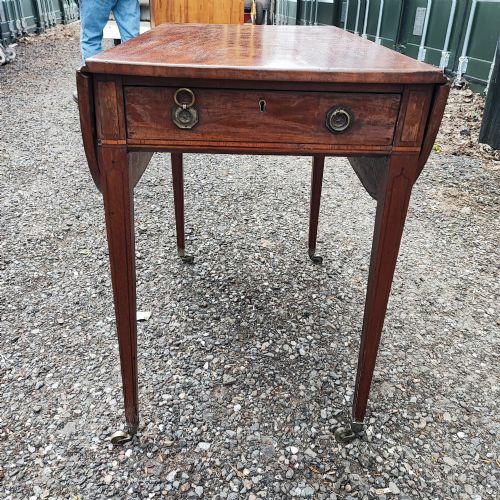
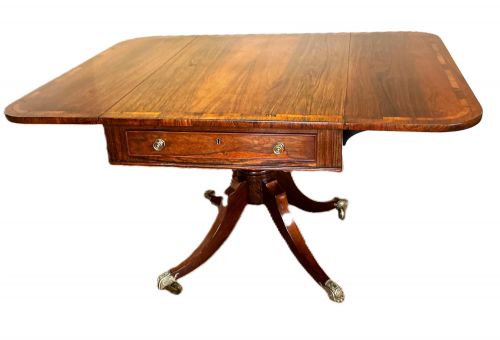
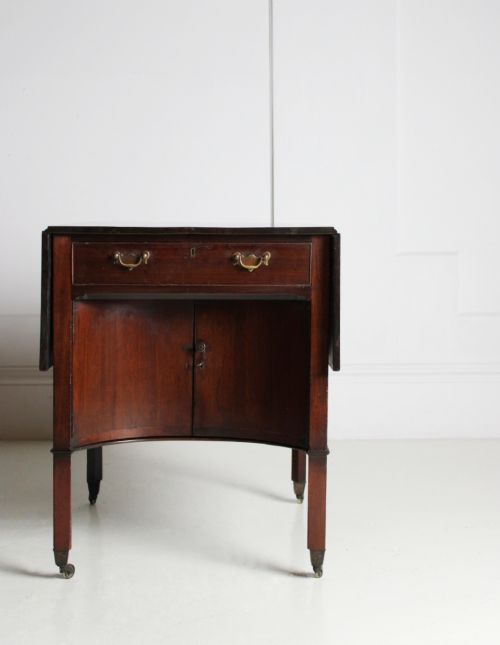
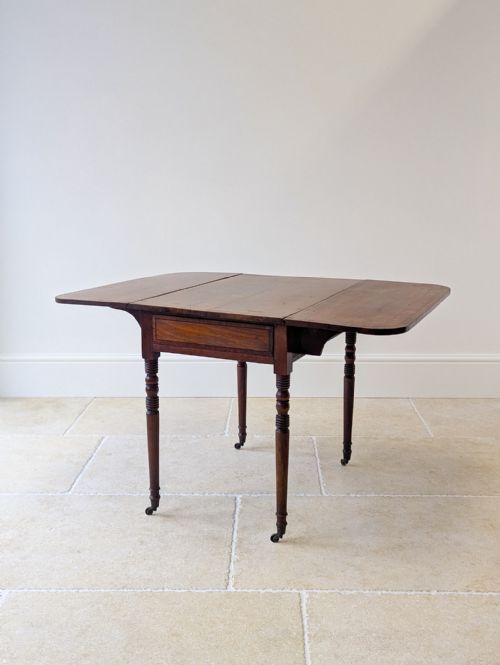
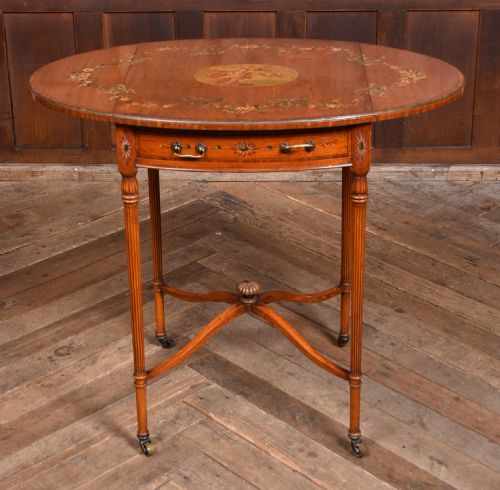
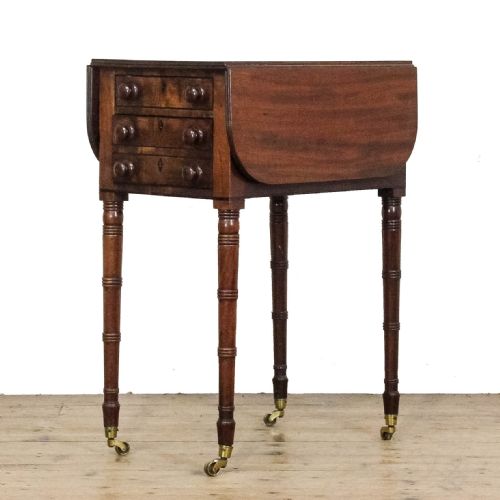
A georgian pembroke desk typically appears as a drop-leaf table fitted with one or more small drawers, designed for writing or light needlework. The form spans the eighteenth and nineteenth centuries, taking shape through periods such as the Georgian, Regency and Victorian eras.
Buyers will most frequently encounter mahogany examples featuring drop leaves supported by hinged wooden brackets known as rule joints. These pieces double as occasional, side or writing tables depending on the layout of the room.
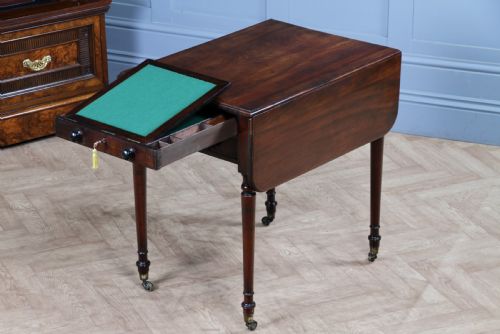
Makers adapted the basic pembroke footprint into specialised variants including games tables, sewing worktables and library desks. Such pieces reflect the domestic habits of the period, providing a movable writing surface that sits neatly against a wall when folded.
Materials and construction methods
Cabinetmakers relied heavily on solid mahogany and mahogany veneers, often accentuating the primary timber with satinwood inlay, boxwood stringing or cross-banding along the table edges. Rosewood, walnut and brass hardware appear on select pieces from later periods.
Construction hinged upon precise joinery for the drop-leaf flaps, utilising knuckle joints and swing brackets to bear weight when the leaves are raised. Drawers incorporate hand-cut dovetailing, frequently accompanied by original brass pulls and working locks.
The listings show pieces spanning the eighteenth to the early twentieth century, incorporating mahogany, satinwood, rosewood, walnut and brass.
Assessing quality in construction and timber
Quality rests upon the selection of figured timber and the crispness of any inlay or cross-banding. Superior examples display continuous grain matching across the table top and flaps, whereas simpler items utilise plain stock without decorative stringing.
The integrity of the flap mechanism dictates daily utility, distinguishing master cabinet work from provincial output. Smooth drawer movement, substantial brass fittings and unaltered structural timber separate fine examples from heavily restored pieces.
Gillows
The Georgian Pembroke Desk Glossary
- Pembroke table
- A small occasional table featuring two hinged drop leaves on opposing sides. It often includes a single drawer and slender legs.
- Drop leaf
- A hinged flap attached to the main table top that extends the surface area when raised. These flaps rest on pivoting wooden brackets or swing legs.
- Cross-banding
- A decorative border of veneer laid perpendicularly to the grain of the main surface. It frames the top of the desk to create a neat visual contrast.
- Satinwood
- A pale, lustrous exotic timber utilised for contrasting inlay work and geometric banding. Cabinetmakers favoured it during the Sheraton and Regency periods.
- Secretaire
- A desk fitted with a pull-down writing flap concealing small drawers and pigeonholes. It transforms a standard table into a compact cabinet for correspondence.
Georgian Pembroke Desk: Frequently Asked Questions
How were these desks used historically?
These pieces served multiple domestic functions in drawing rooms and parlours, primarily acting as convenient writing surfaces for correspondence. The drop leaves allowed the furniture to sit compactly against a wall when not in use.
Owners also utilised them for needlework, reading, or serving tea, making them one of the most adaptable items of small furniture in a historic interior.
How do I spot a true Georgian piece?
Examining the secondary timbers inside the drawer boxes, such as oak or pine, helps determine the age alongside the construction methods of the dovetails. Hand-cut joints and timber shrinkage patterns provide reliable indicators of eighteenth-century manufacture.
Stylistic cues like Sheraton proportions and subtle boxwood stringing further align a piece with the Georgian or Regency periods rather than later revival eras.
Are the drop leaves structurally robust?
The hinged flaps are supported by pivoting wooden brackets known as rule joints, which distribute weight when the leaves are raised. While suitable for writing and light objects, heavy downward pressure should be avoided.
Well-maintained hinge mechanisms operate smoothly without sagging, ensuring the leaves remain level with the central top board.
Where does a pembroke fit best today?
Their modest proportions make these tables ideal as compact writing desks in home offices, or as lamp and side tables in living spaces. The ability to drop the leaves allows the furniture to adapt easily to restricted floor plans.
They pair well with both traditional period interiors and modern spaces that benefit from warm mahogany tones and clean classical lines.