

Georgian Pedestal Centre Table
A georgian pedestal centre table anchors a room with timber grain and balanced proportions, offering a versatile surface for daily use.
Georgian Pedestal Centre Table
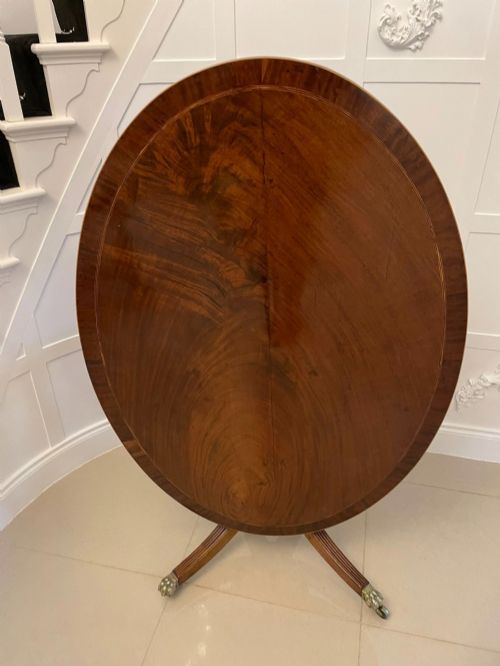
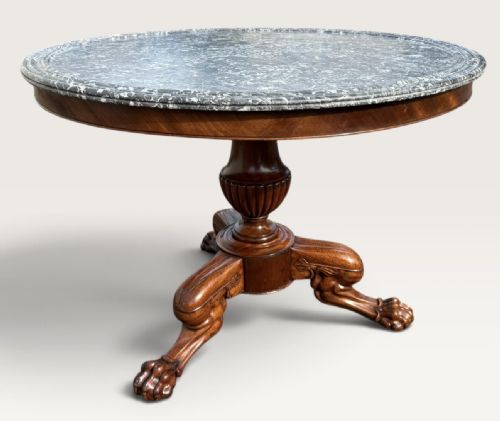
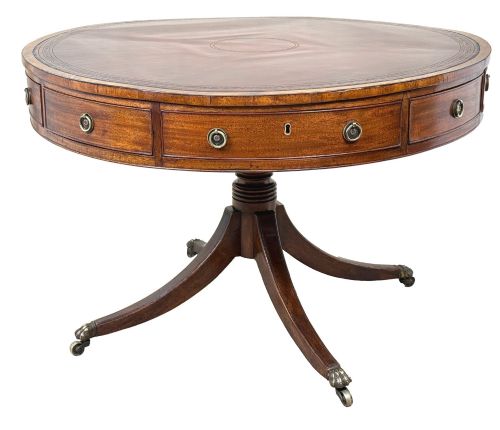
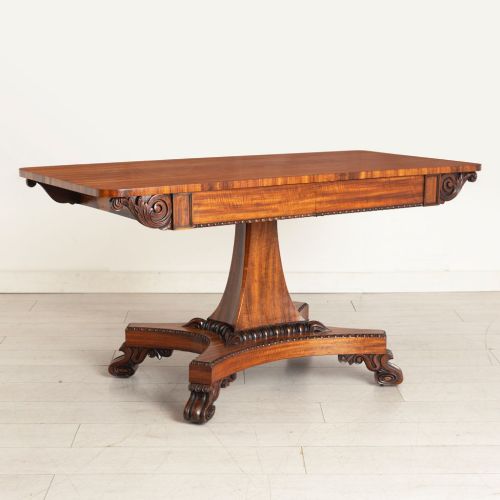
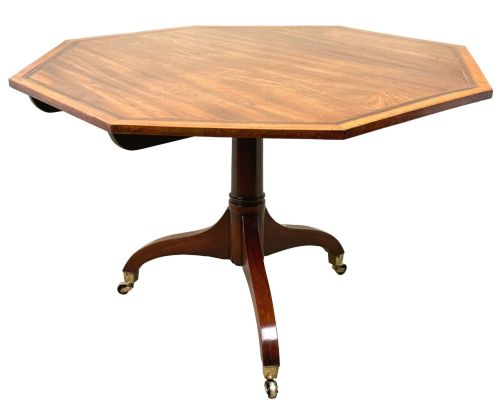
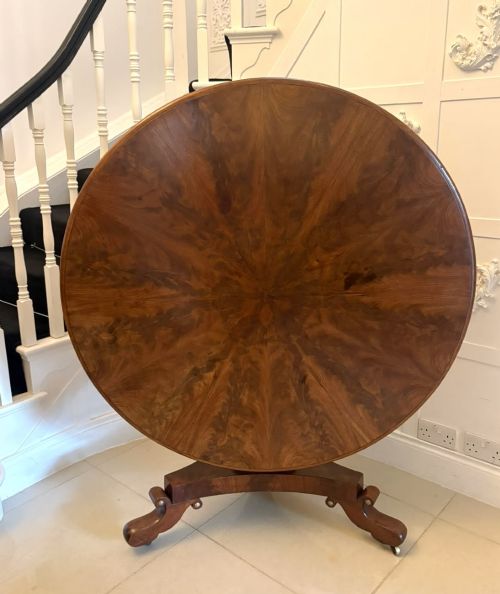
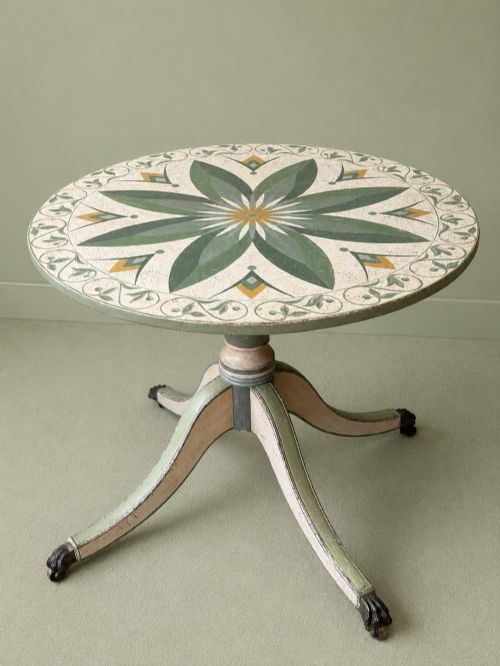
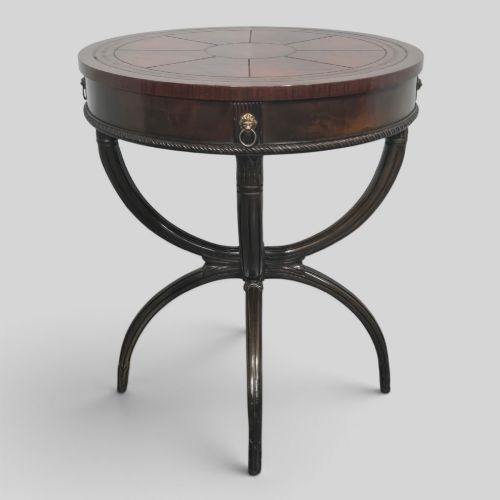
A georgian pedestal centre table stands on a single central column or tripod base rather than traditional corner legs, allowing chairs to tuck in neatly. The selection spans the eighteenth and nineteenth centuries, taking the form of breakfast tables, drum tables, and library tables.
Makers utilised dense native and exotic timbers to construct these freestanding pieces, which were designed to occupy the middle of a room. Surviving examples reflect George III, Regency, and William IV styles, alongside later revival pieces.
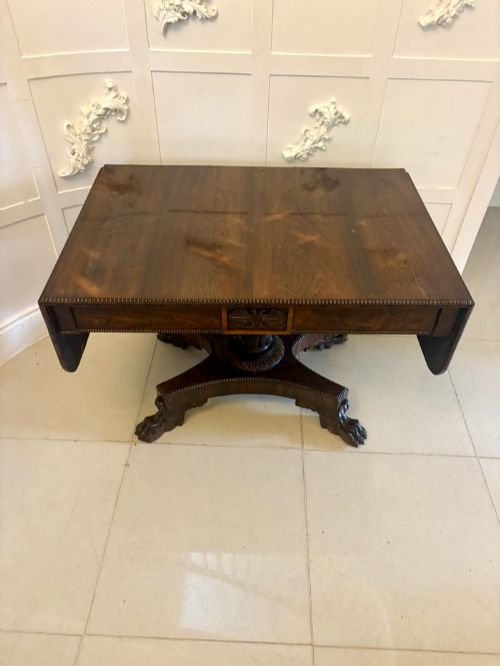
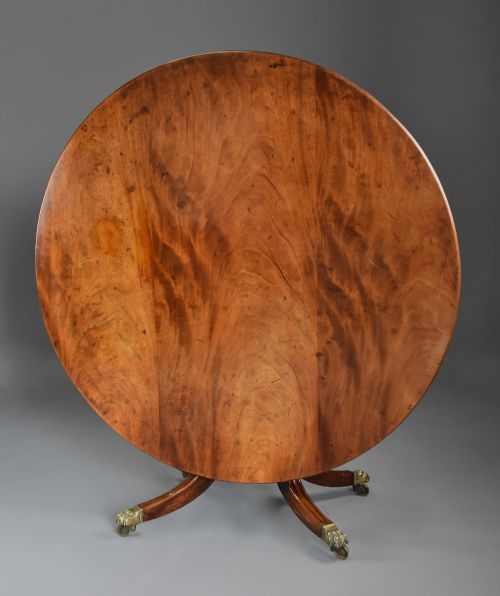
Circular and tilt-top variants dominate the listings, alongside rectangular library and occasional tables fitted with central pedestals. These tables served multiple domestic purposes, from serving breakfast to displaying books and objects of curiosity.
Materials and Construction
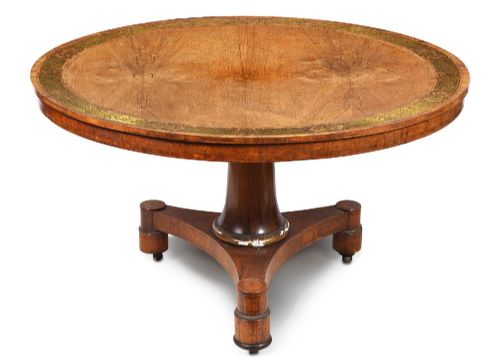
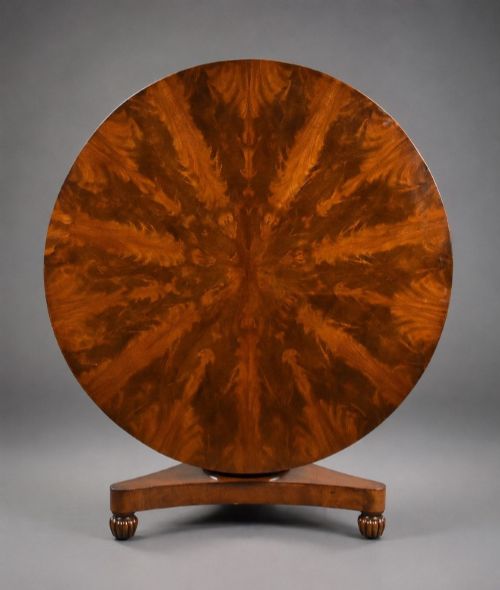
Cabinet makers selected solid mahogany, rosewood, and oak for structural stability, often applying flame mahogany or burr yew veneers to display dramatic grain patterns. Brass inlay and parcel gilt accents frequently decorate the borders and pedestals of higher status pieces.
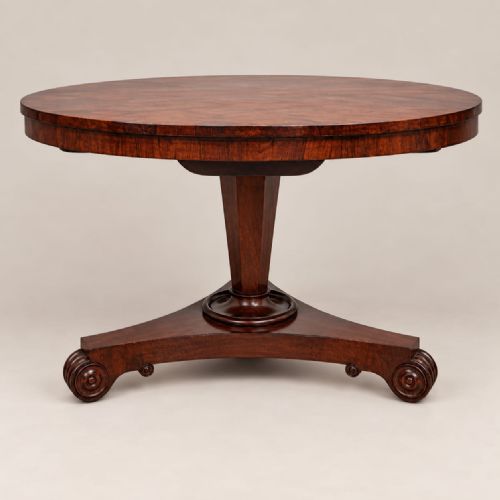
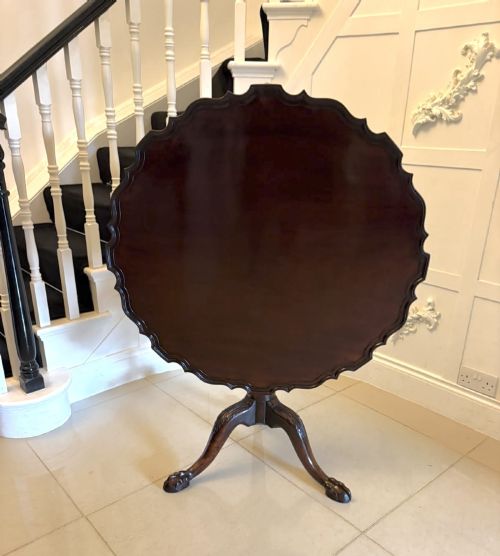
Circular tops commonly utilise a tilt mechanism fixed to a birdcage or block, allowing the surface to fold away vertically when not in use. Heavy triform or platform bases provide counterbalance, resting on carved paw feet or brass castors.
Listings feature mahogany, rosewood, oak, and walnut across eighteenth and nineteenth century periods.
Evaluating the Pieces
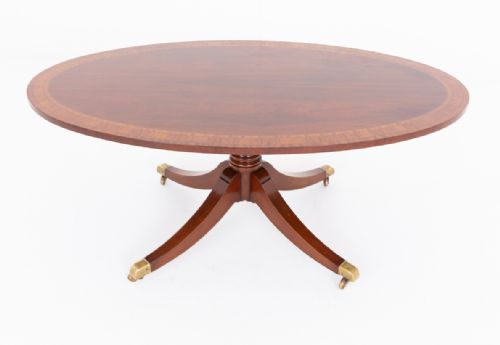
The selection of timber grain and the precision of crossbanding dictate the visual impact of the surface, with figured mahogany and rosewood representing the upper tier. Subtle details such as finely turned columns and original brass castors separate workshops of distinction from standard production.
Structural integrity depends on the stability of the central column joint and the smoothness of any tilt mechanism, which should operate without excessive play. Patina developed through decades of polishing adds depth to the timber, reflecting the care taken by successive owners.
Gillows of Lancaster·Walker Lancaster
The Georgian Pedestal Centre Table Glossary
- Tilt-top
- A table mechanism allowing the circular or rectangular top to pivot vertically for storage against a wall when not in use.
- Drum table
- A circular library table containing a deep frieze fitted with alternating drawers and faux drawers, supported by a central pillar.
- Crossbanded
- A border technique where thin strips of veneer are laid perpendicular to the main grain of the table top to create a framed effect.
- Triform base
- A three-sided pedestal foot assembly commonly found supporting circular breakfast and centre tables from the Regency period.
Georgian Pedestal Centre Table: Frequently Asked Questions
How do I use a tilt-top table?
The top pivots on a horizontal hinge, allowing it to lock flat for dining or tilt vertically to save space against a wall.
This practical design allowed large breakfast and centre tables to be moved aside when the room was needed for other activities.
Where should I place a centre table?
These pieces are finished on all sides to stand freely in the middle of a room, rather than pushed against a wall.
They function well in entrance halls, libraries, or drawing rooms where access from multiple sides is useful.
How do I distinguish George III from Regency styles?
George III pieces often display restrained classical carving and rich mahogany tones dating from the later eighteenth century.
Regency examples frequently incorporate bolder brass inlays, rosewood veneers, and heavier pedestal bases influenced by classical antiquity.