



Georgian Pearlware Plate
A georgian pearlware plate brings hand-printed blue and white scenery straight to the dining table from the early nineteenth century.
Georgian Pearlware Plate
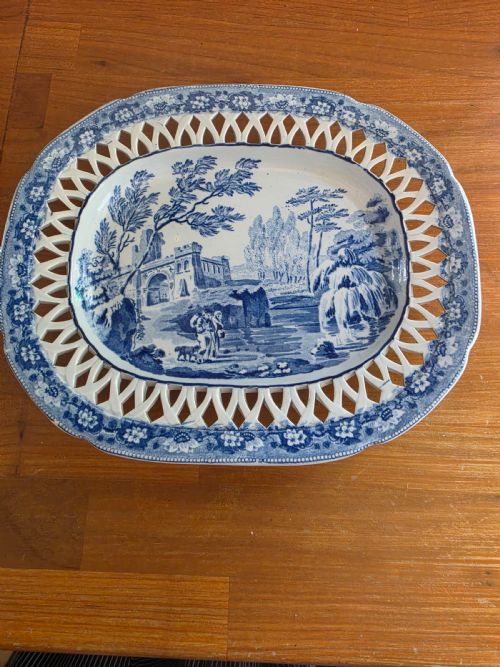
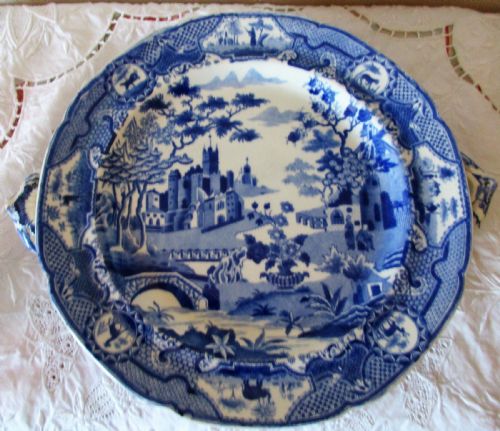
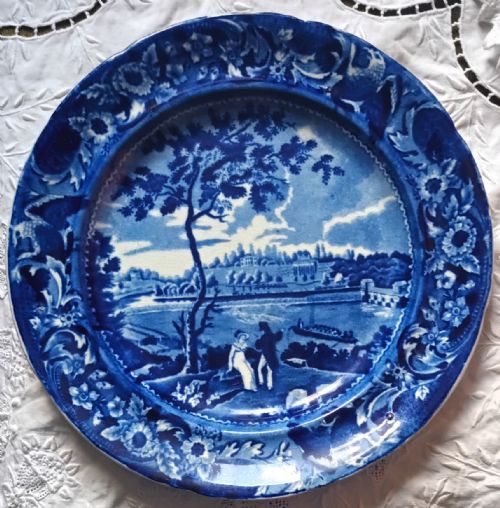
When you examine a georgian pearlware plate, you are looking at early earthenware designed for everyday dining and display during the Georgian and Regency periods. These pieces span flat plates, soup plates, serving dishes, platters, and hot-water plates.
The version you are most likely to meet on this page is a blue and white transfer-printed earthenware plate originating from English potteries around eighteen hundred to eighteen thirty. Common forms also include larger chargers, tazza stands, and children's miniature plates.
How they were made
Potters shaped these vessels from refined earthenware bodies, applying a subtle bluish glaze that pooled pleasantly around rims and feet to mask the yellowish tint of the underlying clay. Cobalt blue oxide provided the pigment for intricate transfer-printed decoration.
Engraved copper plates transferred detailed pictorial scenes onto tissue paper, which workers then pressed carefully onto the fired ceramic surface before glazing and kiln firing.
Certain miniature children's plates from the Regency period preserved tiny alphabets alongside scenic views to assist with early reading.
What varies in quality
The clarity of the transfer print distinguishes finer examples, where crisp lines define architectural ruins, figures, and foliage without blurring or smudging from the copper plate. Early pieces often display deeper, richer cobalt tones that sink satisfyingly into the glaze.
The refinement of the ceramic body itself sets pieces apart, with superior earthenware showing lighter weight, thinner walls, and careful footring formation rather than heavy, utilitarian thickness.
Davenport·Spode·Stubbs·William Adams·Thomas Lakin·Brameld and Co·John Rogers and Son·Thomas and John Carey
The Georgian Pearlware Plate Glossary
- Pearlware
- A refined earthenware developed by Josiah Wedgwood and adopted widely across Staffordshire to succeed creamware. The subtle blue-tinted glaze gives the ceramic body its characteristic pale appearance.
- Transfer printing
- A decoration technique using an engraved copper plate to pull an ink impression on tissue paper, which is then pressed onto the biscuit ceramic. This method allowed intricate pictorial scenes to be reproduced rapidly.
- Chinoiserie
- A decorative style inspired by European interpretations of East Asian artistic traditions. Plates featuring this motif often display imaginative pagodas, bridges, and figures.
- Charger
- A large decorative plate or platter used historically for serving food or as a base beneath other dishes. These sizeable pieces showcase expansive transfer-printed landscapes.
- Hot-water plate
- A specialised vessel featuring a hollow compartment accessed by a plug, designed to hold boiling water and keep food warm at the table.
Georgian Pearlware Plate: Frequently Asked Questions
How do I date a pearlware plate?
Dating relies on stylistic clues, pattern names, and potter marks recorded in the ceramic body or glaze. Earlier pieces from around eighteen hundred tend to feature lighter weight and distinct cobalt shades.
Later Regency examples shift toward heavier Staffordshire production methods and brighter white glazes with crisper transfer printing.
Can I use these plates for dining?
While structurally sound, these antique earthenware pieces deserve careful handling rather than daily service use. Hand washing protects the historical glaze and delicate ceramic body from modern dishwasher damage.
Displaying them on plate stands or wall mounts lets you enjoy the blue and white transfer scenes safely.
What is the difference between creamware and pearlware?
Creamware utilises a warm, yellowish lead glaze over a pale earthenware body suited to eighteenth-century dining tables. Pearlware introduced a slightly bluish glaze formula designed to mimic the whiteness of imported Chinese porcelain.
This chemical adjustment creates the signature cool tone visible across Georgian blue and white ceramics.
Why are some plates stamped while others are unmarked?
Many early nineteenth-century potteries relied on paper trade labels or omitted stamps entirely on standard domestic tableware. Maker marks became more common as regional factories sought to brand their specific transfer-printed patterns.
Unmarked pieces are typically attributed through stylistic analysis of the border prints and engraving quality.