

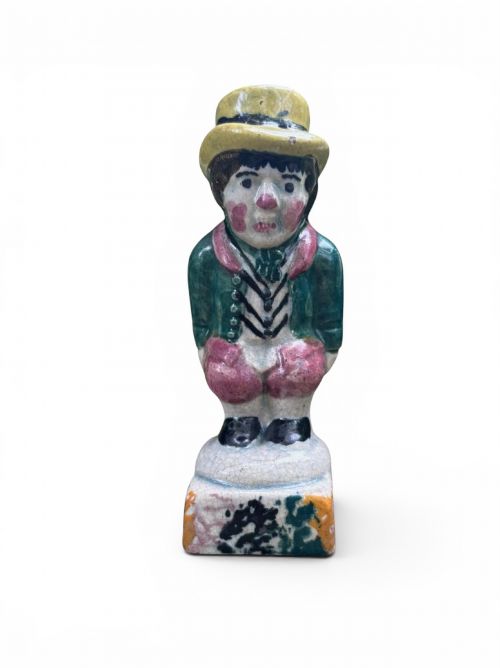
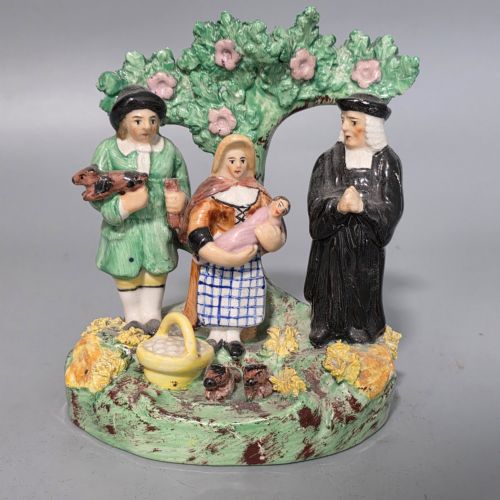


Georgian Pearlware Figurine
A georgian pearlware figurine brings brilliant enamel colour and early ceramic modelling straight into a room.
Georgian Pearlware Figurine
A georgian pearlware figurine represents a distinct category of early ceramic figures, decorative figures, and pottery figures produced in periods including the Georgian era, the nineteenth century, and the Victorian era. These pieces frequently take the form of sculptural groups, animal studies, and literary or biblical subjects.
Buyers seeking a georgian pearlware figurine most commonly encounter Staffordshire works, including spill vases, pepper pots, and creamers and jugs. Figures associated with known makers and specific regional potteries also appear among the selections.
The objects span varied forms such as sheep and lamb figure groups, lions, setters, and figurative pairs like Antony and Cleopatra. Each piece reflects the sculptural output of early British potteries working in earthenware and pearlware glaze.
Materials and manufacture
Potters built a georgian pearlware figurine using earthenware bodies coated in a pale pearlware glaze designed to mimic the whiteness of Chinese porcelain. This bluish-tinged glaze pools subtly around crevices and bases, giving the ceramic surface its characteristic tone.
Makers applied enamel pigment by hand over or under the glaze to render details on clothing, animals, and naturalistic bases. These bright enamel colours distinguish the figures from plain creamware and salt-glazed wares of earlier decades.
Listings feature earthenware and pearlware bodies finished with glaze and enamel pigment, taking the form of figures, spill vases, and pepper pots.
Judging quality
The application of enamel pigment dictates visual success, separating hastily decorated workshop output from carefully detailed models. Superior pieces retain vibrant, stable enamel colours without excessive flaking or crude touch-ups.
Enoch Wood factory·Lakin and Poole·Walton·Mexborough
The Georgian Pearlware Figurine Glossary
- Pearlware
- A refined earthenware body developed in the late eighteenth century featuring a thin glaze with a faint bluish tint. This glaze was formulated to create a whiter appearance than traditional creamware.
- Prattware
- Pottery decorated with specific underglaze metallic oxides, typically blue, ochre, green, brown, and yellow. The colours are applied beneath the glaze before firing.
- Spill vase
- A hollow ceramic tube attached to a figure, designed to hold taper spills for lighting candles or pipes. These dual-purpose objects combine decorative modelling with domestic utility.
- Earthenware
- Porous pottery fired at lower temperatures than stoneware or porcelain. It forms the structural base for virtually all pearlware figures.
- Enamel pigment
- Vitreous coloured glass fused to the ceramic surface during a secondary low-temperature firing. It provides the bright palette seen on costumes and animal markings.
Georgian Pearlware Figurine: Frequently Asked Questions
How do I date a pearlware figure?
Dating relies on stylistic clues, glaze characteristics, and recorded operating periods of specific potteries and modellers. Pieces generally date from the late eighteenth century through the early nineteenth century.
Changes in palette and modelling styles help narrow down the decade of production when factory marks are absent.
What is the difference between pearlware and creamware?
Creamware has a warm, buttery yellow tone imparted by its transparent lead glaze. Pearlware uses a small amount of cobalt in the glaze to create a bluish-white surface.
This deliberate shift in hue aimed to imitate the appearance of imported Chinese porcelain.
Where were these figures made?
The majority of these pieces originated in the Staffordshire Potteries district of England, home to numerous specialised ceramic workshops. Other regional potteries, such as those in Yorkshire and Wales, also produced distinct figures and utilitarian vessels.
Production often centred around towns with established clay resources and fuel supplies.
How should I display pearlware figures?
Display these ceramics away from direct, strong sunlight to protect the stability of the hand-painted enamel colours over time. Stable shelving inside enclosed cabinets protects the fragile earthenware bodies from accidental knocks.
Handling should be kept to a minimum to preserve the glaze and painted surfaces.