


Welsh Pottery Milk Jug
These welsh pottery milk jug examples are robust earthenware and porcelain vessels from the nineteenth century, prized for bringing colourful folk art patterns to the table.
Welsh Pottery Milk Jug
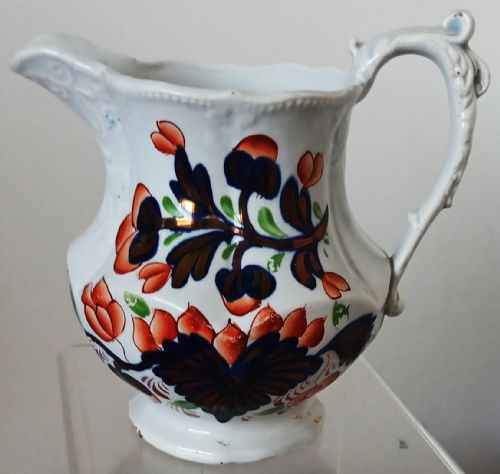
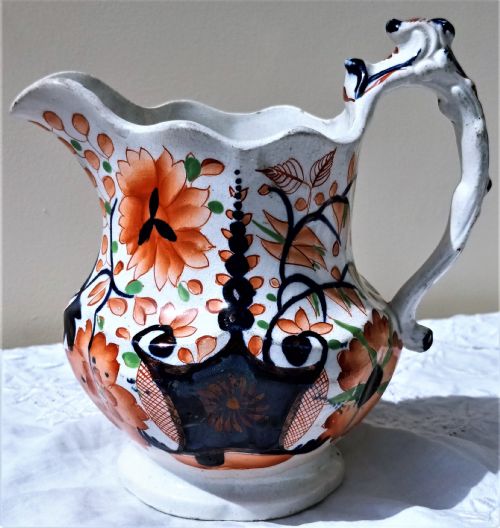
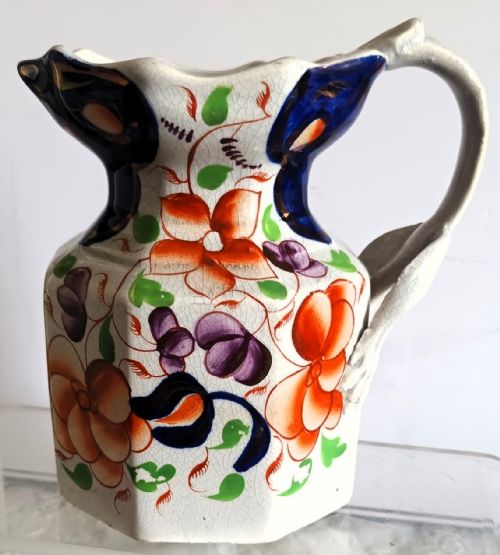
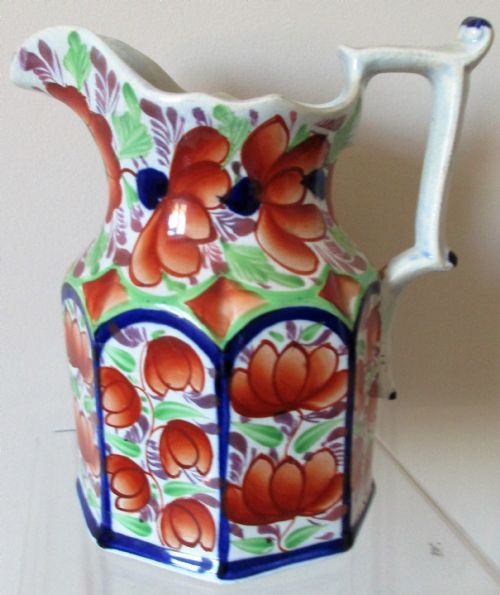
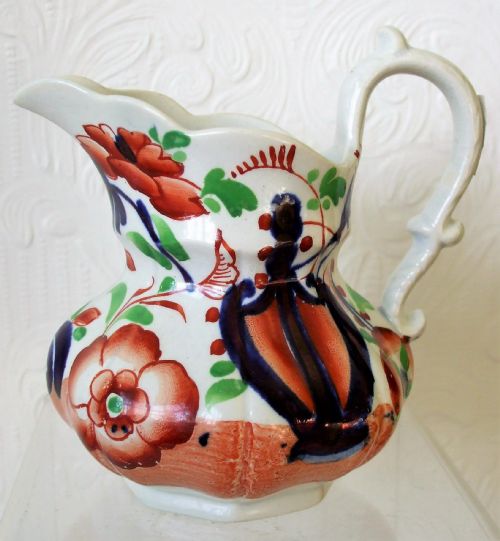
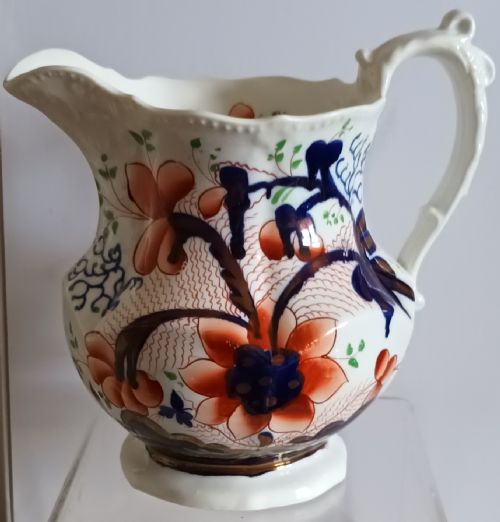
A welsh pottery milk jug most commonly appears on this page as a nineteenth century earthenware or porcelain piece decorated with vibrant patterns in the Victorian and Georgian folk art styles. You will frequently encounter named patterns such as Grape, Pagoda, Gower, Gwent, Aberaeron, Harlech and Conwy, which dominate the available selection.
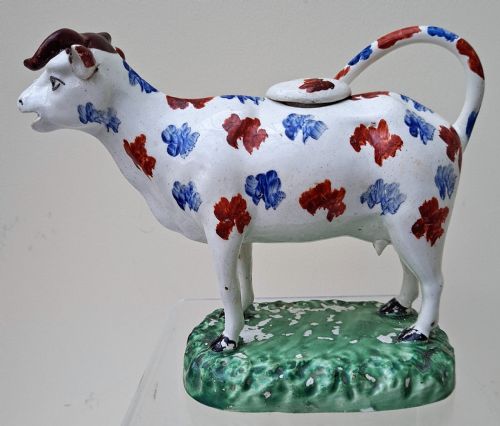
The inventory also includes charming figural variations such as the pottery cow creamer from the Georgian period, alongside distinct vessel shapes like pouch jugs and standard pitchers. These nineteenth century pieces range from sturdy utilitarian milk containers to highly decorative table ornaments.
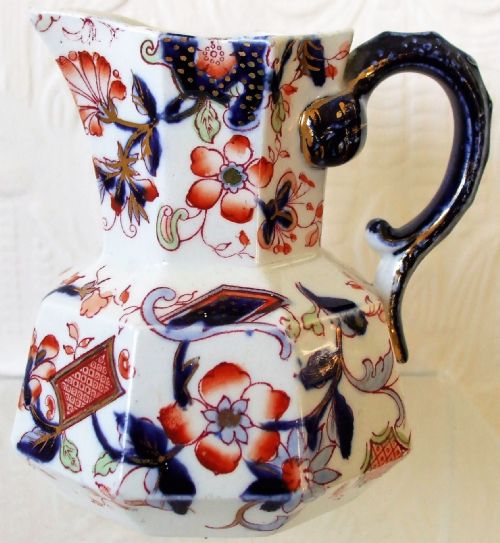
Makers represented in the current selection include Keeling and Co., whose porcelain Hydra jug exemplifies the refined output alongside traditional earthenware productions. Buyers searching for a welsh pottery milk jug will find a strong concentration of nineteenth century Gaudy Welsh wares featuring rich enamel and copper lustre accents.
Materials and construction
Potters built these nineteenth century jugs using earthenware or porcelain bodies, which were then finished with a protective glaze. The application of surface enamel, paint and copper lustre provided the characteristic colourful decoration seen across Victorian and Georgian folk art pieces.
Gilding was frequently applied to accentuate moulded details on porcelain bodies such as the Hydra jug. The combination of hand painting and lustre work required careful firing to fuse the metallic sheens and bright colours securely to the ceramic surface.
Pouring your morning milk from a nineteenth century ceramic cow with a loop tail instantly transforms breakfast into a Georgian parlor game.
Assessing quality and character
Quality in a welsh pottery milk jug rests on the crispness of the moulded form and the vibrancy of the hand painted enamel or copper lustre work. Pieces featuring complex named patterns like Pagoda or Grape display a higher degree of artistic execution than plain utilitarian vessels.
The retention of bright gilding and clean painted lines on nineteenth century earthenware and porcelain indicates superior preservation and careful past handling. Distinctive regional forms, such as the figural cow creamer, demonstrate greater sculptural ambition compared to standard pitcher shapes.
Keeling and Co
The Welsh Pottery Milk Jug Glossary
- Gaudy Welsh
- A style of colourful pottery decorated with bright enamels and copper lustre, popular during the nineteenth century. These wares typically feature hand painted motifs like Grape and Pagoda.
- Copper Lustre
- A metallic glaze technique that produces a coppery, reflective sheen on earthenware pottery. It is frequently used to highlight rims and handles on nineteenth century jugs.
- Cow Creamer
- A whimsical figural vessel shaped like a cow, used for serving milk or cream from the animal's mouth. These pieces are notable examples of Georgian and Victorian folk art.
- Hydra Jug
- A specific ceramic vessel form featuring a moulded serpent handle and classical spout. This shape appears in nineteenth century porcelain production.
- Earthenware
- A porous ceramic body fired at lower temperatures, commonly used for traditional kitchen and table wares. It requires a glaze to become impermeable to liquids.
Welsh Pottery Milk Jug: Frequently Asked Questions
What is a Gaudy Welsh jug?
A Gaudy Welsh jug is a nineteenth century ceramic piece decorated with intense enamel colours and copper lustre. These wares were produced for everyday domestic use and feature distinctive folk art patterns.
Collectors prize them for their vibrant palettes, which often include cobalt blue, iron red, green and pink lustre. The patterns are usually hand applied over a white earthenware body.
How were cow creamers used?
Cow creamers served as functional milk or cream jugs on the tea table during the Georgian and Victorian eras. Liquid was poured from the animal's mouth while the user held the raised tail as a handle.
These figural pieces combine utility with whimsical folk art design. They remain popular display items for collectors of early Welsh and English ceramics.
What periods do these jugs date from?
The pieces listed on this page date from the nineteenth century, spanning both the Georgian and Victorian periods. This era encompasses the height of traditional folk art pottery production in Wales and England.
Stylistic markers such as copper lustre work and specific named transfer or painted patterns help anchor these items firmly within the eighteen hundreds.