

Georgian Overmantel
A georgian overmantel brings historic architectural presence to a room, designed specifically to sit above the fireplace with sweeping proportions and reflective depth.
Georgian Overmantel
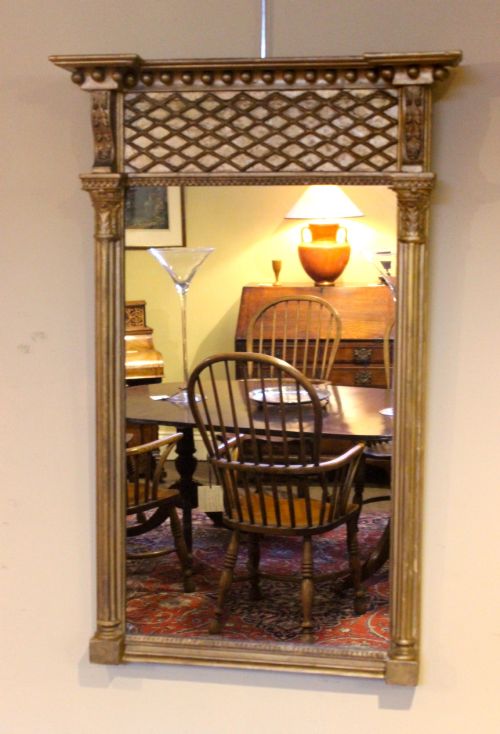
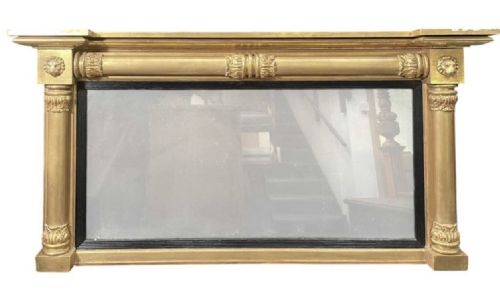
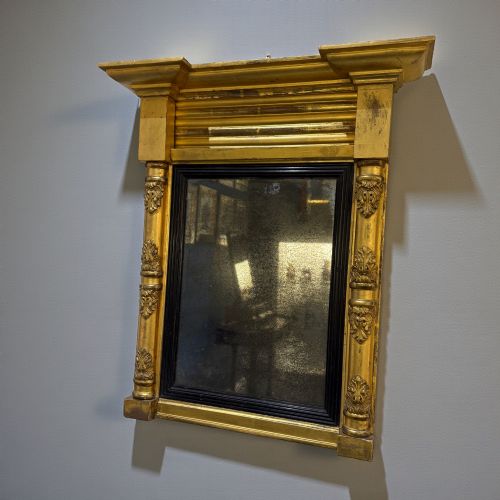
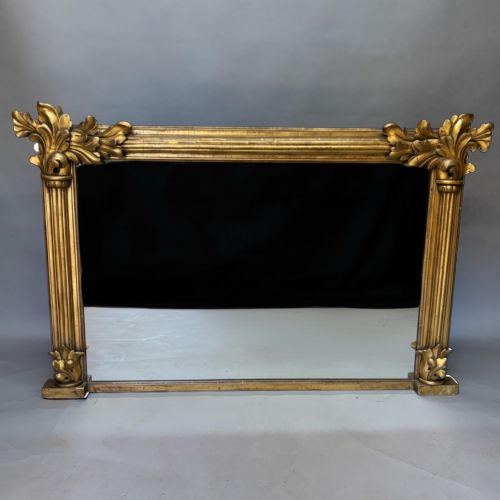
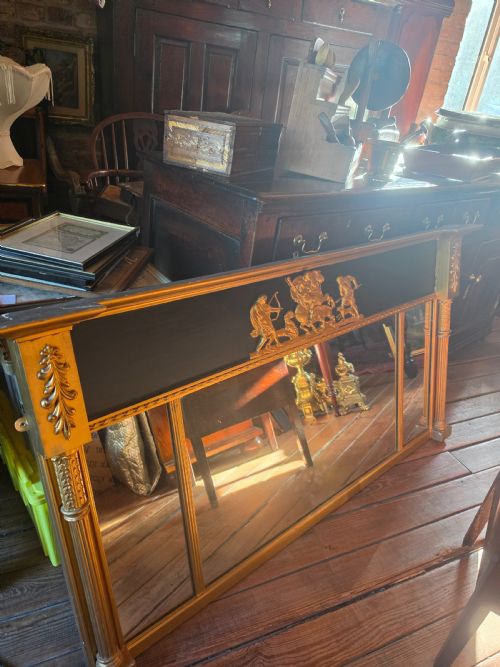
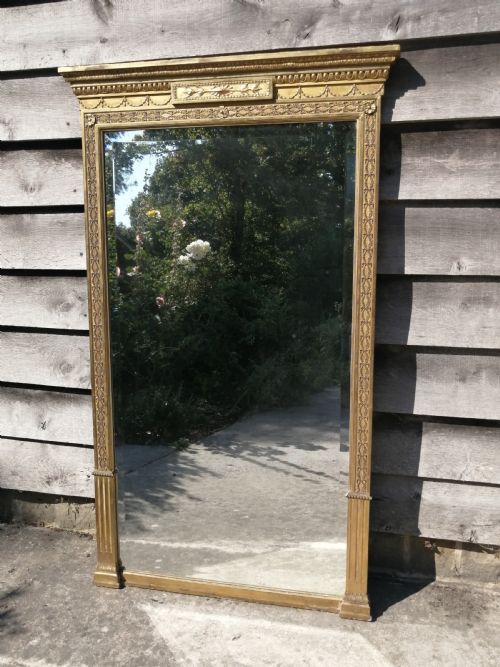
Most examples encountered here date from the eighteenth and nineteenth centuries, reflecting styles from George II and Adam revivals to grand Regency designs. These pieces often feature landscape formats or tall architectural proportions designed to amplify natural light within principal rooms.
Makers utilised various formats, including triple plate arrangements and pier mirrors adapted for domestic reception rooms. The integration of classical motifs places these mirrors firmly within traditional British decorative schemes.
Materials and Construction
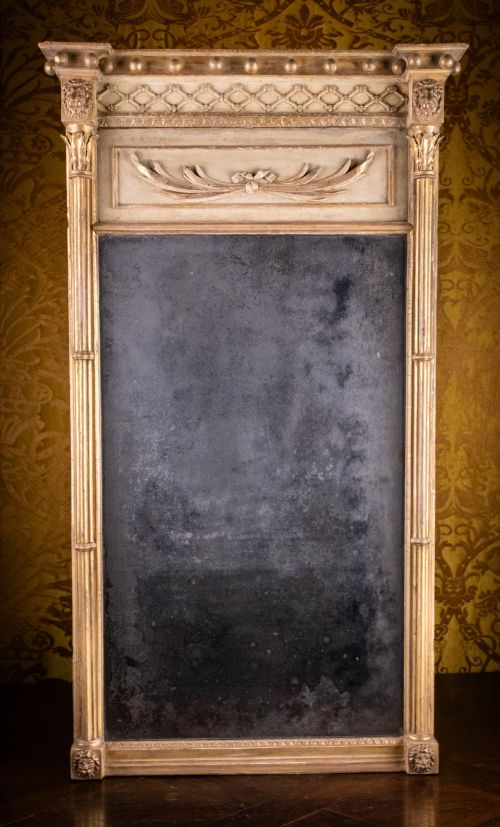
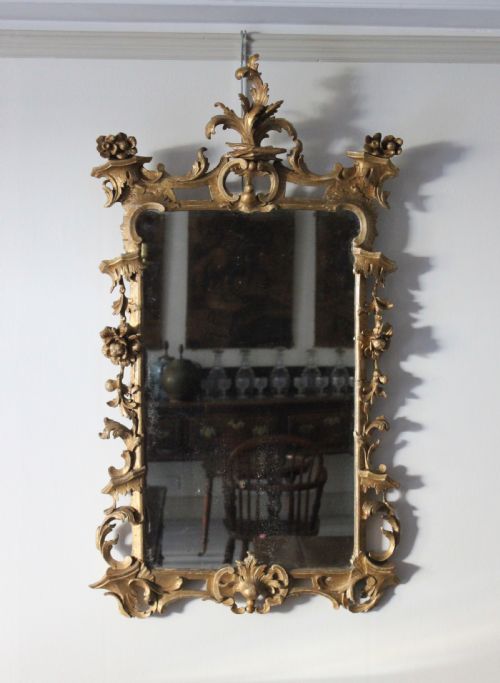
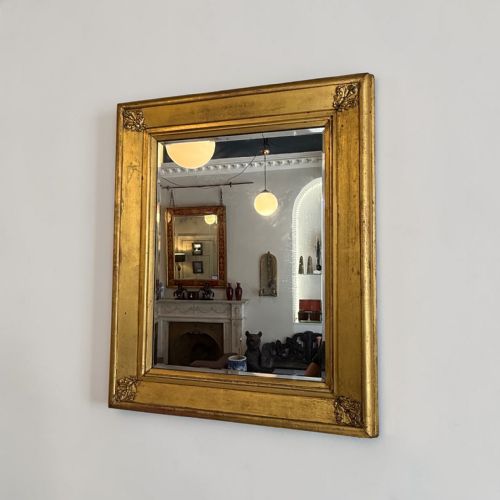
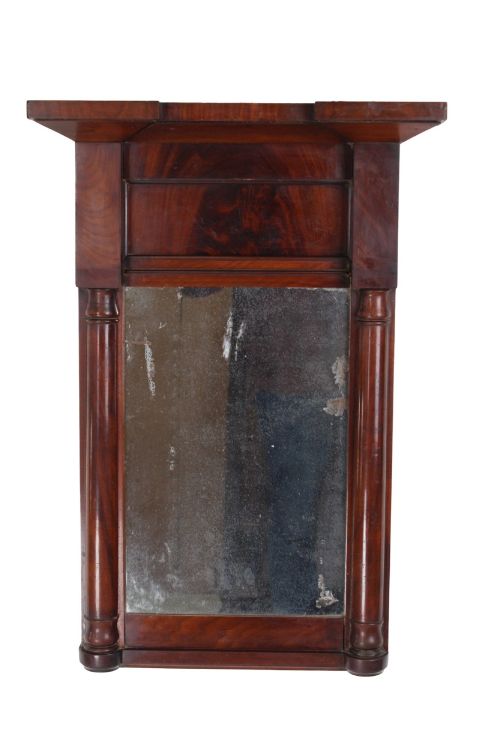
Makers constructed frames primarily from solid timbers like mahogany, walnut, and painted pine, often applying layers of gesso to create intricate relief ornament. Gold leaf and composition details were then applied over the base to achieve a brilliant metallic sheen.
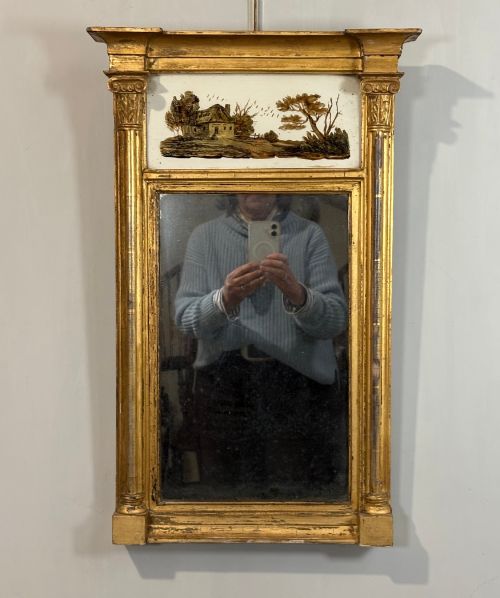
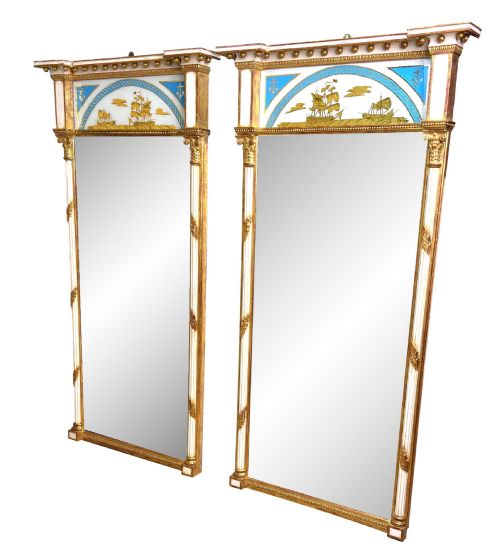
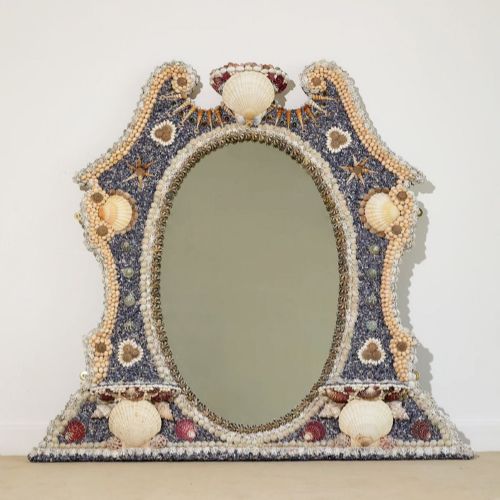
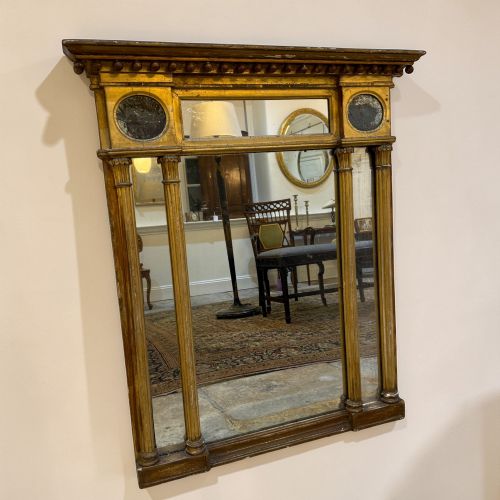
Mirror plates were set into the frames by hand, sometimes accompanied by decorative elements such as verre églomise panels or shellwork. The combination of carved wood, applied gesso, and fragile glass required expert joinery to support heavy overarching structures.
Georgian Overmantel Retail Price Guide 2026
Typical asking prices for georgian overmantel among the pieces listed under this phrase on Sellingantiques today, from the lower quarter to the upper quarter. They describe what is for sale here now, not the wider market.
Listings feature periods spanning from the eighteenth century through the Victorian era, executed in giltwood, mahogany, and painted pine.
Judging Quality and Execution
Quality rests heavily on the depth and crispness of the hand-carved ornament within the gesso and giltwood frames. Superior pieces retain their original mirror plates and historic gilding without excessive modern intervention.
Proportion and scale dictate the visual success of the piece, with finer examples displaying harmonious architectural balance across landscape or trumeau formats. The retention of original backing materials and uncompromised structural joinery further elevates a mirror's standing.
The Georgian Overmantel Glossary
- Giltwood
- Timber that has been coated with fine gold leaf over a prepared gesso base. This technique creates a luminous metallic finish characteristic of formal period mirrors.
- Gesso
- A plaster-like mixture applied to wood frames and carved into intricate decorative motifs before gilding. It provides a smooth, responsive surface for detailed relief work.
- Trumeau
- A decorative mirror incorporating a painted panel or artwork directly above the glass plate. These tall pieces were typically designed to hang between windows or above fireplaces.
- Pier Mirror
- A tall, narrow mirror traditionally hung on the pier of wall space between two windows. They often share stylistic traits with broader overmantel designs.
- Verre Eglomise
- A cold decoration technique involving the application of gold or silver leaf to glass alongside painting. This method creates ornate, reflective borders or panels within the mirror assembly.
Georgian Overmantel: Frequently Asked Questions
Where should an overmantel mirror hang?
These mirrors traditionally anchor the wall space directly above a fireplace mantel, reflecting light and balancing the hearth below.
Ensure the wall framing can support the substantial weight of timber and glass before installation.
How do I identify a Regency period mirror?
Regency pieces often display classical motifs inspired by ancient Rome and Greece, alongside bold gilding and distinctive convex or rectangular plates.
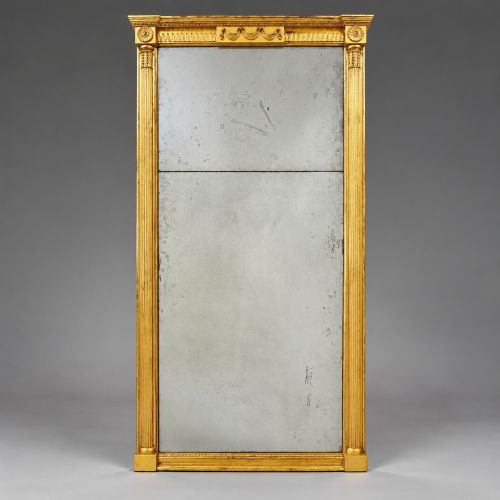
Look for architectural elements such as reeded columns and ball-stud friezes within the frame.
Are original mirror plates common?
Some surviving examples retain their early or original glass, which often exhibits subtle foxing or uneven reflection over time.
Original plates contribute significantly to the historic character and authenticity of the piece.