




Georgian Oval Cooler
A georgian oval cooler brings traditional dining rooms a sturdy vessel for chilling bottles or holding plants.
Georgian Oval Cooler
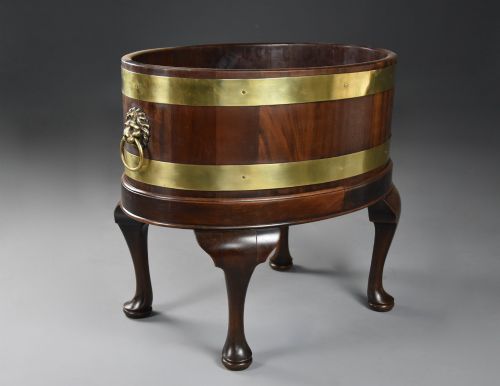
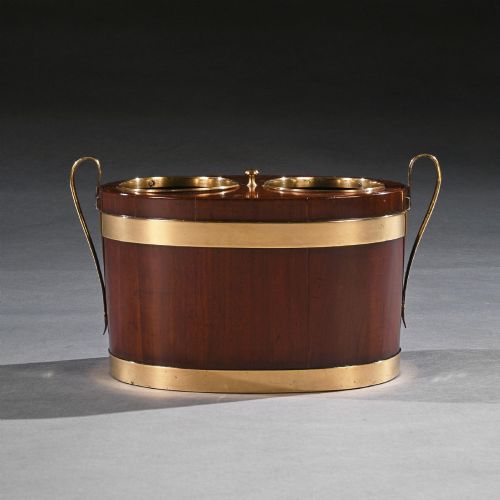
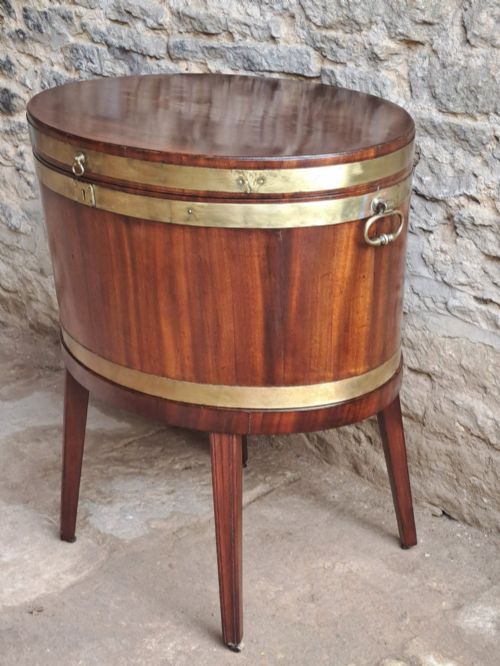
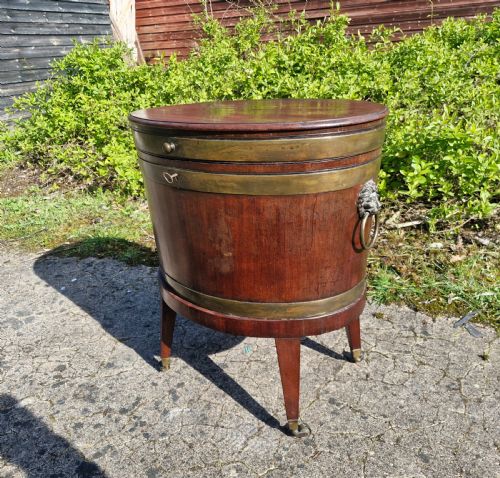
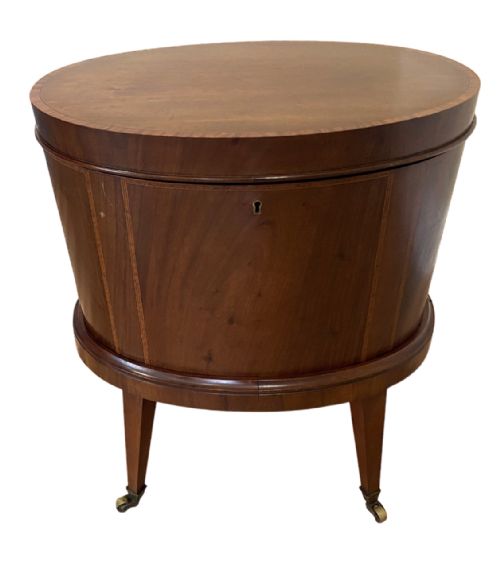
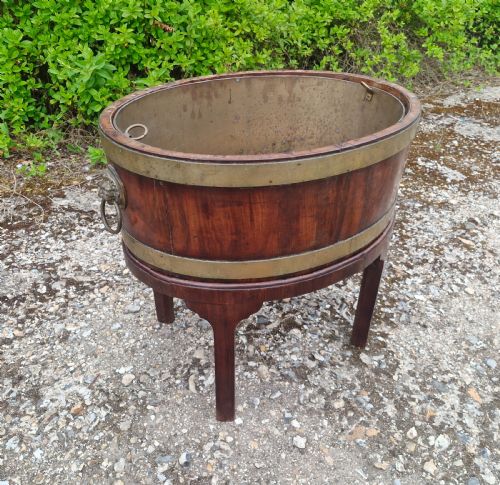
A georgian oval cooler is typically constructed in mahogany, often featuring a coopered body secured with brass bands, or occasionally shaped as an elliptical bucket. These pieces span the eighteenth century and the regency period, alongside later revival iterations from the nineteenth and early twentieth centuries.
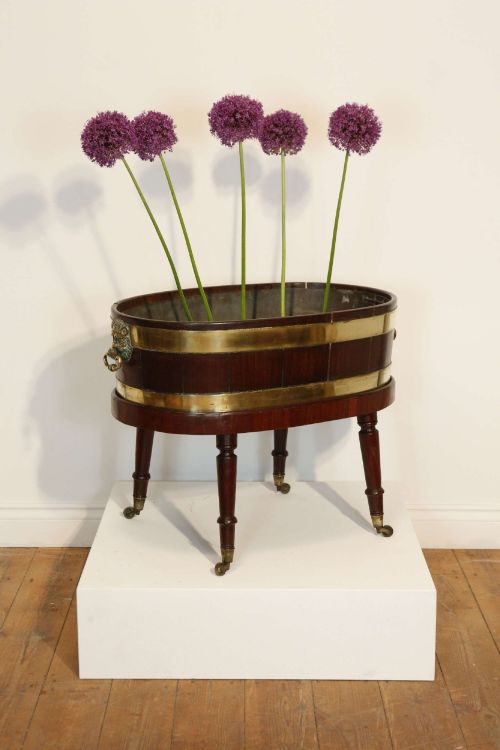
Many examples are raised on dedicated stands or legs, while others sit directly on the floor or serve a dual purpose as a jardiniere for plants. The form accommodates bottles or foliage within a deep, contained basin.
Makers and workshops of the period produced these vessels in various scales, from compact table models to grand cisterns intended for large dining spaces.
Materials and construction
Makers utilised solid mahogany, figured elm, walnut, and satinwood, frequently employing boxwood inlay to delineate panels and borders. The wooden staves were shaped and bound together using heavy brass or bronze bands, mirroring the traditional techniques of cooperage.
Georgian Oval Cooler Retail Price Guide 2026
Typical asking prices for georgian oval cooler among the pieces listed under this phrase on Sellingantiques today, from the lower quarter to the upper quarter. They describe what is for sale here now, not the wider market.
A few timber coolers spent time chilling champagne before retiring to the corner as heavy-duty flower pots.
Assessing quality and craftsmanship
Quality rests in the depth of the timber's patina, the tightness of the coopered joints, and the crispness of any inlay work. Finer examples retain their original stands, metal bands, and internal linings, showing careful hand-finishing rather than mass-produced uniformity.
The weight and gauge of the brass fittings also signal superior manufacture, as heavier mounts sit flush against the curved timber. Proportion and balance dictate whether a piece on a stand appears graceful or heavy-handed.
Warings And Gillow·Gillows·Samual Norman
The Georgian Oval Cooler Glossary
- Coopered
- Constructed from curved wooden staves joined edge-to-edge, similar to barrel-making. This technique provides the structural strength needed for holding heavy loads of ice and liquid.
- Cellarette
- A lockable container or freestanding chest designed to hold bottles of wine in a dining room. These often share the same oval or octagonal forms as wine coolers.
- Jardiniere
- An ornamental pot or stand intended for holding plants or flowers. Many coolers adapted to this function later in their lifespan.
- Patina
- The surface sheen and colour developed by wood over decades of handling, exposure, and polishing. A good surface shows depth rather than a flat, modern finish.
- Band
- A metal strap encircling the wooden body to secure the staves. Brass and bronze are standard materials for these structural hoops.
Georgian Oval Cooler: Frequently Asked Questions
How were these coolers used?
These vessels were filled with ice and water to chill wine bottles beside the dining table during formal meals.
Servants later repurposed many of them as planters or jardinieres when dining habits shifted.
Are they waterproof inside?
Many retain original metal or zinc liners intended to contain melting ice.
Timber staves alone would leak, so waterproof inserts were essential for practical use.
Do they come with stands?
Some examples sit on dedicated wooden frames with legs, while others were built as tabletop or floor buckets.
An original stand adds significantly to the integrity of the piece.
How do I date a cooler?
Stylistic clues such as brass mount designs, inlay motifs, and timber selection help distinguish eighteenth-century originals from later revival pieces.
Construction methods inside the staves also point to the period of manufacture.