

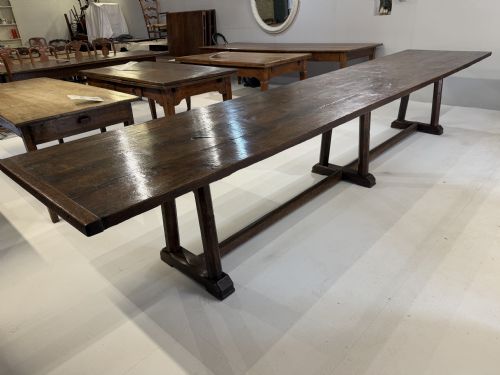


Georgian Oak Trestle Table
A georgian oak trestle table brings robust country craftsmanship and rich historic timber straight into the heart of a modern dining room.
Georgian Oak Trestle Table
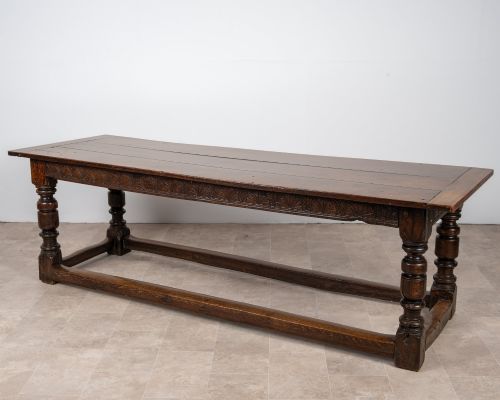
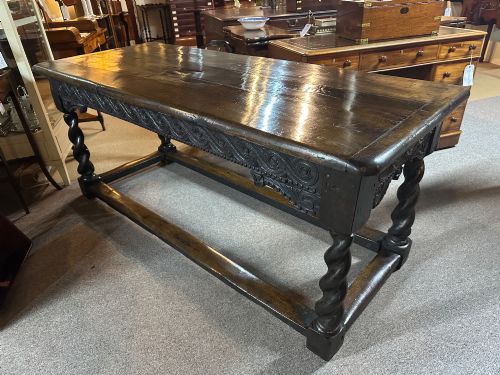
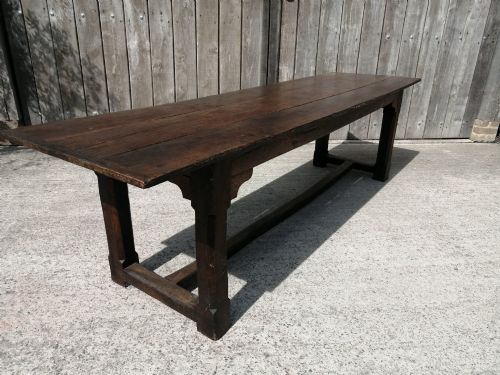
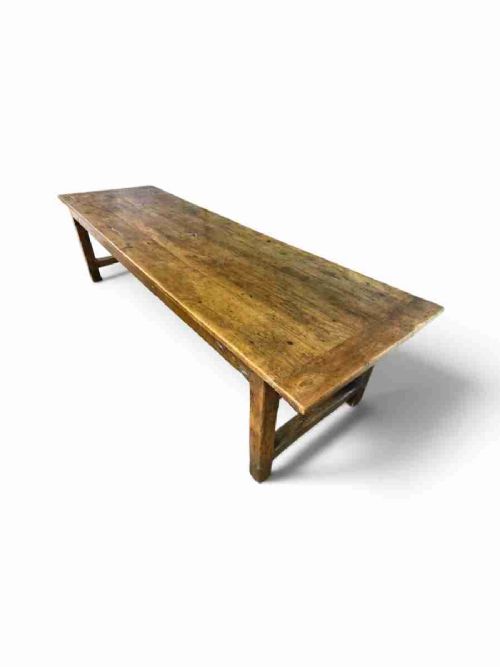
A georgian oak trestle table encompasses sturdy refectory, farmhouse, and tavern dining formats constructed primarily during the eighteenth and early nineteenth centuries. These long boards and sturdy supports served bustling kitchens, public houses, and manor dining rooms alike before finding a new purpose in contemporary homes.
The versions most frequently met here span the breadth of Georgian country design, alongside robust examples incorporating elm, beech, and pollard oak details. Buyers encounter everything from compact tavern formats to substantial eight seater refectory boards built for daily domestic life.
How they were made
Makers relied on durable native hardwoods, chiefly oak matched with elm and beech for structural timber, shaped by hand using traditional joinery. Planks were selected for strength, allowing large dining and tavern surfaces to withstand decades of heavy use.
Secondary timbers such as pine sometimes appear in internal framing, while brass hardware occasionally surfaces on related writing desks and centre tables from the Regency period.
Georgian Oak Trestle Table Retail Price Guide 2026
Typical asking prices for georgian oak trestle table among the pieces listed under this phrase on Sellingantiques today, from the lower quarter to the upper quarter. They describe what is for sale here now, not the wider market.
Listings demonstrate a strong presence of 18th century oak and elm, alongside 19th century regional variations in pine, beech, and pollard oak.
What varies in quality
The grade of timber and the depth of natural patination distinguish a superior board from a basic utilitarian example. Oak that has developed a warm, deep tone through centuries of waxing carries greater visual presence than dry or heavily stripped timber.
Proportion and structural integrity also dictate the standing of a piece. Tables retaining their original base construction and thick top planks hold more character than those altered or substantially rebuilt over successive generations.
The Georgian Oak Trestle Table Glossary
- Refectory table
- A long, narrow dining table historically used in monasteries and large domestic halls. These forms provide generous seating capacity along both flanks.
- Pollard oak
- Timber taken from trees that were pollarded, resulting in timber with tightly clustered knots and dense, swirling grain patterns. Cabinet makers prized this figured wood for decorative surfaces.
- Tavern table
- A sturdy, smaller-scale utility table designed for public houses or domestic kitchens. They often feature robust turned legs or trestle ends.
- Patina
- The lustrous surface sheen developed on old wood through decades of handling, polishing, and exposure to light. It signals age and gentle maintenance.
- Elm
- A resilient native hardwood frequently utilised for table tops and seat furniture alongside oak. Its interlocking grain resists splitting under heavy pressure.
Georgian Oak Trestle Table: Frequently Asked Questions
Are these tables suitable for daily family dining?
These tables were built for heavy communal use in farmhouses and taverns, making them exceptionally durable for everyday meals. Their solid timber construction easily withstands the rigours of a busy modern household.
Regular waxing helps protect the historic surface from moisture and daily wear without altering the character of the wood.
How do I spot an eighteenth century top?
Early tops typically consist of wide, boarded oak planks showing hand-planed surfaces and natural undulations accumulated over generations. The grain patterns and fastening methods reveal the age of the timber.
Examining the underside often uncovers tool marks and original battens that distinguish period construction from later replacements.
What is the difference between refectory and tavern forms?
Refectory formats are generally longer and narrower, designed to stretch down the length of a formal dining hall or large farmhouse kitchen. They provide substantial seating for many guests.
Tavern tables tend to be more compact and portable, intended for smaller rooms, drinking establishments, or domestic utility spaces.
How should I care for a dry oak surface?
Nourishing dry timber requires application of traditional beeswax to restore moisture and bring out the natural warmth of the grain. Avoid modern silicone polishes that can build an artificial film over the old wood.
Keeping the table away from direct heat sources and sudden humidity shifts prevents the ancient planks from warping or splitting.