

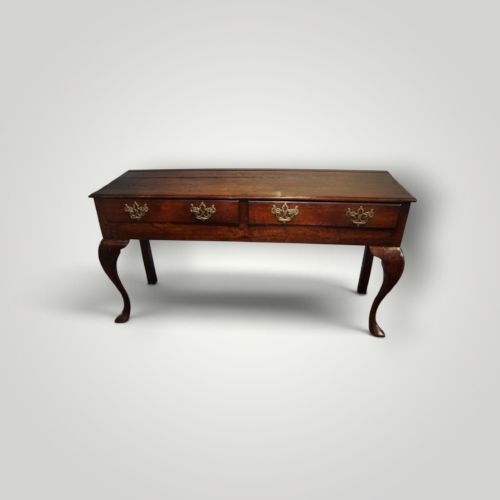
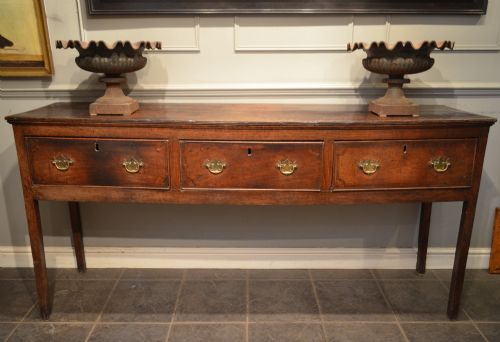
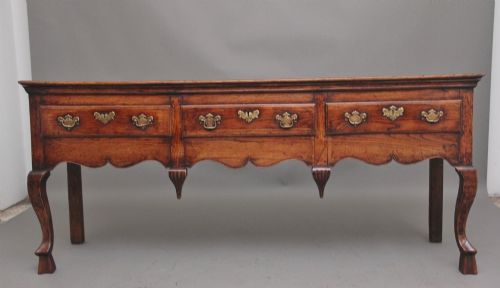
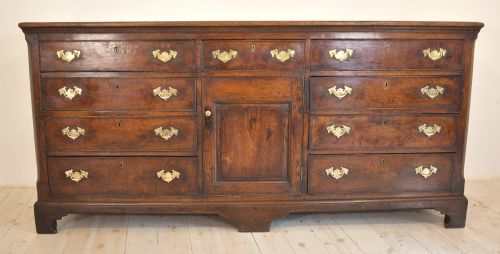
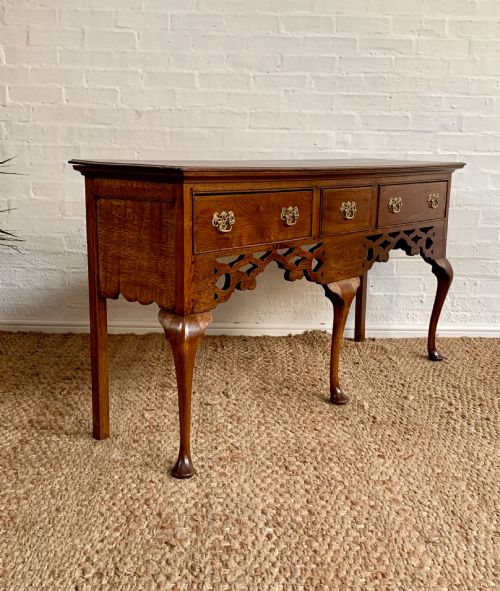
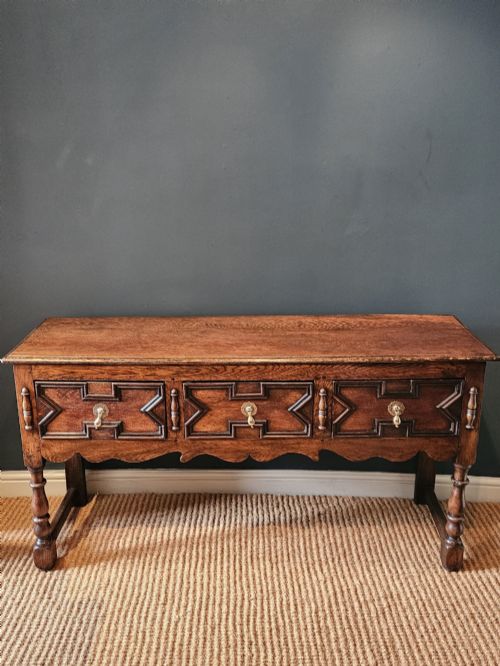
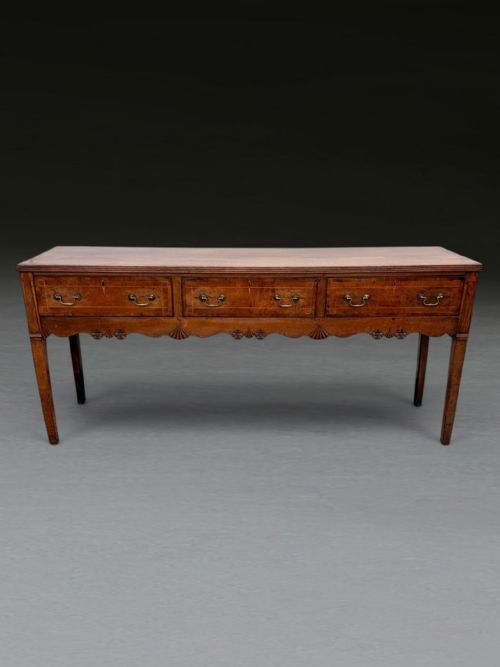
Georgian Oak Sideboard Table
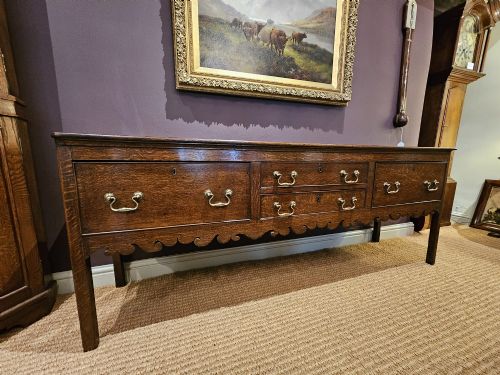
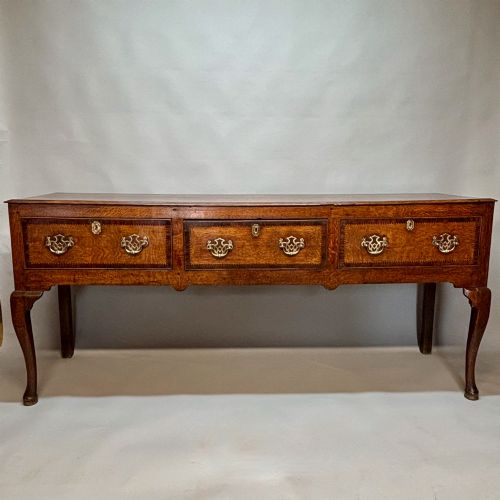
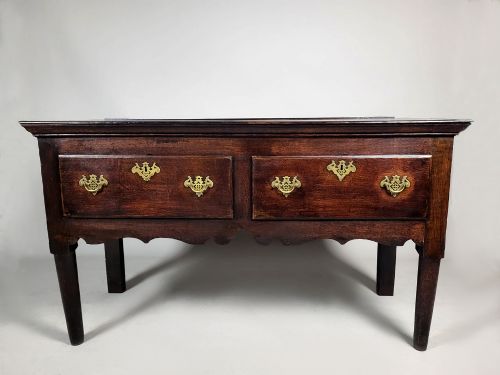
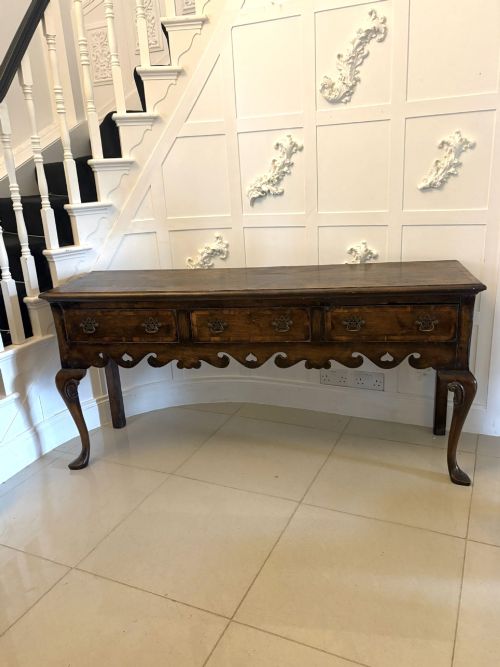
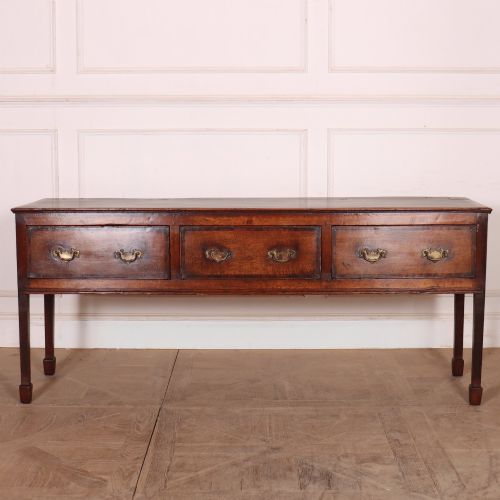
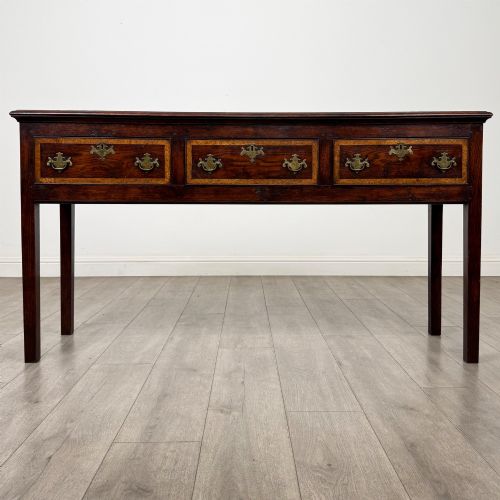
A georgian oak sideboard table provides robust storage and deep patinated timber, serving as a practical focal point for a traditional dining room or hallway.
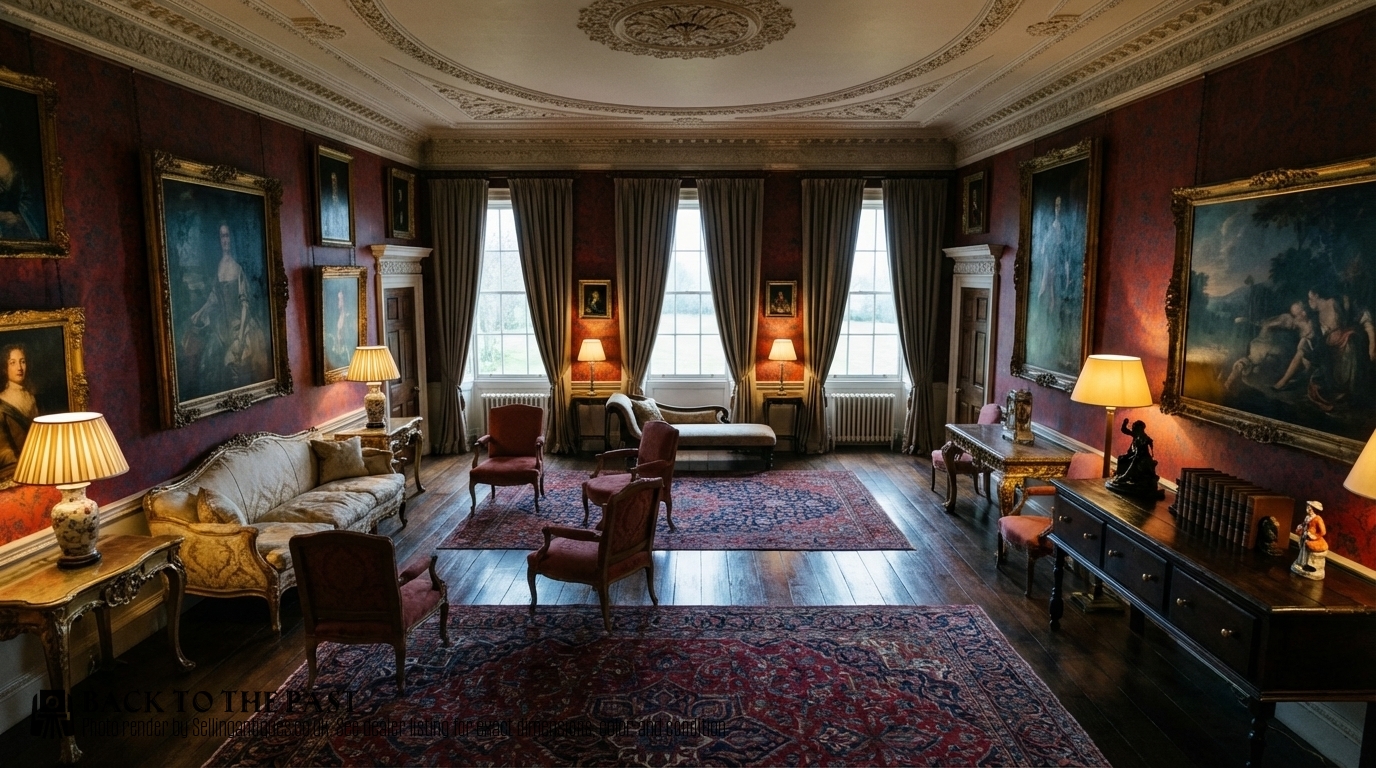
Georgian Oak Sideboard Table
When searching for a georgian oak sideboard table, buyers encounter heavy timber forms primarily recorded as dresser bases, side tables and serving tables. These pieces date predominantly from the eighteenth century, with later revivals appearing from the Edwardian era and the early twentieth century.
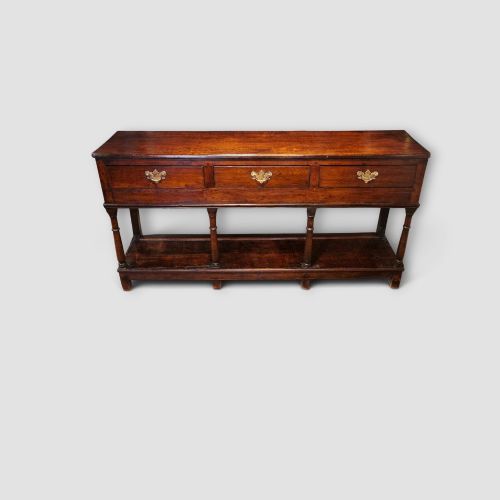
Regional variations emerge strongly in the evidence, particularly through Welsh vernacular pieces and Lancashire formats. Many examples incorporate potboards or open lower shelves beneath multiple drawers, combining display surfaces with functional low storage.
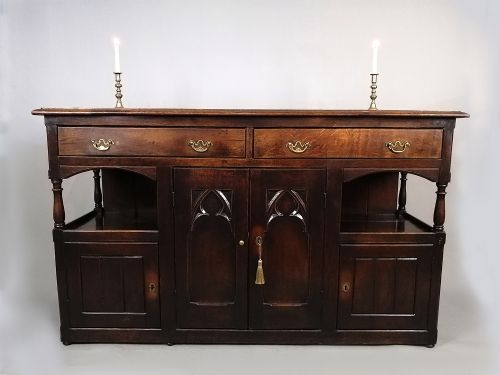
Styles range from straightforward English country furniture to George III designs featuring cabriole legs, geometric mouldings, and Strawberry Hill Gothic influences. Painted timber surfaces also appear alongside the dominant exposed grain.
Materials and Construction
Construction relies heavily on solid oak, frequently paired with secondary woods like elm and pine for internal or secondary structures. Cabinet makers utilised traditional jointing alongside applied mouldings and carved details.
Surface finishes vary from natural waxed timber showing deep grain to painted oak and painted timber treatments. Original brass hardware, including drop handles and escutcheons, often accompanies eighteenth-century examples.
Structural elements like potboards and blind silhouette legs demonstrate the utilitarian origins of these serving tables. Inlay timber and decorative veneers occasionally accent the standard solid timber construction.
Blind silhouette legs hide secret profiles that turn a simple kitchen table into a gentleman's dining secret.
Craftsmanship and Proportion
The degree of hand-carving and the sophistication of mouldings, such as geometric drawer fronts or Gothic arches, separate standard utility pieces from finer urban or country house commissions. Proportions also dictate standing, with smaller vernacular formats commanding distinct architectural interest.
The survival of original brasses and untouched timber surfaces with deep, authentic patination elevates an example above those with heavily restored or replaced elements. Cohesion between primary oak timbers and secondary woods like elm points to superior regional workshop standards.
The Georgian Oak Sideboard Table Glossary
- Dresser base
- A low wooden storage unit with drawers, functioning primarily as a sideboard or serving table rather than a tall plate rack. These pieces form the core of the available selection.
- Potboard
- An open lower shelf built near the floor between the legs of a dresser base, originally intended for storing pots and pans. This structural element is typical of Welsh and English vernacular furniture.
- Cabriole leg
- A furniture leg that curves outward at the knee and tapers inward toward an ankle or foot, drawing inspiration from classical forms. This style appears frequently on eighteenth-century Georgian examples.
- Geometric moulding
- Raised wooden profiling applied to drawer fronts in rectilinear patterns to create texture and depth. It is particularly associated with early periods of cabinet making.
- Strawberry Hill Gothic
- A decorative architectural style translating Gothic Revival motifs into furniture design. It represents a lighter, more whimsical branch of eighteenth-century taste.
Georgian Oak Sideboard Table: Frequently Asked Questions
How were these tables used originally?
These tables served primarily in kitchens and dining rooms for food preparation, serving meals, and storing household utensils and tableware.
The lower potboards and deep drawers provided heavy-duty storage before fitted kitchen cabinetry became standard in domestic interiors.
How do I tell an 18th century piece from a revival?
Eighteenth-century pieces display natural timber wear, hand- cut joinery marks, and aged patination accumulated over centuries of continuous domestic use.
Revival pieces from the Edwardian period or the nineteen-twenties often show more uniform machine-processed surfaces and cleaner interior construction.
Can I use a dresser base as a sideboard?
A dresser base functions exceptionally well as a modern dining room sideboard due to its practical working height and deep drawers.
The substantial oak construction and generous top surface easily accommodate serving dishes, glassware, and everyday dining accessories.
Are painted finishes period-accurate?
Historic painted timber surfaces do appear on English and Welsh vernacular pieces dating back to the seventeen-hundreds.
While natural oak grain dominates the selection, historical workshops frequently applied paint to protect cheaper secondary woods or follow contemporary fashions.