



Georgian Oak Display Rack
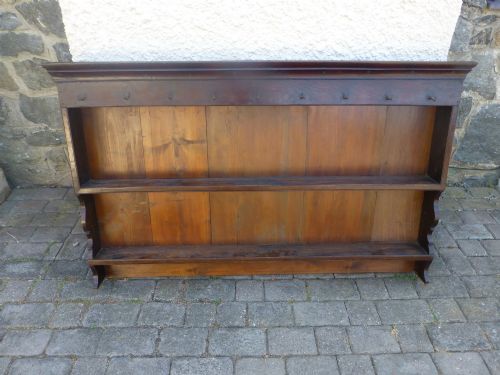
A georgian oak display rack is a practical wall-mounted or dresser-top shelf built for holding ceramics, everyday kitchenware and pewter.
Georgian Oak Display Rack
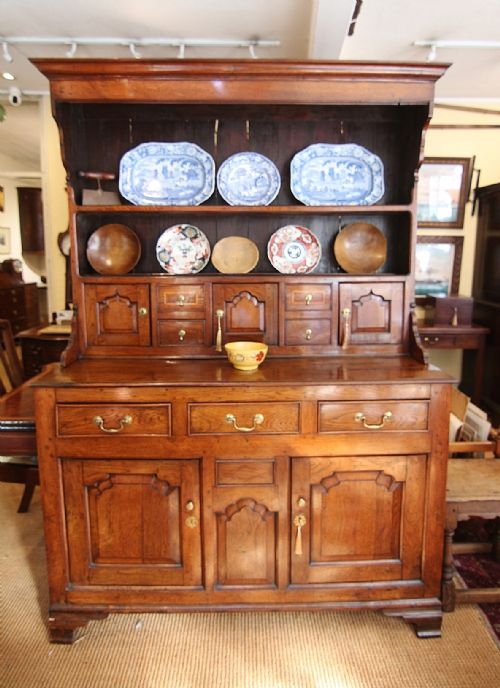
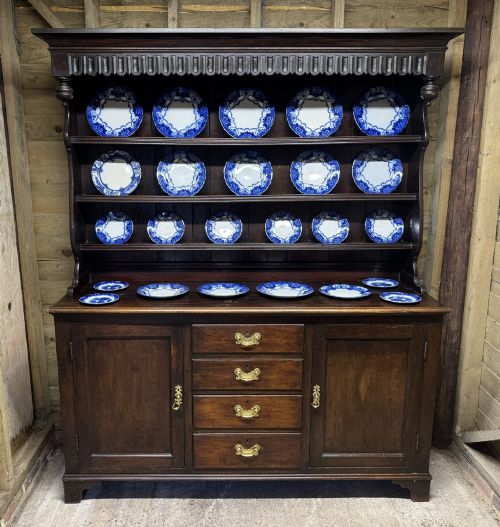
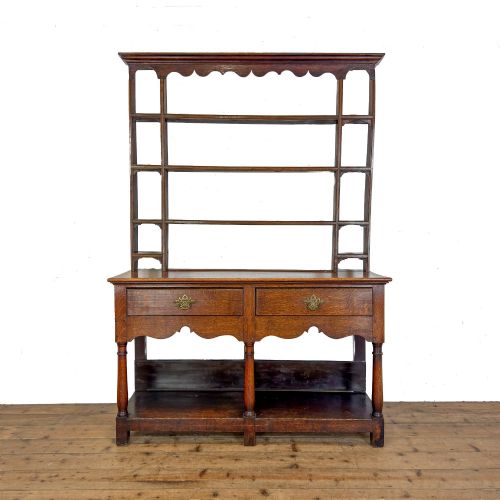
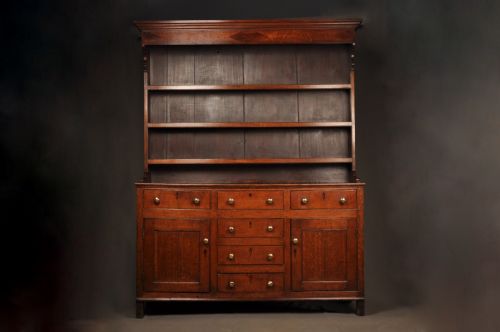
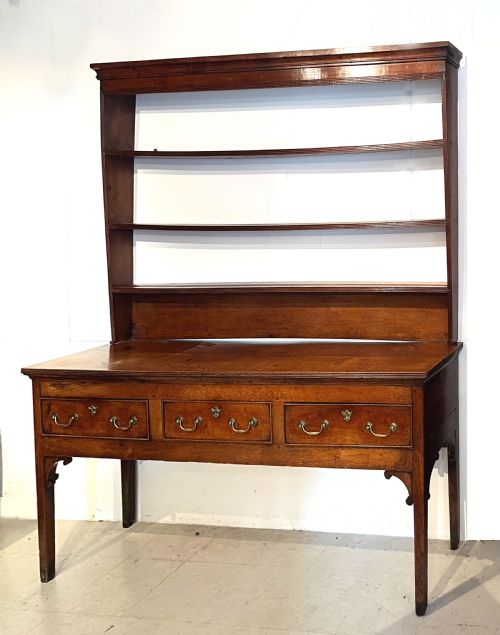
A georgian oak display rack is primarily found mounted to walls or sitting atop base cabinets as part of a larger kitchen dresser. These pieces originate largely from country workshops, with many examples linked to Welsh vernacular traditions.
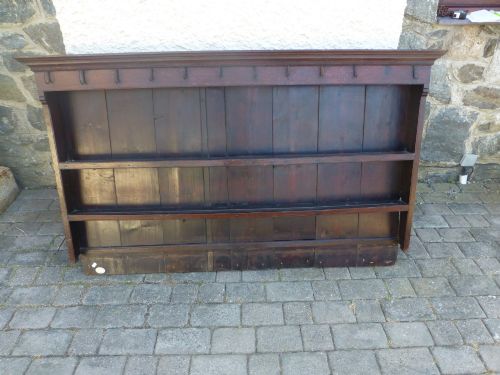
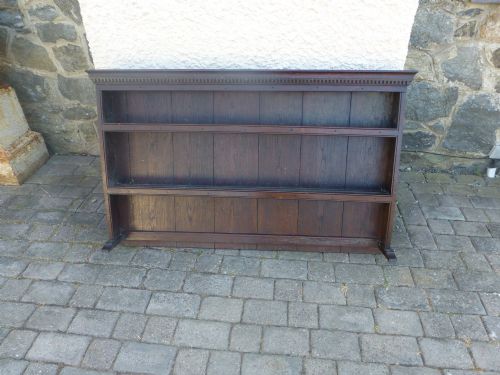
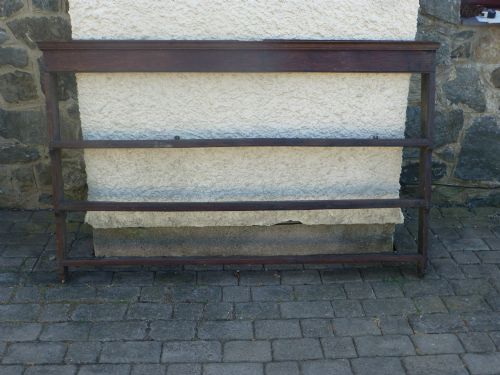
The most common form encountered on this page is the open wall rack, designed specifically to display delft plates, bowls and spoons safely against vertical wooden slats. These racks range from modest single-tier spoon shelves to substantial multi-tiered plate displays featuring carved cornices and side supports.
Makers built these pieces for utilitarian storage in domestic kitchens and dining spaces, utilising durable regional timbers to support heavy earthenware. Surviving examples reflect centuries of domestic use, showing the rich patination typical of eighteenth- and nineteenth-century country furniture.
How they were made
Makers constructed georgian oak display racks primarily using solid oak boards, frequently supplemented with secondary timbers such as pine for interior partitions or backings. Structural joints relied on traditional pegged mortise and tenon construction to ensure stability under the weight of heavy ceramics.
Surface finishing involved hand-planing the timber followed by centuries of waxing and natural wear, which produced deep patination across the oak boards. Details such as moulded plate rails, shaped friezes and occasionally inlaid decoration or Corinthian columns mark the work of skilled regional joiners.
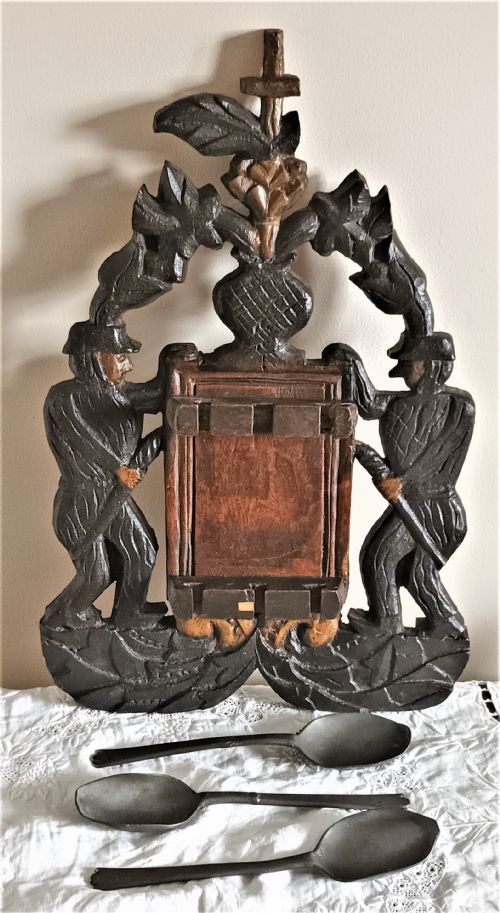
Some antique spoon racks survive with their original trefid pewter spoons still tucked neatly into the tiny carved slots.
What varies in quality
Quality in a georgian oak display rack rests on the crispness of its joinery, the thickness of the primary oak boards and the elegance of its proportions. Pieces with well-balanced tiers, original plate retaining bars and intact backboards stand clearly apart from utilitarian replacements.
The degree of regional ornamentation also distinguishes finer examples, such as those featuring breakfront drawers, fine inlay, or architectural details like columns. Surface preservation plays a major role, as racks retaining their original warm patination and untouched timber surfaces command greater appreciation than heavily stripped or over-restored pieces.
The Georgian Oak Display Rack Glossary
- Delft rack
- An open wall-mounted shelving unit designed to display ceramic plates and platters upright against a backboard. These racks often include narrow ledges with front retaining strips to prevent dishes from sliding forward.
- Potboard
- A lower open shelf positioned near the floor on traditional dressers, originally intended for storing heavy pots and pans. This feature frequently anchors larger two-part vernacular furniture forms.
- Breakfront
- A cabinet or rack design where the central section projects forward from the flanking outer sections. This architectural arrangement adds visual depth and structure to larger display pieces.
- Trefid spoon
- An early form of spoon featuring a flat, three-lobed terminal handle, commonly made of pewter or silver during the seventeenth and eighteenth centuries. These items occasionally accompany antique spoon racks.
- Vernacular furniture
- Domestic pieces made by local craftsmen following regional traditions rather than high-style metropolitan fashions. These objects prioritize utilitarian function and local timber availability.
Georgian Oak Display Rack: Frequently Asked Questions
How were these racks originally used?
These racks served as everyday storage in kitchens and dining rooms for holding ceramic plates, bowls and spoons within easy reach. The open shelving allowed wet dishes to air dry while keeping household tableware on display.
Over time, families used them to showcase their finest delftware and pewter collections. They functioned as both practical utility furniture and decorative focal points in country homes.
Are these racks wall-mounted or part of a dresser?
Surviving examples appear in both formats, functioning either as independent hanging wall racks or as the upper tier of a two-part dresser. Independent wall racks were secured directly to kitchen walls using mounting points built into the frame.
When paired with a base cabinet, the rack simply rests on top of the counter surface, sometimes secured with wooden pins or brackets. Both configurations were standard in domestic kitchens of the period.
How do I care for antique oak furniture?
Keep antique oak display racks away from direct heat sources and drastic humidity changes to prevent the timber from splitting or warping. Dust the surfaces regularly with a dry, soft cloth rather than using modern aerosol polishes.
Applying a traditional beeswax occasionally helps nourish the dry timber and maintain its natural lustre. Gentle care preserves the historical patination built up over centuries of domestic use.
How can I tell an older rack from a later style?
Examine the construction methods, tool marks on the wood, and timber characteristics to assess age. Eighteenth-century examples typically feature hand-sawn boards, pegged joints, and timber surfaces showing deep patination from age and wear.
Later Victorian or twentieth-century pieces often display more uniform machine-cut lumber and standardised fixings. Comparing the drawer construction and hardware also helps differentiate period originals from later reproductions.