


Georgian Oak Display Cabinet
A georgian oak display cabinet brings rich timber grain and historic storage into a room.
Georgian Oak Display Cabinet
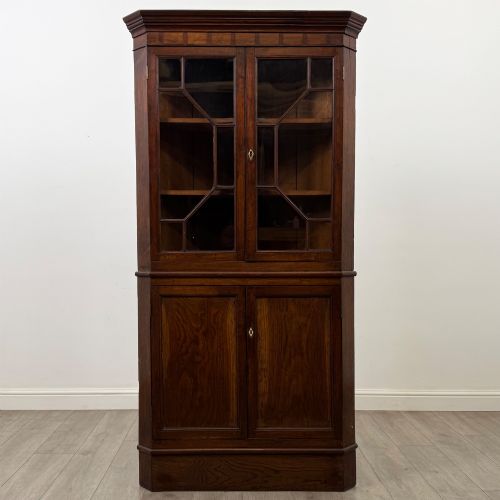
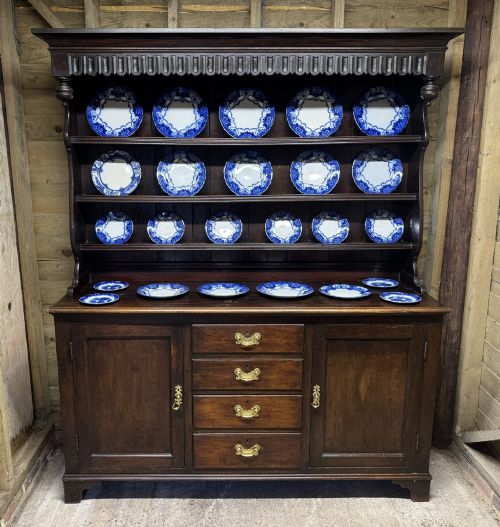
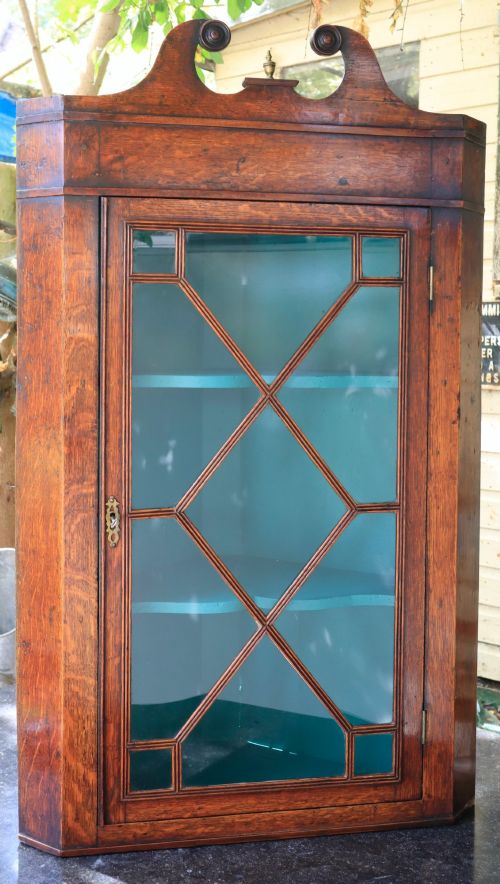
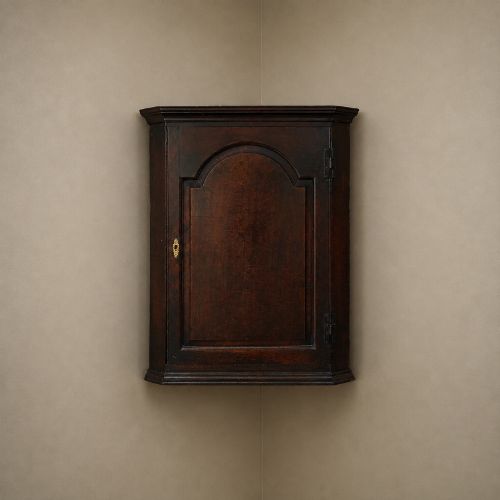
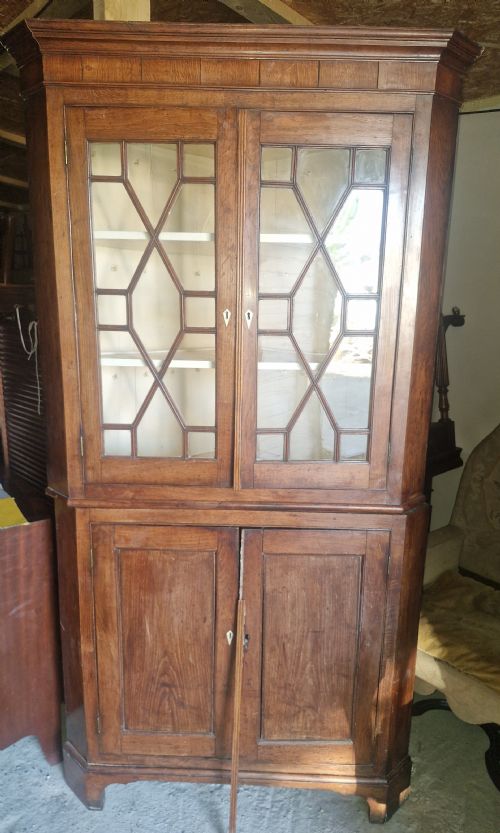
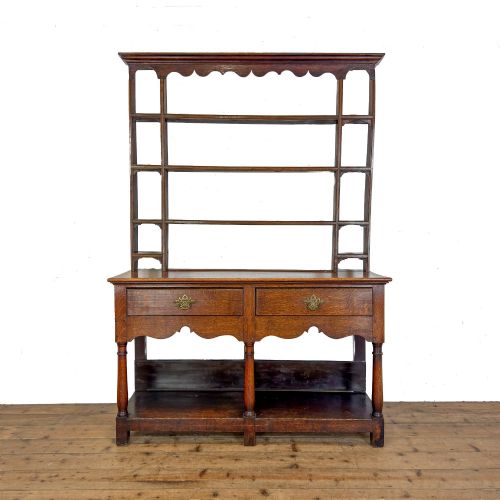
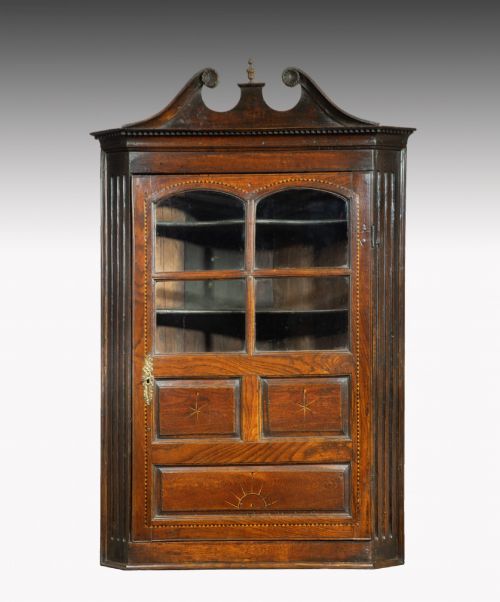
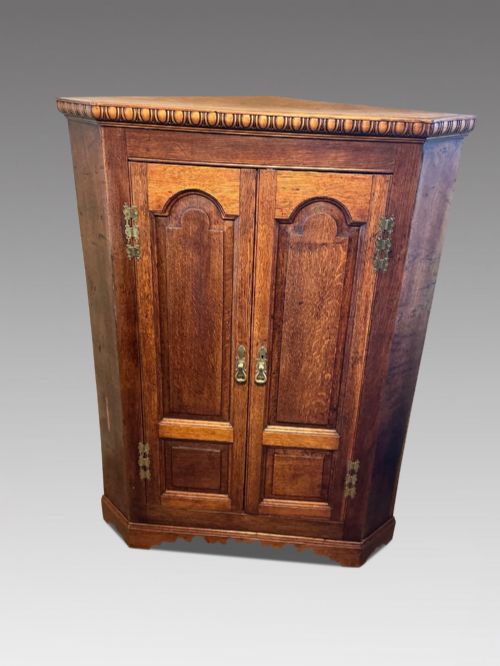
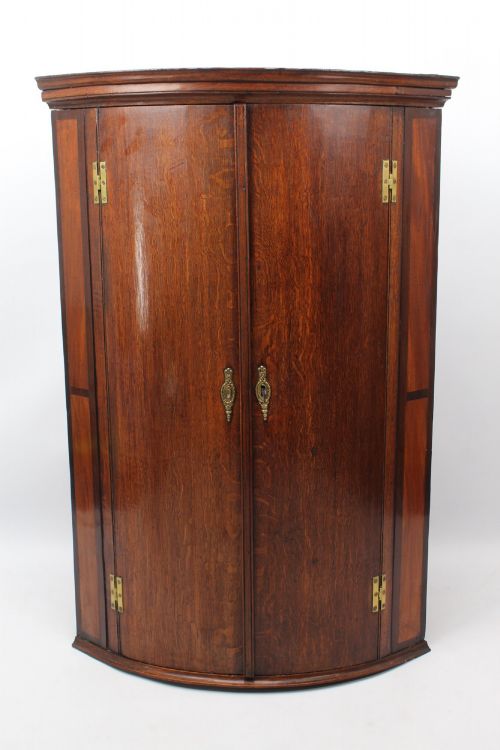
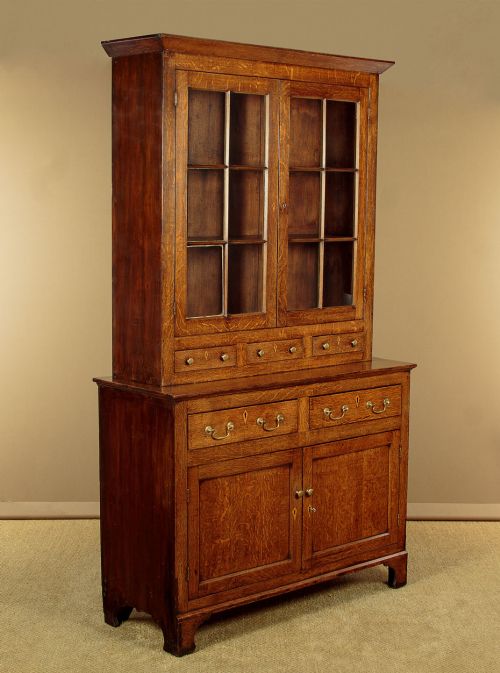
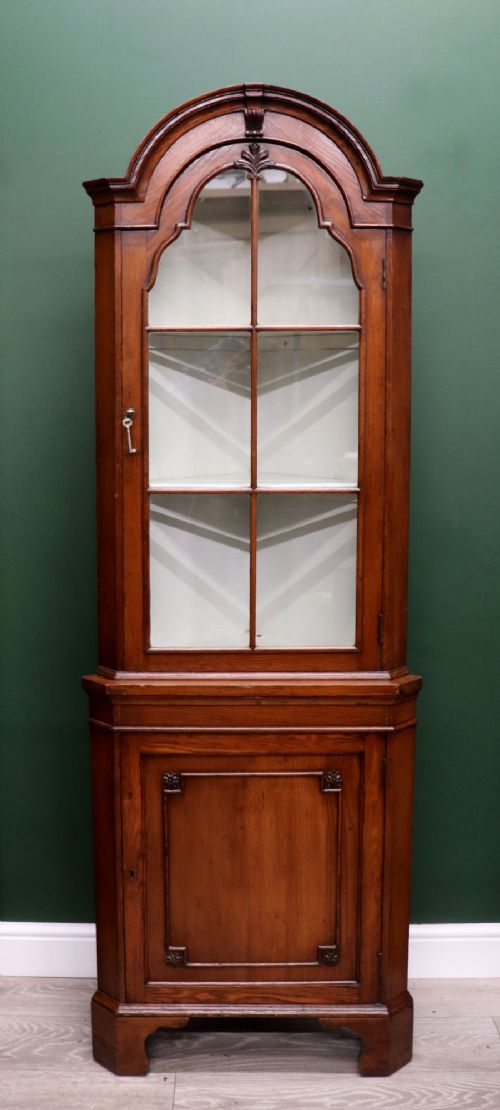
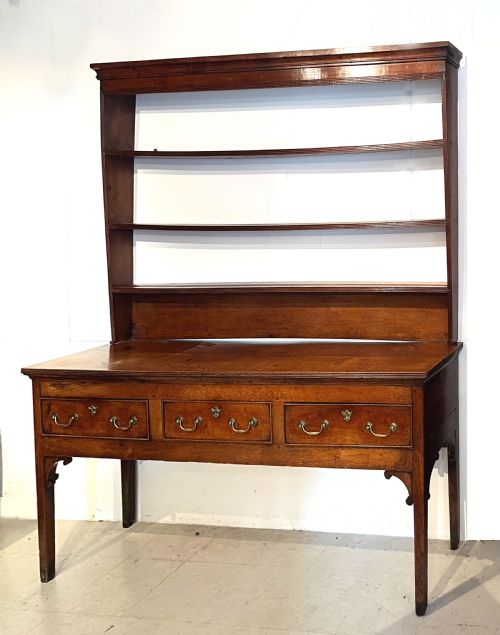
A georgian oak display cabinet encompasses various forms designed to house and exhibit valued possessions in domestic settings. The pieces range from wall-hanging corner cupboards to floor-standing glazed bookcases and kitchen dressers originating across English and Welsh regions.
The inventory on this page contains numerous corner cabinets and two-part cupboards built during the eighteenth and nineteenth centuries. Buyers frequently encounter regional variations such as Welsh country dressers alongside standard Georgian forms.
Makers and makers' marks are absent from the record, leaving the focus entirely upon the vernacular traditions and cabinet-making styles of the period. Each piece reflects the functional storage needs of domestic interiors from the Georgian era through to later revivals.
How they were made
Construction relies heavily on solid oak timbers, frequently paired with mahogany crossbanding and wood inlay to create decorative contrast on cupboard doors and friezes. Secondary woods such as pine appear in concealed sections or simulated finishes.
Glazing forms a central element, utilising panes of glass held within timber frames to protect contents while allowing visibility. Brass hardware such as hinges and escutcheons complete the structural assembly of hanging and floor-standing pieces.
Some Welsh cupboards hide household provisions behind glass while others proudly display grandmother's best china to passing guests.
What varies in quality
The standard of craftsmanship depends on the precision of the joinery and the selection of timber figures used across the panels and doors. Cabinets featuring deliberate mahogany crossbanding or sophisticated cross-grain mouldings generally represent a more ambitious level of workshop production.
Proportion and surface preservation determine the visual impact of an example. Pieces retaining undisturbed timber patination and original brass hardware sit higher in the range than those altered by later interventions.
The Georgian Oak Display Cabinet Glossary
- Crossbanding
- A strip of veneer applied perpendicularly to the surrounding grain along the edges of a door or drawer front. This decorative technique frames the primary oak surface with a contrasting border.
- Cwpwrdd Gwydr
- A Welsh term for a glazed cupboard. These regional pieces provide display space for crockery and household items behind glass doors.
- Breakfront
- A piece of furniture featuring a central section that projects forward from the flanking sides. This architectural arrangement adds depth and visual rhythm to larger cabinets.
- Plate rack
- An open set of wooden shelves mounted above a dresser base, designed to display plates upright. They form an integral part of traditional kitchen dressers.
Georgian Oak Display Cabinet: Frequently Asked Questions
Where should I place a corner cabinet?
These cabinets suit awkward room angles by utilising unoccupied corners for storage and display.
Wall-hanging versions require secure fixing to masonry or studwork to support the weight of timber and glass.
How do I care for antique oak?
Keep wooden furniture away from direct heat sources and sudden temperature fluctuations to prevent timber splitting.
Apply traditional wax sparingly and polish with a soft cloth to maintain the natural surface sheen.
What is a two part cabinet?
A two-part cabinet consists of a separate upper section resting upon a lower base unit.
This modular construction aided transport into domestic properties during the Georgian period.
How can I identify a Georgian piece?
Look for traditional timber construction methods, period hardware, and regional design characteristics.
Stylistic markers include moulded cornices, panelled doors, and period glazing bar arrangements.