
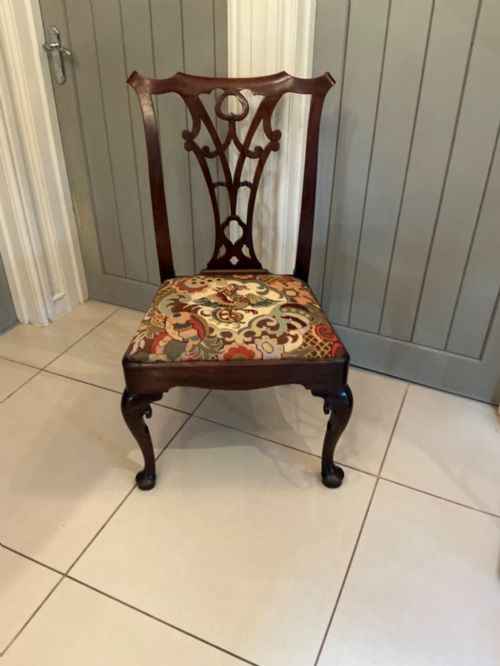


Georgian Needlepoint Chair
A georgian needlepoint chair brings tactile history into a room, combining solid timber frames with enduring stitched wool seats.
Georgian Needlepoint Chair
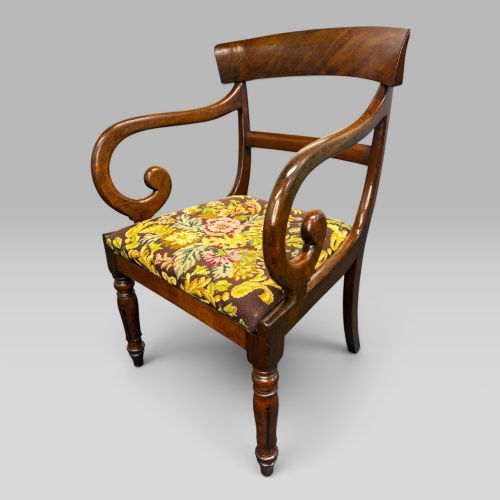
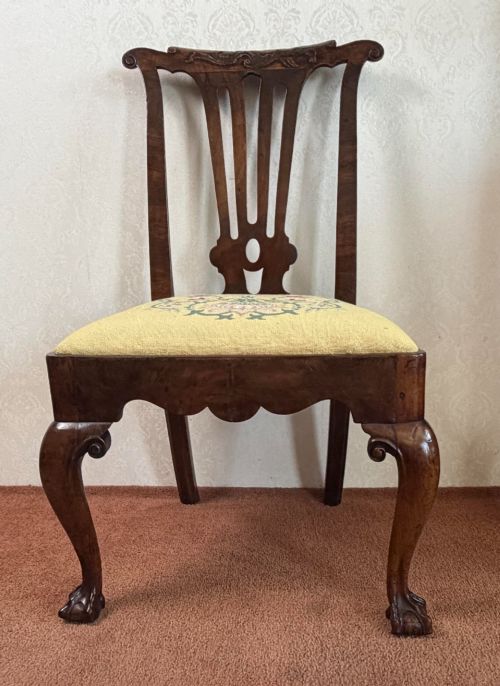
A georgian needlepoint chair unites the structured timber framing of the eighteenth and early nineteenth centuries with intricate textile seat coverings. You will encounter dining chairs, side chairs, elbow chairs, and corner chairs spanning periods from George I through to Regency and later revival eras.
The timber frames vary from dark elm and walnut to rich mahogany and rosewood, reflecting the changing tastes of English, Irish, and Scottish makers. Seats range from drop-in foundations to fixed upholstery worked in wool, tapestry, and fabric.
Many examples survive as pairs or larger dining sets, while others stand alone as singular library or morning room seating. Their forms serve both practical utility and decorative presence in traditional interiors.
Materials and construction
Cabinetmakers shaped these frames primarily from dense hardwoods like mahogany, walnut, and elm, employing sturdy mortise and tenon joints to ensure longevity. Brass accents occasionally appear on castors or structural mounts on heavier armchairs.
Seat upholstery relies on traditional textile techniques, utilising wool threads stitched into canvas needlepoint and tapestry grounds. These hand-worked panels are then fitted over drop-in wooden frames or secured directly to the webbing of the chair structure.
Georgian Needlepoint Chair Retail Price Guide 2026
Typical asking prices for georgian needlepoint chair among the pieces listed under this phrase on Sellingantiques today, from the lower quarter to the upper quarter. They describe what is for sale here now, not the wider market.
Materials span walnut, mahogany, rosewood, and dark elm, paired with wool, tapestry, and fabric upholstery across multiple centuries.
Distinctions in craftsmanship
The refinement of the carved woodwork dictates much of the distinction between standard production and top-tier output. Crisp lines on cabriole legs, detailed splats, and well-executed joinery separate provincial pieces from those produced by premier urban workshops.
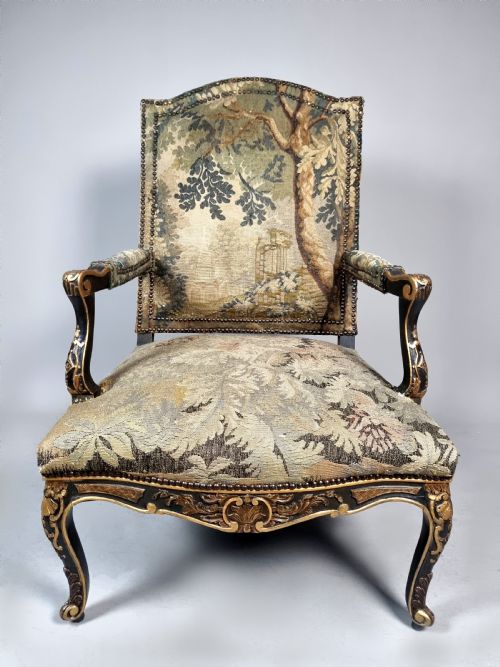
The density and complexity of the needlepoint work also define the tier of the piece. Finely detailed wool stitchwork with intricate pictorial or floral motifs commands greater attention than simpler, coarser textiles.
Robert Strahan Dublin
The Georgian Needlepoint Chair Glossary
- Drop-in seat
- A removable wooden frame padded and upholstered separately, designed to drop snugly into the seat rails of a chair. This method allowed for easier reupholstery over the centuries.
- Gainsborough chair
- A type of wide, upholstered armchair with open padded arms, short legs, and a low seat, popular during the mid-eighteenth century. These chairs often feature needlepoint or tapestry upholstery.
- Elbow chair
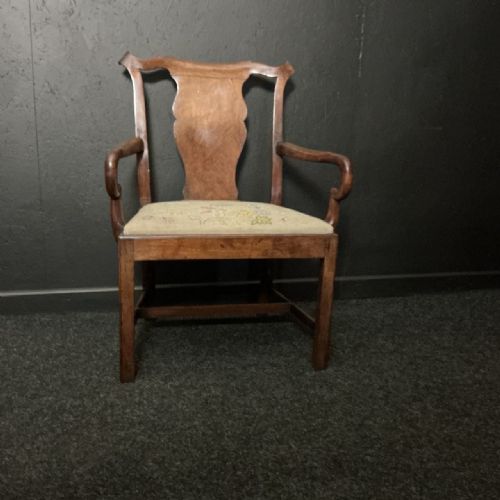
- An alternative term for an armchair, particularly those used at a desk or as an occasional seat with low arms. They frequently accompany matching sets of side chairs.
- Corner chair
- A square-seated chair designed to fit into the corner of a room, featuring a diagonal orientation with a continuous curved armrest supported by multiple uprights. They often rest upon three legs with a central rear leg.
- Tapestry
- A heavy textile woven or worked by hand with decorative designs, frequently utilised interchangeably with needlepoint in period seat covers. It adds significant texture and colour to the seating.
- Carver chair
- An armchair, typically sharing its design with a set of dining side chairs but featuring armrests for the head of the table. They provide a commanding silhouette in traditional dining arrangements.
Georgian Needlepoint Chair: Frequently Asked Questions
How do I identify a Georgian needlepoint chair?
Look for period-specific timber framing, such as mahogany or walnut, paired with hand-stitched wool needlepoint or tapestry seat covers. Structural details like splat backs, cabriole legs, or sabre legs help date the piece.
Examine the construction methods underneath the seat frame to confirm period joinery techniques and materials consistent with eighteenth and early nineteenth-century production.
Were these chairs used for dining?
Many examples on this page are dining chairs, often found as single pieces, pairs, or larger sets intended for formal tables. Others served as side chairs or elbow chairs in libraries and morning rooms.
Armchairs and corner chairs generally fulfilled more occasional seating roles rather than serving as regular dining accommodations.
Can I use these chairs daily?
Solid hardwood frames of mahogany and walnut provide exceptional structural integrity for everyday use. However, fragile historic needlepoint upholstery may require careful handling or protective measures.
Placing them away from direct sunlight preserves the wool fibres and prevents fading of the vintage textile panels.
What is the difference between a side chair and an elbow chair?
Side chairs lack armrests and were designed to stand against walls or fit compactly around dining tables when not in use. Elbow chairs feature supportive armrests, offering a more substantial sit for desks or parlours.
Sets of dining chairs from this era frequently combined multiple side chairs with a pair of elbow chairs for the ends of the table.