
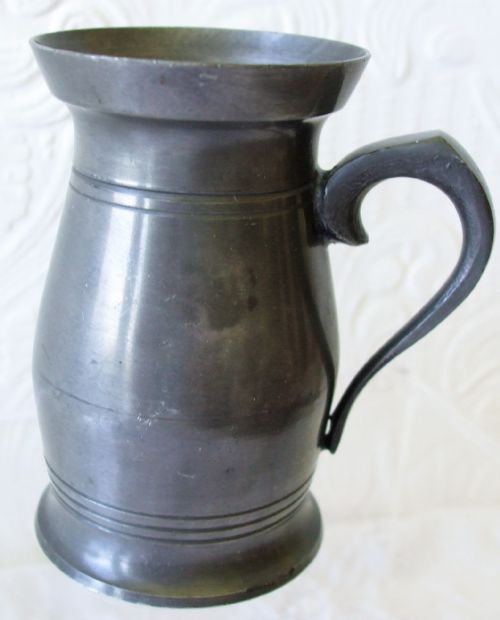


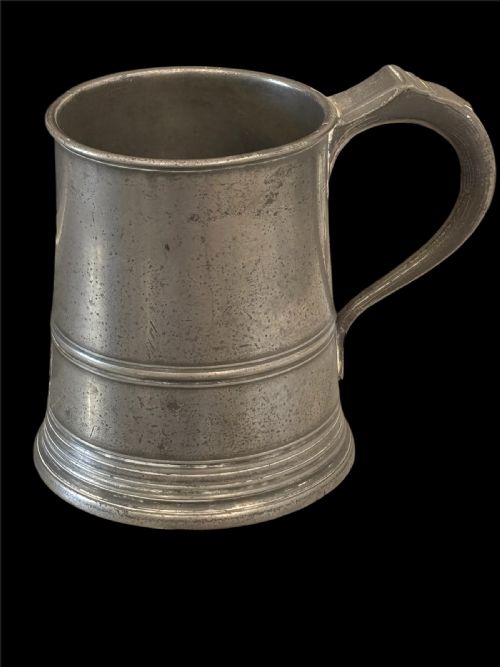


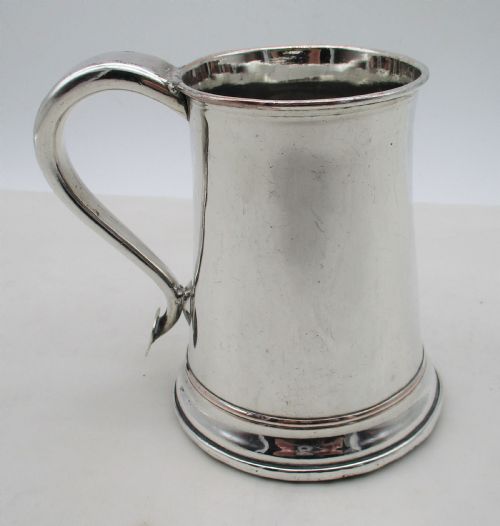

Georgian Metal Ale Mug
A georgian metal ale mug brings tangible weight and historic character to any sideboard, offering sturdy drinkware shaped by centuries of use.
Georgian Metal Ale Mug
When you search for a georgian metal ale mug, you encounter robust drinking vessels spanning the Georgian period and the nineteenth century. These items include pint and quart tankards alongside smaller gill measures.
The most common forms on this page are tankards and mugs shaped from gleaming Old Sheffield plate or heavy pewter. Copper and silver also appear, sometimes finished with gilding or nickel-plating.
Origins stretch across English and Irish workshops, uniting utilitarian drinking customs with durable metalwork traditions. Collectors meet both plain tavern pieces and refined plated examples.
Materials and Construction
Pewter vessels rely on tin-based metal alloys cast into sturdy forms that withstand daily service. Heavy walls and reinforced bases provide the physical heft expected of period drinkware.
Old Sheffield plate items combine a copper core fused with a thin layer of silver, creating lustrous surfaces. Makers shape these plated sheets into tankards and secure handles with soldered joints.
Assessing Quality and Execution
The distinction between standard tavern items and finer presentation pieces rests on the weight of the metal and the crispness of form. Thicker walls and balanced proportions separate utilitarian output from superior examples.
Surface finish also determines quality, particularly in plated items where uniform silver coverage and clean soldering demonstrate skilled craftsmanship. Maker marks and clear capacity stamps add authority to the piece.
Richard Morton·Thomas Phillips I of London
The Georgian Metal Ale Mug Glossary
- Tankard
- A tall drinking vessel with a single handle and often a hinged lid. These cylindrical forms dominate historic metal drinkware.
- Old Sheffield plate
- A composite material made by fusing silver to a copper base. This technique preceded modern electroplating.
- Gill measure
- A small standardised drinking or serving vessel used for liquid capacity. These smaller pieces often feature calibrated lips or touchmarks.
- Pewterware
- Utilitarian and decorative objects shaped from tin alloy. The metal yields a soft grey patina over decades of handling.
Georgian Metal Ale Mug: Frequently Asked Questions
What metals were used for these mugs?
Makers shaped these drinking vessels from pewter, copper, silver, and Old Sheffield plate. Some examples incorporate nickel-plating or gilding.
Heavier items rely on substantial pewter casting, while plated pieces utilise fused silver and copper sheets.
How do I identify a Georgian tankard?
Look for traditional cylindrical forms, sturdy applied handles, and capacity measures stamped into the metal. Period pieces typically display simple geometric lines rather than ornate Victorian ornamentation.
Maker marks and touchmarks stamped near the rim or base provide further clues to origin and date.
What is Old Sheffield plate?
Old Sheffield plate is an early fusion material created by melting a sheet of silver onto a thicker copper base. This technique produced durable items with the appearance of solid silver.
Craftsmakers then hammered and shaped these sheets into tankards and mugs.
How were these mugs used?
These vessels served ale and other beverages in homes, inns, and taverns during the eighteenth and nineteenth centuries. Their sturdy metal construction suited daily public and domestic service.
Measures like gills and pints also assisted in regulating poured volumes.