


Georgian Meat Platter
A georgian meat platter brings scale and presence to a dining table, combining substantial ceramic forms and plated metal covers built for grand feasts.
Georgian Meat Platter
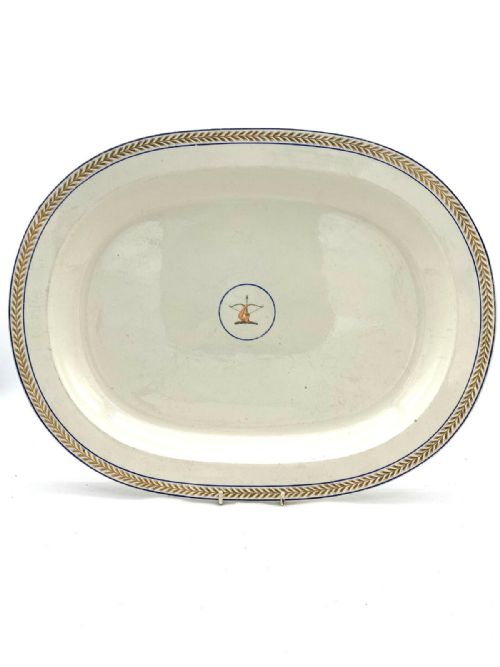
A georgian meat platter encompasses large ceramic serving dishes and metal domes designed to present substantial joints of meat at table. The examples found here range from earthenware and creamware to ironstone and porcelain, often paired with matching drainers or warming dishes.
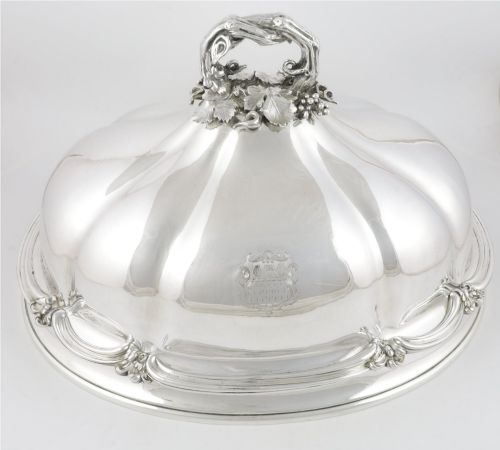
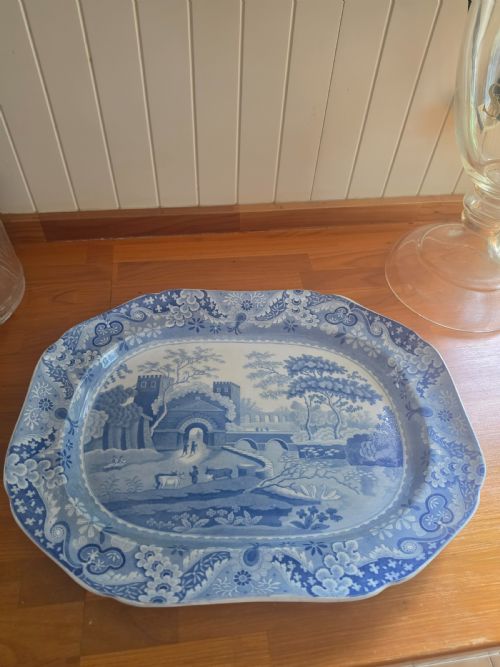
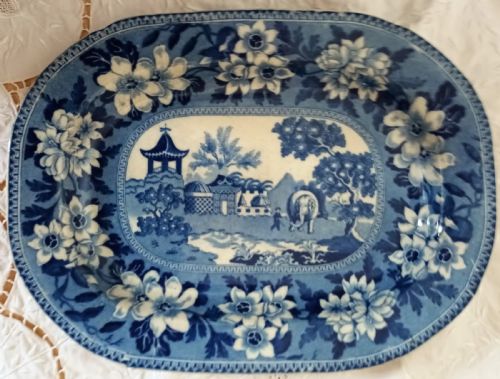
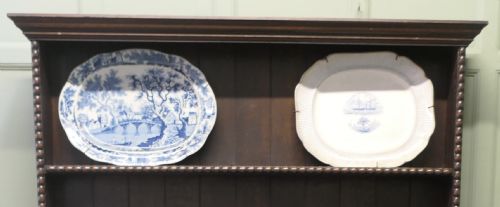
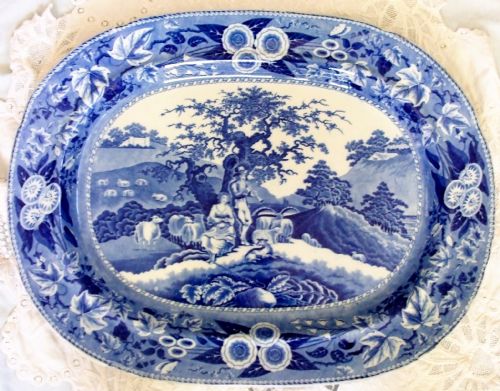
Transfer-printed earthenware in blue and white dominates the selection, featuring pictorial scenes from classical ruins to exotic landscapes. Alongside these ceramic chargers sit Old Sheffield Plate meat domes and covers designed to keep roasts warm during long dining services.
How They Were Made
Potters shaped large quantities of clay on wheels or in moulds, applying intricate blue and white transfer prints before firing the glaze at high temperatures. Ironstone and creamware provided durable bodies capable of supporting heavy joints of meat without cracking under heat.
Metal covers and domes utilised Old Sheffield Plate, fusing a thin layer of silver to a thick copper core to achieve a lustrous finish with durable underlying strength. Craftsmen formed these sheets by hand, soldering handles and crests onto the finished pieces.
Several platters depict exotic animals and naval battles, proving that nineteenth-century diners enjoyed a dramatic sea fight with their Sunday roast.
What Varies in Quality
Quality rests in the crispness of the transfer print and the clarity of the ceramic glaze, where finer vessels show deep cobalt tones without blurring or pooling. The weight and gauge of the metal in Old Sheffield Plate domes also dictate the standard of execution.
The presence of heraldic arms, custom crests, or matching drainers elevates a piece from standard utilitarian ware to a commissioned service item. Potteries known for superior paste and design achieve sharper relief and more balanced proportions across their large serving surfaces.
Roberts Cadman·Henry Wilkinson·Robert Breading·Thomas Lakin·Don Pottery·Elkin Knight And Bridgwood
The Georgian Meat Platter Glossary
- Transferware
- Ceramic decorated by applying a paper transfer printed from an engraved copper plate onto the bisque body. This technique allowed intricate pictorial scenes to be replicated consistently across large production runs.
- Old Sheffield Plate
- A composite metal made by fusing a sheet of silver to a copper ingot before rolling them together into thin sheets. It allows the appearance of solid silver while maintaining structural rigidity.
- Mazarine
- A pierced ceramic or metal insert placed inside a platter to drain juices away from the meat. They are frequently found alongside large serving dishes of the period.
- Creamware
- A refined earthenware developed in Staffordshire featuring a pale yellow or cream-coloured glaze. It gained popularity for its smooth surface and suitability for domestic and armorial services.
- Meat Dome
- A large metal cover placed over a platter to retain heat and protect food before carving. These covers often feature cast handles and engraved family crests.
Georgian Meat Platter: Frequently Asked Questions
What is a georgian meat platter used for?
These large vessels served the central joint of meat at formal dining tables, accommodating heavy roasts during multi-course meals.
Many incorporate integrated wells or separate drainer inserts to collect juices away from the meat during carving.
How do I identify a transferware pattern?
Makers stamped or printed pattern names, such as Tower or Bridge of Lucano, directly onto the underside of the ceramic surface alongside factory marks.
Stylistic elements like border motifs and landscape subjects help attribute unmarked pieces to specific Staffordshire potteries.
What is Old Sheffield Plate?
Old Sheffield Plate is an early form of plated metal created by fusing silver and copper together through heat and pressure before rolling.
Examining the edges often reveals a thin line of copper where the base metal shows through beneath the silver layer.
How should I display a meat dome?
Meat domes sit best over a matching ceramic platter or directly on a large sideboard to showcase the polished surface and engraved crests.
Their substantial scale requires a deep surface and adequate clearance to support the height of the metal cover.